Integration of Bambu Lab Printers with Home Assistant
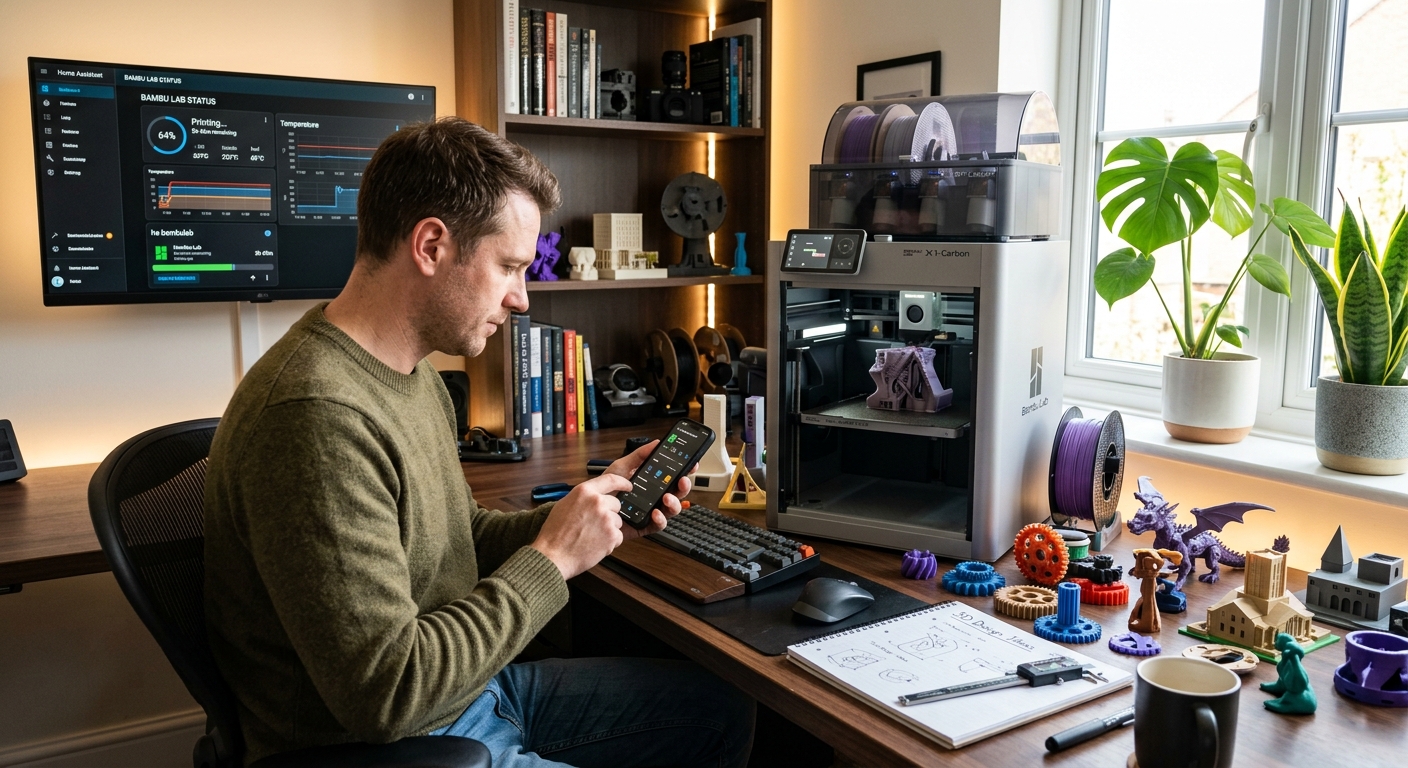
The integration of Bambu Lab 3D printers with Home Assistant allows users to effectively monitor and automate their printing processes within a smart home ecosystem. Using the open-source component ha-bambulab, this connection facilitates tracking print progress, receiving notifications, and triggering automated actions based on printer status, which enhances operational efficiency for users at all skill levels.
Setup and Configuration
Establishing the integration is streamlined through the Home Assistant Community Store (HACS). Users should install the ha-bambulab integration, supplying their printer’s local IP address and access code from the network settings. Configuring a static IP for the printer is recommended to maintain stable communication and avoid conflicts, ensuring both devices are operating on the same local network for optimal discovery.
Communication and Benefits
This integration leverages local network communication, which enhances privacy and stability by eliminating reliance on cloud services. Users benefit from improved streaming stability and lower latency, although certain features may be restricted if operating in hybrid modes. This localized connection allows users to seamlessly monitor their printers through a central dashboard, providing a substantial advantage over official apps.
Automation Features
Once integrated, users can monitor various metrics such as print status and filament type directly within Home Assistant. Automation capabilities allow for conditional control of other smart devices, such as directing notifications when a print status changes or syncing operations with environmental settings, such as lighting and temperature controls. This capability not only increases the efficiency of workflow but also enhances the printing experience overall.
Alternative Solutions and Community Contributions
For those seeking extended functionality, community-built solutions like Node-RED integrations offer additional options for interfacing with Bambu Lab printers, providing an easy-configurable tool for users familiar with automation systems. Furthermore, Home Assistant accommodates integration with other popular printer brands, enhancing smart home compatibility across various devices.
Automation Scenarios and Usability
This integration enables a broad range of automation scenarios, leading to enhanced user convenience. For instance, automatic management of environmental controls—like activating fans or adjusting lighting based on print status—reduces the need for manual adjustments. Users can also design custom notification systems for critical print event alerts, ensuring they remain informed regardless of their location.
Monitoring and Control Limitations
Despite its advantages, the Home Assistant integration does have limitations, notably regarding direct control over advanced printer functions which still require official applications. Users primarily gain control over peripheral features, such as chamber lights or camera functions, but complex tasks like print job management will necessitate compatible apps, highlighting a reliance on dedicated software for comprehensive printer functionality.
User Community and Support
The Bambu Lab printer user community plays an essential role in driving innovative uses for the integration, often expressing a preference for local network control to enhance privacy and reliability. Although the primary direct control options are limited, community-driven tools and resources are continually evolving, focusing on extending and customizing the integration with Home Assistant for a better automated experience.
Future Trends and Considerations
Looking forward, as smart home technology evolves, enhancements to the Bambu Lab and Home Assistant integration are anticipated. The growing array of third-party integrations signals a move toward expanding compatibility with various printer models and automation systems, indicating a robust ecosystem for well-rounded smart home solutions. Community advancements in automation capabilities further emphasize the trend toward tailored user experiences that adapt over time.
The content is provided by Avery Redwood, Home Upgrade News