Summary
Unlocking Vertical Space: The Ultimate Guide to Selecting the Perfect Shelving for Compact Living Areas provides essential strategies for maximizing storage and functionality in small homes through vertical shelving. As urban living spaces shrink, effective use of vertical space is key to enhancing both practicality and aesthetics. The guide explores various types of shelving, materials, and design trends, offering insights for residents and designers seeking stylish, efficient storage solutions.
Understanding Vertical Space in Compact Living
With urbanization leading to smaller living spaces, maximizing vertical space is vital. This approach not only addresses the challenges of limited square footage but also enhances functionality and style. Utilizing strategies like loft furniture and wall-mounted solutions transforms cramped areas into visually appealing, functional spaces, with shelving serving as a crucial tool for organization and design.
Types of Shelving Systems for Compact Spaces
When choosing shelving solutions for compact areas, various systems offer a mix of functionality and style to meet different needs.
Floating and Corner Shelves
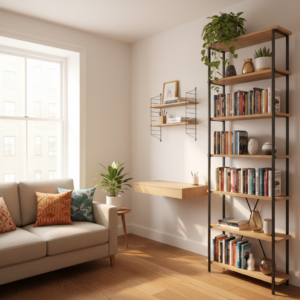
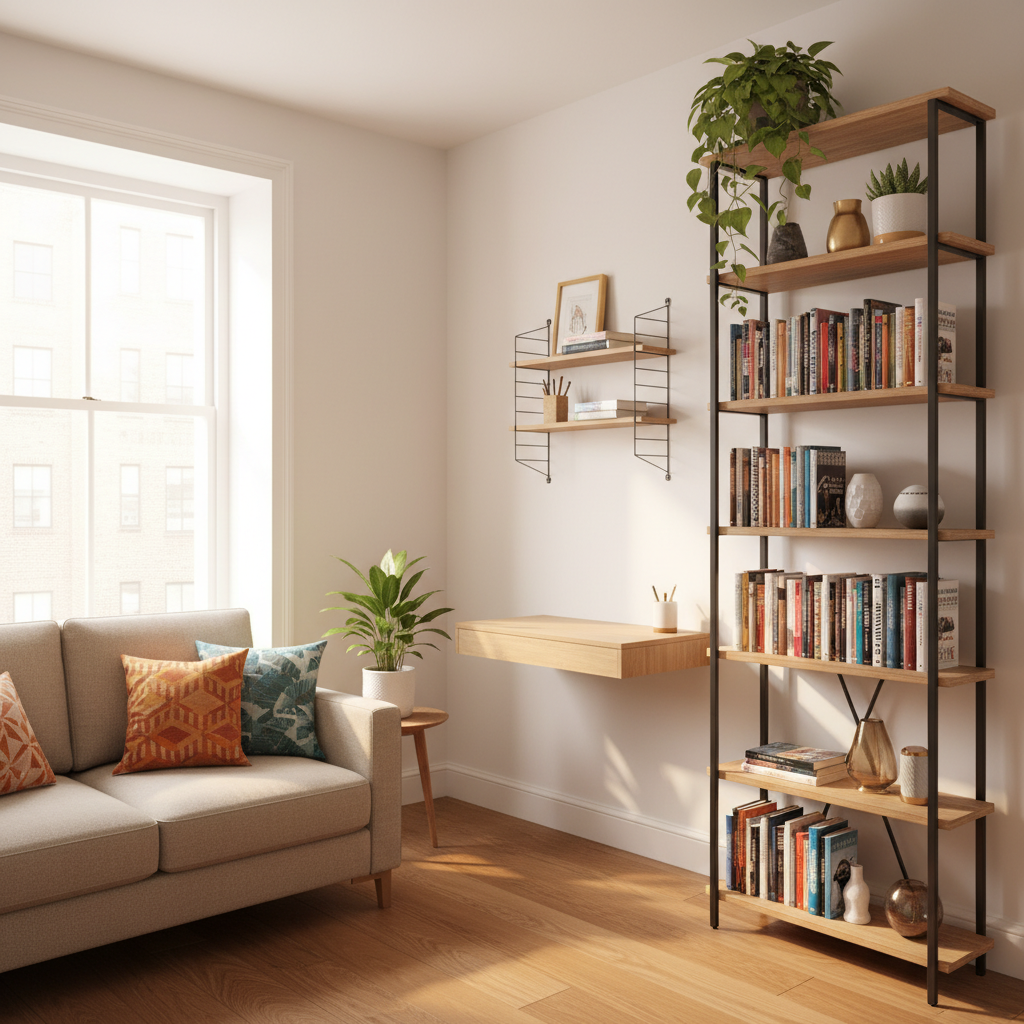
Floating shelves create a sleek, minimalist look while optimizing vertical space. They fit seamlessly into walls, while corner floating shelves efficiently utilize overlooked areas, adding storage without clutter. Both options maintain an airy feel, making them ideal for tight spots.
Under-Cabinet and Ceiling-Suspended Shelving
Under-cabinet sliding shelves target unused spaces beneath cabinets, while ceiling-suspended systems free up valuable floor space. These combined methods fully exploit vertical dimensions in small environments, maximizing storage capability.
Ladder and Tiered Shelves
Ladder-style and tiered shelves offer vertical storage that fits well in narrow areas. Their design helps preserve sightlines and maintain an open appearance, making them suitable for books and decorative items while enhancing storage efficiency.
Track-Mounted and Pegboard Systems
Track-mounted shelves and pegboard wall systems allow for flexible and customizable organization. These solutions adapt to changing storage needs and further enhance wall utilization, making them ideal for evolving compact spaces.
Freestanding and Room Divider Shelves
Freestanding shelves provide flexibility and versatility without needing wall installation, ideal for renters. Room divider shelving serves dual purposes—storing items and subtly dividing spaces—enhancing both function and design.
Material-Specific Shelving
The choice of material affects durability and aesthetics. Metal offers strength and moisture resistance, while wood adds warmth and character. Innovative materials like glass and lightweight composites also cater to specific needs, ensuring storage is not only functional but visually appealing.
Additional Innovative Solutions
Creative storage solutions like wall hooks, door-mounted shelves, and window niches further enhance vertical space utilization. These options contribute to a more organized, visually pleasing environment while maximizing storage potential.
Materials Used in Vertical Shelving
Various materials enhance vertical shelving effectiveness, balancing durability, cost, and aesthetics. Solid wood is prized for its natural look, while engineered wood offers a cost-effective alternative. Metal is known for its strength, fabric brings versatility, and lightweight materials are ideal for minimalist designs.
Metal
Metal shelving offers robust strength and ease of maintenance, making it suitable for both residential and industrial applications. Its modular design and durability meet heavy-duty storage needs effectively.
Fabric and Lightweight Materials
Fabric shelves provide a gentle storage solution, perfect for delicate items. Lightweight materials like acrylic and bamboo favor small spaces, creating an unobtrusive design while simplifying installation.
Sustainability Considerations
Many manufacturers focus on sustainable practices, sourcing eco-friendly materials and employing greener production methods. This not only minimizes environmental impact but also satisfies the growing demand for responsible consumption in design.
Wood and Engineered Wood
Solid wood offers durability and appealing aesthetics, while engineered options provide affordability and customization in design. Both materials, when chosen wisely, can enhance the long-term usability of shelving.
Design and Style Trends
Current trends emphasize the fusion of aesthetic appeal with practical functionality in compact living spaces. Floating shelves have gained popularity, merging style with effective use of wall space, while a shift towards richer woods and sustainable materials reflects a demand for sophistication in design.
Functional Considerations for Selection
When selecting shelving for compact spaces, weight capacity and material suitability are paramount. Considering modularity and adjustability enhances the functionality of shelving systems, accommodating a range of items as needs evolve. Ease of maintenance and proper installation ensure safety and usability, while smart planning maximizes vertical potential and maintains an uncluttered atmosphere.
Installation and Maintenance
Safe and effective installation of shelving units is critical, especially in compact living environments. Correct height placement and appropriate materials contribute to longevity, while straightforward maintenance varies by material, ensuring that shelving remains functional without excessive upkeep.
Innovative Architectural and Design Solutions
Emerging design trends in compact living capitalize on modular and flexible shelving systems that blend utility with aesthetics. These innovative approaches prioritize customization and integration of biophilic elements, ensuring that storage solutions enhance both functionality and the overall ambience of the space.
Manufacturing Processes and Technological Innovations
Modern shelving production increasingly emphasizes sustainability, with manufacturers adopting eco-friendly materials and processes. Technological advancements in shelving design are moving towards smart, adjustable systems that cater to diverse storage needs while enhancing usability and efficiency in various environments.
Examples and Case Studies
Real-world applications demonstrate how shelving solutions can effectively address storage challenges while enhancing aesthetic appeal. From wall-mounted desks that maximize space to versatile room dividers, innovative designs showcase the ability of shelving to adapt to the unique demands of compact living.
The content is provided by Avery Redwood, Home Upgrade News