
Summary
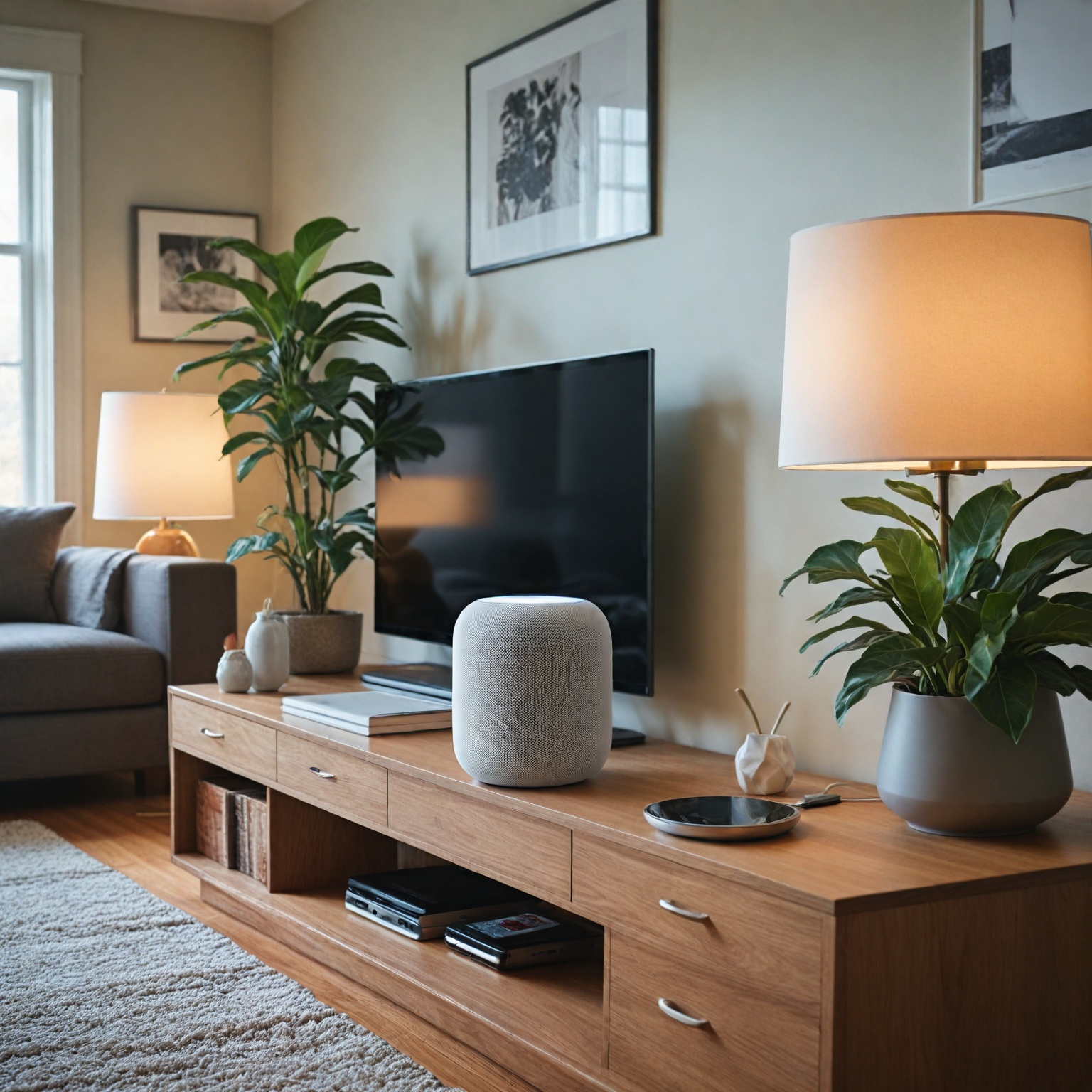
Apple’s intended entry into the smart home market has been postponed due to a delay in the development of Siri’s advanced features, which are vital to the operation of the planned HomePod device. The HomePod, a smart home hub, is designed to compete with existing products such as Google Home and Amazon’s Echo. Siri, Apple’s voice-activated assistant, is set to undergo significant enhancements, including AI-infused upgrades, which are integral to the HomePod’s functionality. The delay places Apple at a potential competitive disadvantage in the rapidly advancing tech industry.
The setback has generated significant discussion within the tech industry, particularly concerning privacy concerns and competitive pressure. Apple’s HomePod has been distinguished by its robust privacy policy, known as HomeKit, which is expected to make Apple the most privacy-friendly smart home provider in the market. However, issues such as supply chain disruptions, maintaining an innovation lead, and addressing privacy concerns are prominent challenges.
Despite these challenges and delays, Apple remains committed to the successful launch of its smart home hub. It’s anticipated to compete with products such as the Amazon Echo Show by combining a voice-assistant-based speaker with an iPad-like screen. The pricing strategy, though not confirmed, could reflect Apple’s premium market positioning or align with competitor’s prices.
While a concrete release date for the new Smart Display has not been confirmed, speculation suggests a launch in late 2023 or early 2024. The continuous advancement of Apple’s technology, alongside the addressing of privacy concerns, will remain crucial in maintaining its position within the competitive landscape of the tech industry.
Background
The smart home device industry has seen significant advancements over the past years with the emergence of prominent players such as Google Home and Amazon’s Echo. These devices, often equipped with digital assistants and security cameras, have been incorporated into households for various uses, such as visitor notifications and management.
Apple, a leading technology company, has announced its intention to enter the smart home market with a product that mirrors some of the features found in Google Home and Echo. This product, known as the HomePod, is expected to revolutionize the smart home device industry, with promises of delivering high-quality sound with minimal distortion. Apple’s Vice President of Marketing, Phil Schiller, announced during a presentation that the HomePod is intended to primarily function as a speaker.
At the heart of this innovation lies Siri, Apple’s digital assistant, which is set to undergo a significant overhaul. Unlike other digital assistants such as Amazon’s Alexa, Siri is integrated across multiple Apple devices – iOS, WatchOS, MacOS, and TvOS, ensuring a uniform user experience. This integration would extend to the HomePod, providing users with a seamless and interactive experience.
One distinguishing factor of Apple’s smart home device is its robust privacy policy. Termed as HomeKit, this platform sets Apple apart as the most privacy-friendly smart home provider in the market. Its policy explicitly outlines that data collected by Siri would solely be used for platform improvement and not sold to third parties.
Despite these advanced plans, Apple’s smart home hub has not yet been launched due to the delay in Siri’s progress. This delay has been attributed to the anticipation surrounding Siri’s AI-infused upgrade. Apple first hinted at this upgrade during its developers conference but is still working towards its completion.
In the interim, Apple’s competitors have launched their own products, such as Amazon’s Echo Show, which offers video calling and playback features. Despite this competition, Apple remains committed to developing a high-quality product that aligns with its reputation for aesthetic design and functional excellence.
Delay in Siri Progress
Apple’s highly anticipated improvements to Siri, their voice-activated assistant, are reportedly being delayed . This is due to the setbacks in the development of Apple Intelligence which is focused on enhancing Siri’s AI features . The enhancements, which were expected to be released in spring, were meant to include Siri’s ability to manage in-app actions for home automation, rewrite emails, and summarize cluttered inboxes .
This delay puts Apple at a competitive disadvantage in the fast-paced tech industry, as its competitors continue to surge ahead . Tech giants such as Google and Amazon are incorporating AI functions into their voice assistants . For instance, Google has already introduced its Gemini model into its assistant . Similarly, Amazon unveiled Alexa+, which offers more natural interactions and personalized assistance . It is noteworthy that, amid these advances from competitors, Apple’s Siri processes an astonishing 1.5 billion user requests daily .
The setbacks in Siri’s development and subsequent delays in product launches not only disrupt Apple’s supply chain but also put added pressure on the company in an already intensely competitive market . This emphasizes the need for Apple to continually innovate and invest in research and development to stay ahead in the global market and maintain its competitive edge .
Impact on Apple’s Smart Home Hub Launch
This delay may position Apple behind its competitors, such as OpenAI, Amazon, and Google, especially with the advent of generative AI technology. Apple is currently re-strategizing to make another attempt at the smart home market. Reportedly, this involves combining a voice-assistant-based speaker (Siri) with an iPad-like screen to compete with existing smart displays, such as the Amazon Echo Show.
In terms of pricing, Apple’s HomePad may be priced higher than its competitors, reflecting Apple’s premium market positioning. However, it’s also reported that the pricing could align with competitors, potentially in the $150 to $230 range. This strategic positioning, coupled with Apple’s commendable privacy policy, may provide an edge for Apple in the smart home market.
However, Apple also faces several challenges that could influence its success in this market. As technology rapidly evolves, maintaining an innovation lead is essential for Apple, especially with constant competition from rivals such as Samsung, Google, and Microsoft. Issues such as disruptions in the supply chain can also cause delays in new product launches. Furthermore, as smart devices’ ubiquity grows, the privacy concerns associated with personal digital assistants need to be addressed. The present privacy laws need to be strengthened, and Apple, along with other companies like Amazon and Google, will play a crucial role in this aspect.
Industry Reactions
The delayed launch of Apple’s smart home hub and the perceived slow progress of Siri have sparked considerable commentary in the tech industry and beyond. Some industry reactions to the delay were critical, pointing out that Apple’s strategy seemed to be combining the functionalities of two less successful products and adding a facetime camera. The question of the proposed smart home hub’s cost also surfaced, with predictions that the price would be higher than that of the Amazon Echo, given Apple’s history of pricing products at a premium.
Future Expectations
In terms of future prospects, Apple remains committed to launching its own Smart Display device. It is expected that this device will serve as a central hub for smart home functions, heavily reliant on Siri’s updated capabilities. The new Siri is set to be more intelligent and capable of protecting user data through on-device processing. However, due to the delayed Siri updates, the release of this new Smart Display has been postponed.
To keep up with its competitors, Apple must overcome its current challenges and ensure timely product launches. There is no concrete information about the price of the upcoming Smart Display. However, it is likely that it will be higher than Amazon’s echo device, as Apple is known for its premium pricing strategy. The device is also expected to be marketed as a Siri/AirPlay device and may incorporate some form of Beats technology.
While Apple is pushing for innovation, it is also conscious of privacy issues associated with personal digital assistants. As the in-home digital assistant devices become increasingly popular, ensuring privacy becomes a more challenging task. Consequently, it will be essential for Apple to strike a balance between advancing its smart home hub technology and addressing these privacy concerns.
Finally, it is important to mention that while the specific release date is not confirmed, at least one new product from Apple could arrive late next year or in early 2024. However, these dates are not specific to the Smart Display and thus remain speculative.
The content is provided by Jordan Fields, Home Upgrade News