Summary
Incorporating laundry facilities in apartments requires mindful strategy due to limited space, structural challenges, and building codes. Unlike single-family homes, apartments often lack designated laundry areas, necessitating compact solutions like ventless washer-dryer combos or stackable units, which can fit into small spaces without extensive renovations. Innovative designs, such as multi-functional zones and ergonomic features, can enhance usability and comfort while ensuring compliance with safety standards.
Challenges of Adding Laundry Space
Limited square footage and structural constraints complicate adding laundry space in apartments. Finding functional storage for laundry essentials becomes difficult without a dedicated area. Plumbing challenges arise particularly in units not originally designed for laundry setups, often requiring compliance with local plumbing codes, which can be complex and costly to navigate.
Ventilation issues also affect enclosed laundry spaces, as inadequate airflow can damage finishes and reduce appliance lifespans. Solutions may involve installing ducted exhausts or fans to ensure proper air circulation. Additionally, noise and vibration from appliances can disrupt residents, necessitating noise-mitigation techniques during design.
Popular Laundry Appliances
Compact laundry appliances are essential for small apartments. Ventless washer-dryer combos, typically 23 to 27 inches wide, integrate washing and drying functions, making them ideal for limited spaces. Stackable laundry centers, with a dryer stacked on a washer, effectively use vertical space, while portable washers provide flexibility for occasional use and easy storage.
When space permits, installing compact appliances can optimize functionality, but careful consideration of plumbing and electrical setups is necessary, as they require similar connections as full-sized machines. Creative repurposing of closets or alcoves for laundry areas can also effectively utilize unoccupied spaces without major renovations.
Innovative Laundry Solutions
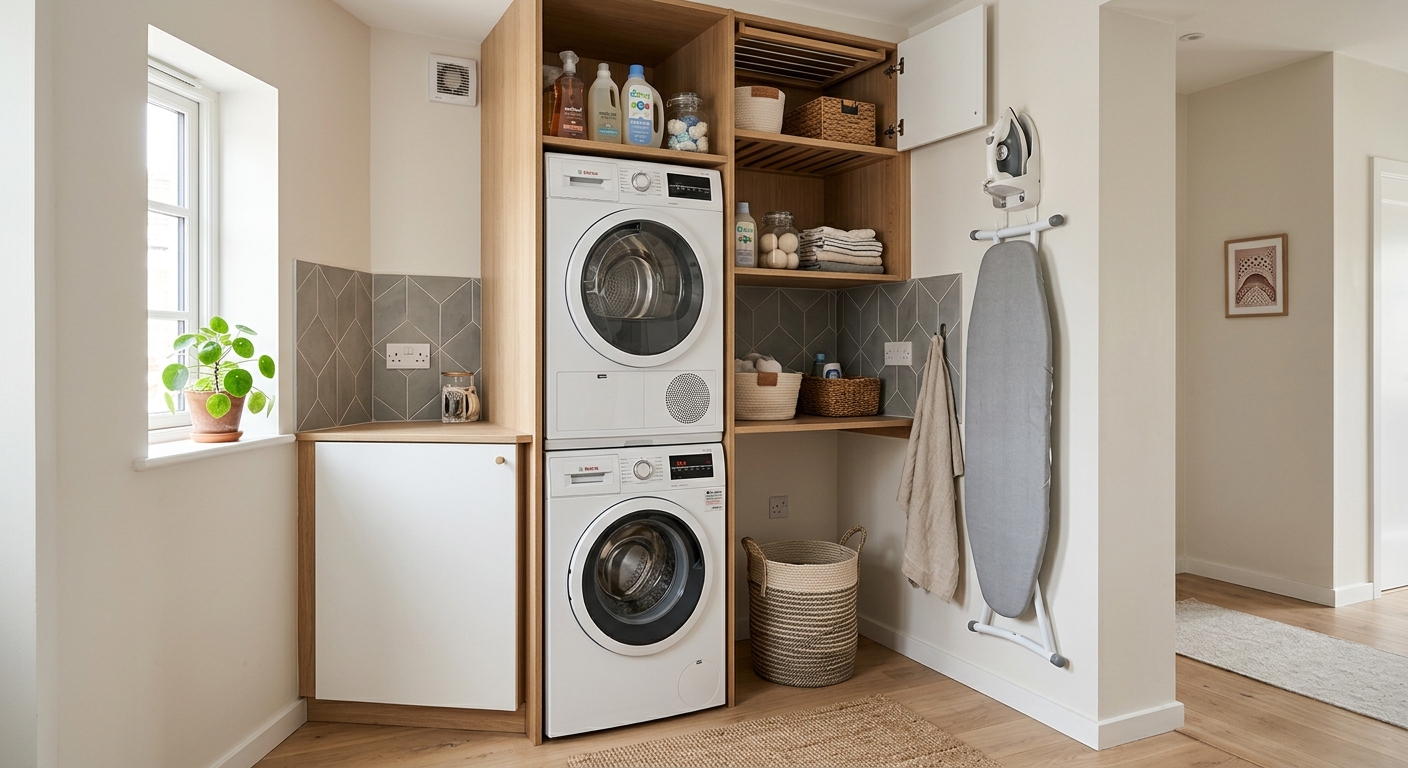
Maximizing laundry space in apartments calls for innovative solutions. Stackable units and all-in-one washer-dryer combos can fit into tight areas while maintaining full functionality. Utilizing vertical space, through shelves or cabinetry, keeps essentials organized and accessible without cluttering surfaces.
Transforming underused areas into laundry zones is gaining popularity. Concealing laundry setups behind doors or within dedicated nooks offers aesthetic appeal while preserving space. Maintaining a clear area in front of appliances is advisable for ease of movement and user comfort.
Design and Aesthetic Approaches
Strategic design choices can turn small laundry areas into stylish, efficient spaces. A clean color palette with cool tones can create a calm, modern atmosphere. Incorporating multi-functional elements, such as open shelving for supplies and innovative door solutions like pocket doors, enhances both functionality and design.
Maximizing vertical space with stackable units and integrated cabinetry can provide ample storage without overwhelming the room. Combining laundry with other functional areas, such as mudrooms, can enhance convenience and save valuable square footage.
Ergonomic and User-Friendly Features
Effective laundry space design balances function with ergonomic features to improve user experience. Prioritizing layout simplifies workflow by incorporating working heights tailored to reduce strain, along with adequate lighting and proper ventilation for comfort. Incorporating features such as pocket doors and fold-down counters optimizes space while ensuring easy access to folding surfaces.
Effective storage solutions, including vertical shelving and mobile carts, maintain organization. Bright colors and mirrored surfaces can create an inviting atmosphere, enhancing the overall experience within compact areas.
Installation Considerations
When adding laundry facilities, it’s essential to address plumbing, electrical requirements, and ventilation needs for a safe and efficient installation. Plumbing codes must be adhered to, particularly when modifying existing structures not originally designed for laundry.
Electrical circuits must meet safety requirements, with dedicated circuits and GFCI protections being critical. Proper ventilation is crucial to avoid moisture build-up and maintain air quality, especially in enclosed spaces.
Cost and Budget Strategies
Cost efficiency is vital when upgrading laundry spaces in apartments. Simple updates, such as applying moisture-resistant paint, can significantly enhance the room’s aesthetic on a budget. For larger projects, engaging professionals can provide accurate cost estimates and streamline renovations.
Environmental Impact and Energy Efficiency
Incorporating laundry space allows for improving environmental sustainability. Utilizing energy-efficient appliances helps reduce resource consumption, while proper ventilation prevents moisture buildup, enhancing longevity and reducing waste. Compact washers and dryers optimize water and electricity usage, making them suitable for space-constrained living. Creative solutions, such as transforming underused areas into laundry zones, further minimize environmental impact.
Case Studies and Practical Examples
Reviewing case studies can provide insights into effective laundry space designs. Successful examples often showcase maximizing storage through built-in shelves and transforming closets into compact laundry areas with stackable units. These practical instances inspire residents to adapt and personalize their laundry setups based on available space.
The content is provided by Avery Redwood, Home Upgrade News