Summary
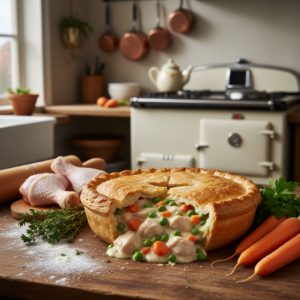
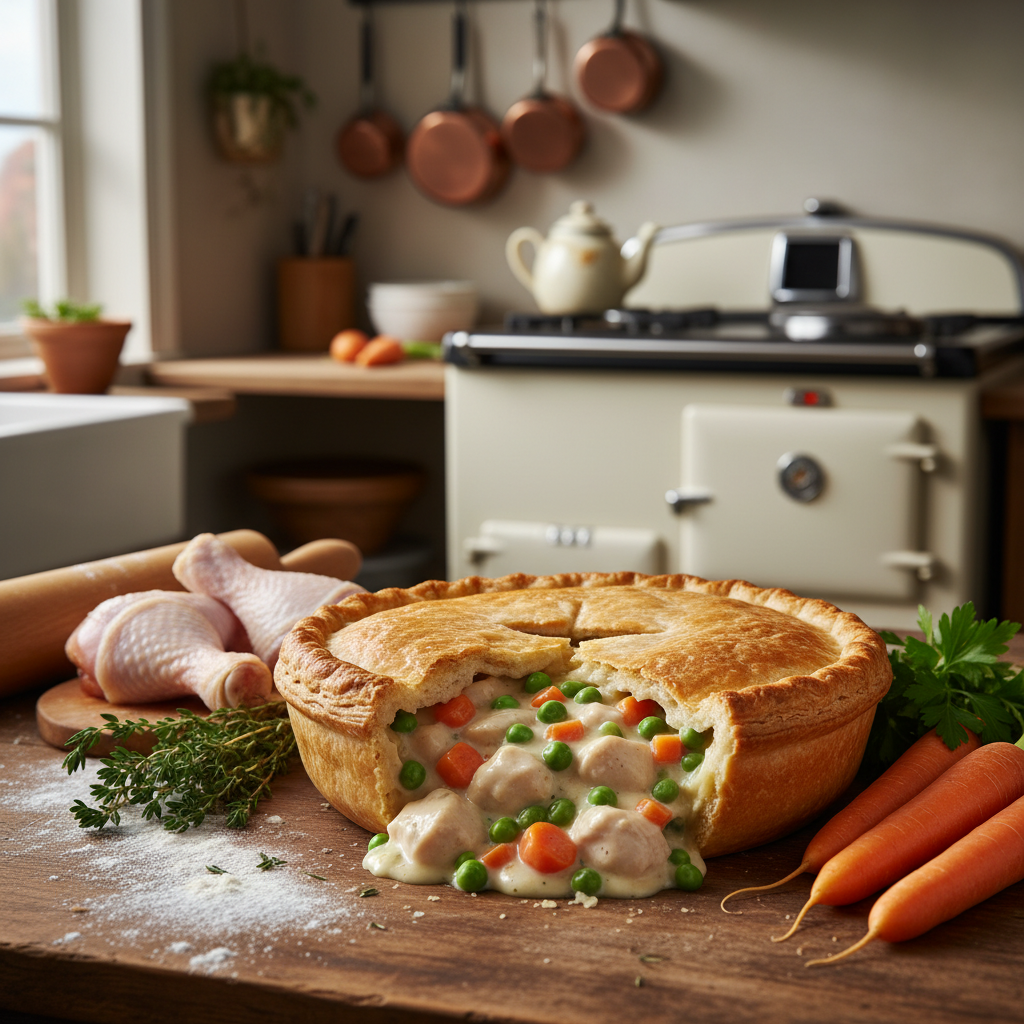
Irresistible Classic Chicken Pot Pie is a favorite comfort food, featuring tender chicken, vegetables, and a creamy sauce in a flaky crust. Originating over 2,500 years ago, its evolution from open-faced pies to the American-style dish showcases a rich cultural heritage. By the 19th century, it became a staple in the U.S. for its nutritious one-dish convenience, with regional variations highlighting its adaptability. The dish’s nostalgic value also reflects its role in home-cooked traditions, with contemporary recipes allowing for dietary adjustments to suit various preferences.
History
The chicken pot pie dates back to ancient Greece, where early meat pies were created without a top crust. During Elizabeth I’s reign in England, refining pie-making techniques helped establish it as a prestigious dish. In the 18th century, English settlers adapted their recipes in America, leading to the first documented American chicken pie in Amelia Simmons’ 1796 cookbook. By the 19th century, it evolved into the classic chicken pot pie, incorporating vegetables and thick gravy, amid influences from diverse immigrant traditions and historical culinary practices.
Ingredients
A traditional chicken pot pie features a flaky crust enveloping a filling made from chicken, vegetables, and a creamy sauce. Common ingredients include broiler chicken, carrots, peas, and celery, and the rich filling is thickened with a roux. Various crust types, such as buttery shortcrust or puff pastry, add unique textures. Recipe adaptability allows for substitutions based on personal taste or dietary needs, making it an all-in-one nutritious meal that combines protein, vegetables, and carbohydrates.
Preparation
Preparing chicken pot pie involves cooking seasoned chicken and sautéing vegetables for a flavorful filling. A roux is made from butter and flour to thicken, followed by adding liquid for a rich consistency before combining with chicken and vegetables. While homemade crust enhances the dish, pre-made options can save time. Prepping components in advance is practical for busy nights, and variations in vegetables and herbs offer customization for taste and seasonal availability, ensuring comfort and satisfaction in each serving.
Regional Variations
The versatility of chicken pot pie is evident in its regional adaptations across the U.S. The Pennsylvania Dutch version, particularly the “bot boi,” utilizes homemade dumpling-style noodles instead of a crust, showcasing a different apporach to pot pie. Early American versions lacked vegetables, which only became common in the 1870s as seasonal produce became widely available. Contemporary adaptations reflect local ingredients and preferences, exemplifying the dish’s ability to evolve while maintaining its comforting essence.
Nutritional Information
Nutritional content in chicken pot pie varies between homemade and store-bought versions. A typical homemade serving has about 199 calories, with macronutrient ratios that can shift based on ingredient choices. Frozen varieties differ widely, with brands offering varying fat and calorie counts. Customizing recipes by enhancing the vegetable content can improve nutritional value without significantly increasing calories, allowing for a healthier version without sacrificing flavor.
Cultural Significance
Chicken pot pie is deeply rooted in culinary traditions, evolving from ancient forms to modern interpretations in both English and American cultures. As settlers brought recipes to America, the pot pie became a symbol of home-cooked comfort, embraced during chilly months. Its versatility extends beyond chicken to include regional variations, showcasing its broad connection to diverse culinary heritages. Celebrated as comfort food, it embodies nostalgia and the communal essence of shared meals in family kitchens.
Serving Suggestions and Presentation
To best enjoy chicken pot pie, serve it warm, presenting it in ramekins or a pie dish to showcase its golden crust. Pairing it with a fresh salad or steamed vegetables can balance the richness, enhancing the meal’s appeal. The hearty filling makes it a crowd-pleaser, likely to become a family favorite thanks to its familiar taste and satisfying nature.
In Popular Culture
Chicken pot pie serves as a comforting symbol in popular culture, celebrated for its warmth and tradition. Its history, from ancient culinary practices to modern interpretations, reinforces its status as a beloved comfort food. Frequently referenced in literature and media, it continues to evoke nostalgia as a representation of wholesome family meals, reflecting broader trends of culinary adaptation and appreciation.
The content is provided by Avery Redwood, Home Upgrade News