Summary
Unlocking a Smarter, Safer Home: Discover 4 Fantastic Benefits of DIY Home Assistant Smart Displays explores the growing trend of do-it-yourself (DIY) smart home interfaces built on the open-source Home Assistant platform. These smart displays combine customizable visual dashboards and natural language voice control to centralize management of various connected devices such as lighting, security cameras, thermostats, and smart locks. By leveraging modular hardware—ranging from single-board computers like Raspberry Pi to repurposed tablets—DIY Home Assistant smart displays empower users to create personalized, privacy-focused smart home ecosystems without relying on proprietary cloud services.
Notable for their flexibility and extensibility, these smart displays support a wide array of communication protocols including Zigbee, Z-Wave, Thread, and emerging standards like Matter, enabling broad interoperability across diverse devices. Voice control is facilitated by the open-source Assist voice assistant, which operates locally or via community-driven models, enhancing user privacy and responsiveness. The ability to tailor dashboards and automate home functions according to individual preferences offers significant improvements in convenience, energy efficiency, and home security.
Security and privacy are key advantages of DIY Home Assistant smart displays. Unlike many commercial alternatives, these systems allow users full control over software updates, network access, and data flows, reducing dependence on external cloud servers and minimizing potential vulnerabilities. Best practices include enforcing IP bans, using HTTPS via reverse proxies, and regular software maintenance to safeguard against attacks. However, challenges remain, such as hardware reliability concerns, the complexity of multi-protocol integration, and the technical skill required for setup and ongoing management.
Looking forward, the adoption of open standards like Matter and advancements in customizable voice assistant technology promise to simplify device onboarding and enhance smart home interoperability. Coupled with ongoing community-driven development and modular hardware options, DIY Home Assistant smart displays are positioned to revolutionize home automation by making smart homes more accessible, adaptable, and secure for users worldwide.
Technical Architecture and Functionality
DIY Home Assistant smart displays are built upon a flexible and modular technical architecture that combines open-source software with versatile hardware components. At the core, Home Assistant provides an open-source home automation platform that integrates diverse smart devices into a unified ecosystem, accessible through customizable dashboards and natural language voice control.
Hardware Components
The hardware backbone typically involves single-board computers (SBCs) such as the Raspberry Pi or Amlogic-powered boards. These SBCs offer a compact, low-power, and affordable solution capable of running Linux-based operating systems and handling 4K video playback, multiple display outputs, and extensive connectivity options including USB 3.0, HDMI, eMMC storage, and Gigabit Ethernet. The availability of GPIO pins enables direct interfacing with relays, sensors, and custom peripherals, allowing users to build highly personalized smart home setups with physical control panels, buttons, or displays. Furthermore, the hardware choice is highly adaptable; users can repurpose existing Android tablets or ePaper displays to serve as dedicated smart home interfaces. This reuse approach not only reduces electronic waste but also empowers users to maintain control over firmware updates and privacy by eliminating unnecessary cloud connectivity.
Software and Protocol Integration
Home Assistant’s software stack is open source, providing full access to source code, configuration schematics, and an extensive repository of automation scripts that facilitate a DIY approach to home automation. The Lovelace dashboard system enables users to create tailored visual interfaces that aggregate data such as HVAC status, energy usage, and security alerts into sleek, purpose-built displays. Connectivity and interoperability are achieved through support for a wide array of communication protocols, including Zigbee, Z-Wave, Thread, LoRa, and Wi-Fi variants. Although the smart home landscape includes multiple competing standards, Home Assistant continuously expands its integrations, leveraging community contributions to maintain broad compatibility. The emerging Matter protocol promises to further simplify device onboarding and cross-platform functionality by running over Wi-Fi and Thread networks, although adoption by major manufacturers is ongoing.
Voice and Interaction Layers
In addition to graphical interfaces, Home Assistant incorporates voice control through an open voice foundation known as Assist. This system allows users to interact with their smart home devices using natural language across various hardware platforms—mobile phones, tablets, smartwatches, and even legacy telephones—enabling seamless conversational control and customization. Localized speech-to-text processing options are available for enhanced privacy and responsiveness on lower-power hardware.
System Architecture and Connectivity
Smart displays and control hubs typically operate on low-power, low-bandwidth, long-range wireless protocols such as Zigbee, Thread, and LoRa, often integrated into multifunctional devices like smart speakers or routers. Most smart home devices communicate over the 2.4 GHz frequency, with newer Wi-Fi standards like Wi-Fi 6E and the forthcoming Wi-Fi 7 utilizing the 6 GHz band to improve speed and reduce interference. The combination of open-source software, customizable hardware, and multi-protocol support empowers users to design smart home systems that prioritize privacy, flexibility, and longevity, breaking free from proprietary ecosystems and enabling truly personalized, responsive smart environments.
Key Features and Capabilities
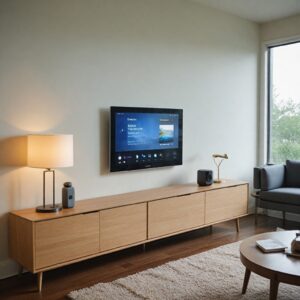
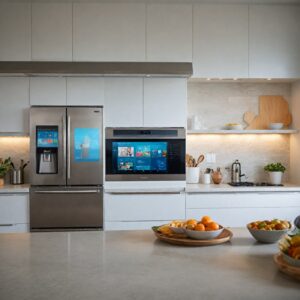
DIY Home Assistant smart displays combine voice recognition technology with a visual interface, enabling users to interact naturally and efficiently with their smart home systems. These devices serve as central hubs that allow for seamless control of various smart home components, such as lighting, locks, cameras, and thermostats, all accessible from a single, intuitive dashboard. One of the standout capabilities of these smart displays is their customizability. Users can build and personalize dashboards with drag-and-drop tools, selecting from different card types to visualize data or control devices according to their preferences. This flexibility extends to creating sleek, purpose-built displays that consolidate vital home information like HVAC status, energy usage, and security alerts, avoiding the clutter common to generic tablet interfaces. Additionally, the displays can be programmed to update in real time to provide alerts, such as motion detection notifications, ensuring active participation in home automation rather than functioning as passive screens.
Voice control is a fundamental feature of Home Assistant smart displays. Powered by an open voice foundation and enriched by community knowledge, the built-in voice assistant, Assist, enables natural language interaction with the entire smart home setup. It can be accessed across various devices including smartphones, tablets, smartwatches, and even traditional telephones. For enhanced privacy and efficiency, some languages support Focused Local models that perform speech-to-text processing locally on lower-power hardware, reducing reliance on cloud services.
In terms of security, these smart displays integrate with smart locks to provide robust access management solutions. Users can create individual accounts, assign unique access codes or virtual keys, and establish permissions such as temporary guest access or scheduled entries. These features are complemented by monitoring capabilities, including entry logs and remote access control, which enhance both convenience and property security across different settings, including multifamily and commercial properties.
Benefits of DIY Home Assistant Smart Displays
DIY Home Assistant smart displays offer a multitude of benefits that enhance the functionality, convenience, and security of modern smart homes. By combining voice assistance with customizable visual interfaces, these displays serve as centralized hubs for managing connected devices and accessing real-time information with ease. One of the key advantages is the ability to create highly personalized dashboards tailored to specific household needs. Users can design sleek, purpose-built interfaces that display vital data such as HVAC status, energy usage, and security alerts all on a single screen without the clutter typical of generic tablet interfaces. This level of customization extends to controlling Home Assistant through natural language with tools like Assist, which leverages community-driven knowledge to enable voice control on multiple devices including smartphones, tablets, and smartwatches.
In addition to convenience, DIY smart displays significantly enhance home security. Integrating smart locks with these systems allows for detailed access management, including user accounts, permissions, entry logs, and scheduled access. This is particularly useful for families, multifamily residences, and commercial properties seeking both security and flexibility. Furthermore, the open-source nature of many Home Assistant platforms empowers users to implement strong security practices, such as closing open ports, enforcing SSL encryption, and keeping systems updated to reduce vulnerabilities.
Another benefit is the ability to maintain local control over smart home functions, reducing dependence on cloud services and mitigating privacy concerns. Some setups support focused local models for speech recognition that run efficiently on low-power hardware, ensuring responsive voice control even without constant internet connectivity. The modular hardware approach also encourages hands-on learning and creativity, allowing users to build or customize circuits and control panels with components like Raspberry Pi boards and Power over Ethernet setups.
Ultimately, DIY Home Assistant smart displays revolutionize household management by making everyday routines smoother and more integrated. They empower users to transform their homes into smarter, safer environments that adapt to their unique lifestyles, all while fostering an engaging and customizable smart home experience.
Hardware Options and Their Impact on Functionality
DIY Home Assistant smart displays offer a wide range of hardware options that cater to different needs and budgets, significantly impacting their functionality and user experience. One of the primary advantages of these smart displays is the ability to choose hardware that matches specific requirements, from basic ePaper screens to advanced Android tablets. This flexibility not only allows for customization but also encourages the reuse of older devices that might otherwise be discarded, promoting sustainability and cost-effectiveness.
At the core of many DIY smart displays are single-board computers (SBCs), which have evolved into powerful, compact platforms capable of handling complex tasks. For example, SBCs powered by processors like the Amlogic S905X3 support 4K video playback, dual display outputs, and run various Linux-based operating systems. Features such as USB 3.0 ports, HDMI output, eMMC storage, and Gigabit Ethernet contribute to a desktop-like experience in a small form factor. Additionally, GPIO headers provide extensive control over connected sensors, motors, and other external hardware, making these boards ideal for smart home automation, coding education, and custom network tools.
The choice of hardware also influences security and privacy. Unlike many commercial smart displays that rely on cloud connectivity, DIY solutions allow users to control their devices entirely, eliminating unnecessary external data streams. The only required data exchange is typically with the Home Assistant server, reducing potential vulnerabilities and enhancing privacy. Furthermore, the modularity of these systems permits ongoing updates and modifications, ensuring that hardware does not become obsolete due to proprietary firmware restrictions.
Smart displays designed with visual-forward interfaces enhance interaction within the home environment, making them practical for various use cases including media centers, home automation control panels, and interactive information hubs. Though some high-end smart displays can be costly, investing in customizable DIY hardware can provide families with a significant upgrade in home convenience and automation capabilities. Moreover, many hardware options are compatible with a range of platforms, including phones, tablets, and custom voice-controlled devices, broadening their usability.
Popular Open-Source Platforms and Software Stacks
Open-source home automation platforms have become increasingly popular among DIY enthusiasts due to their emphasis on privacy, flexibility, and customization. As of 2025, Home Assistant leads as the most widely adopted open-source platform, favored for its powerful capabilities and strong focus on data ownership and control without reliance on third-party cloud services. However, this flexibility requires users to have a certain level of technical skill to properly install, configure, and maintain their setups.
Alongside Home Assistant, several other platforms stand out in the open-source smart home ecosystem. OpenHAB is known for its unmatched device compatibility, supporting a broad range of smart home products and protocols, making it an excellent choice for those looking to integrate diverse devices into a unified system. Domoticz offers a more beginner-friendly approach with an easier setup process, catering to users who prefer a simpler entry point into home automation.
Additional options such as Node-RED, Homebridge, and Gladys Assistant provide further alternatives depending on specific needs, ranging from flow-based programming to bridging Apple HomeKit devices and more. OpenMotics distinguishes itself by combining open-source software with modular hardware kits, allowing users to build and customize their smart home circuits at a granular level. It offers full access to source code, schematics, and over 500 automation scripts, ideal for those who enjoy a hands-on DIY experience that extends beyond software into hardware customization.
While open-source platforms offer significant advantages in terms of privacy and personalization, they may also come with challenges such as smaller contributor communities, which can lead to fewer updates or slower resolution of issues compared to proprietary solutions. Nevertheless, these platforms empower users to be the architects of their smart home environments, crafting systems that align closely with their creativity, budget, and privacy standards, supported by vibrant online communities ready to offer assistance and inspiration.
Community Resources and Support Networks
The development and adoption of DIY Home Assistant smart displays are heavily supported by a vibrant and engaged worldwide community. This community plays a crucial role in advancing open, local, and private voice assistant technologies across multiple languages, contributing knowledge and collaboration to overcome the complexities of such an ambitious project. Users of open-source home assistant platforms benefit from this communal support, which empowers them to customize their smart homes extensively, turning them from mere users into creators and directors of their own comfort and convenience.
One notable community-driven initiative is Assist, an open voice control system built on a foundation of community-provided knowledge, enabling natural language control of Home Assistant devices. The presence of such platforms fosters an environment where DIY enthusiasts can start small, experiment, and progressively build highly personalized smart home setups with guidance and inspiration from other community members.
Additionally, the community is instrumental in developing and sharing cutting-edge hardware and software solutions, such as display options and digital signage tools that integrate with Home Assistant. These resources include open source digital signage software and tools like Chromecast Kiosk or Gogolplex Theatre, which facilitate synchronized content across multiple screens in various settings, enhancing flexibility and real-time updates for users.
Security Considerations and Best Practices
When integrating Home Assistant smart displays into a DIY smart home setup, ensuring robust security is paramount to protect personal data and prevent unauthorized access. Home Assistant manages critical devices such as smart lights, cameras, and locks, which, if compromised, could lead to serious privacy breaches or control over home systems by malicious actors.
A primary security measure is enforcing IP bans on repeated failed login attempts. Configuring Home Assistant to automatically ban IP addresses after multiple unsuccessful login tries helps mitigate brute force and credential stuffing attacks. However, users should exercise caution when installing third-party add-ons, as some may introduce vulnerabilities due to excessive permissions, outdated code, or unverified sources.
Another best practice involves the use of reverse proxies like Nginx, Caddy, or Traefik to enforce HTTPS connections, ensuring encrypted communication between devices and the Home Assistant server. Disabling plain HTTP access in the configuration files further strengthens network security by preventing unencrypted data transmission. Additionally, implementing firewalls using tools such as UFW (Uncomplicated Firewall) or iptables can restrict access to only trusted IPs and ports, reducing the attack surface.
Keeping all software dependencies up to date—including the Home Assistant core, Python environment, Docker containers, and the Supervisor—is critical to patch known vulnerabilities and enhance system stability. Running outdated firmware or software exposes the smart home ecosystem to increased risks, especially when devices are exposed to the internet via open ports.
One significant advantage of DIY Home Assistant smart displays is the ability to control the device’s software environment fully. Unlike proprietary hardware that may rely on cloud connectivity and face potential firmware obsolescence, DIY displays can be monitored continuously, updated promptly, and configured to restrict data streams solely to the Home Assistant server. This reduces exposure to external threats and enhances privacy by avoiding unnecessary cloud interactions.
Furthermore, users should avoid publicly disclosing any security vulnerabilities without first coordinating with the Home Assistant development team. Responsible disclosure includes providing detailed impact descriptions and allowing at least 90 days for fixes before public release. This approach protects the broader user community by preventing exploitation before patches are available.
Future Trends and Developments
The future of DIY home assistant smart displays is closely tied to the evolution of open standards and enhanced interoperability in the smart home ecosystem. One significant development is the ongoing rollout of the Matter protocol, which aims to unify the fragmented landscape of smart home communication standards such as Zigbee, Z-Wave, and Samsung SmartThings. Although major industry players like Google, Apple, Amazon, and Samsung have been slow to fully integrate Matter, the release of updated specifications—such as Matter 1.4 and 1.4.1—introduces expanded support for energy-related devices including solar panels, batteries, heat pumps, and water heaters, enabling more advanced home energy management automation. Additionally, enhancements like the Enhanced Setup Flow simplify device onboarding by displaying regulatory terms and conditions without needing manufacturer apps. Matter currently operates over Wi-Fi and Thread network layers, using Bluetooth Low Energy for device setup, which promises faster and more seamless integration across multiple platforms like Alexa and Google Assistant.
Beyond connectivity protocols, voice assistant technology is anticipated to continue advancing, though current versions are still considered previews of a more comprehensive future. The potential for customizable, AI-powered voice assistants that integrate deeply with home automation systems remains a key area of innovation. Projects like Home Assistant’s open voice foundation empower users to tailor their voice interactions and experiment with AI conversations across diverse devices—from smartphones and tablets to smartwatches and even traditional telephones.
On the hardware and interface side, customization will play an increasingly important role. DIY smart displays can be tailored using built-in dashboard builders or custom-coded interfaces to provide streamlined, purpose-built control panels that display vital home information such as HVAC status, energy usage, and security alerts without the distractions of generic tablet interfaces. This approach enhances usability and ensures that smart displays function as true extensions of a user’s lifestyle and workflow.
The open-source nature of Home Assistant and similar projects also ensures that users maintain local control and prioritize privacy. This self-hosted model requires users to manage updates, monitor security, and control data flows, fostering a more secure smart home environment free from reliance on third-party cloud services. The robust community-driven development model offers continual innovation and user empowerment, though some smaller projects may experience slower updates or issue resolutions due to limited contributor bases.
Collectively, these trends point toward a future where smart home technology is more interoperable, energy-efficient, customizable, and privacy-focused, enabling homeowners to create truly smarter and safer living environments through DIY solutions.
The content is provided by Harper Eastwood, Home Upgrade News