Summary
Transform Your Backyard with Affordable Outdoor Movie Night Gear under $200 | Young House Love
Outdoor movie nights have become a popular and accessible way to transform ordinary backyards into engaging home theaters, blending the magic of cinema with the fresh air and ambiance of the outdoors. With advances in projection and audio technology, creating an enjoyable alfresco viewing experience no longer requires a large budget. By selecting carefully chosen gear—such as portable projectors, dedicated screens, and quality audio equipment—priced under $200, homeowners can easily host memorable movie nights for family and friends.
This affordable approach to outdoor cinema builds on a long tradition dating back to early 20th-century public film screenings, evolving from simple street projections to sophisticated backyard setups that balance convenience, portability, and performance. Modern gear often includes WiFi-enabled projectors capable of streaming directly from popular services, Bluetooth connectivity for external speakers, and screens optimized for 4K content, making outdoor movie nights both versatile and user-friendly.
Key considerations for an optimal outdoor movie experience include choosing the right projector brightness and screen size, enhancing sound with external speakers, and ensuring stable, weather-conscious setups. Additional accessories such as tripods, power stations, and weather-resistant components further improve usability and durability, especially in variable outdoor conditions. These enhancements help overcome challenges like limited built-in projector audio and environmental factors, allowing for immersive viewing that rivals indoor theaters.
Beyond entertainment, outdoor movie nights foster social connection and community engagement by encouraging neighbors, friends, and families to gather in relaxed, open-air settings. Their affordability and ease of setup make them an increasingly popular alternative to traditional cinema outings, combining cost-effective fun with creative use of outdoor spaces. As interest grows, continued innovation and user feedback are driving improvements in both equipment and experience, ensuring that backyard movie nights remain an enduring and beloved pastime.
History and Evolution of Outdoor Cinema
Outdoor cinema has a long and rich history, dating back to the early 20th century. One of the earliest known instances occurred in the summer of 1900, when films were projected outdoors in the cafés of Syntagma Square, Athens. By around 1916, outdoor cinemas had made their way to Berlin, Germany, marking the spread of this form of entertainment across Europe.
Originally reliant on either digital or analog movie projectors paired with scaffolded or inflatable screens and sound systems, outdoor cinemas offered a novel way to experience films under the open sky. Over the decades, the concept evolved from simple street-side projections to elaborate setups in sprawling lawns, cozy backyards, majestic parks, and even bustling city rooftops. This evolution reflects the growing popularity of outdoor movie viewing as both a social and recreational activity.
Today, outdoor movies have become a beloved summer tradition, allowing people to enjoy classic films and new releases alfresco, often transforming ordinary spaces like backyards and parks into unique entertainment venues. Whether for romantic date nights, family gatherings, or fun social events with friends, outdoor cinema has become a versatile and cherished pastime that combines the magic of movies with the pleasures of the outdoors.
Despite advances in projection technology delivering fantastic picture quality, challenges such as subpar sound from built-in projector speakers remain, prompting many enthusiasts to invest in dedicated sound systems to fully replicate the cinematic experience. This ongoing refinement highlights how outdoor cinema continues to evolve, balancing accessibility and quality to bring the magic of movies under the stars to more people than ever before.
Essential Outdoor Movie Night Gear Under $200
Creating an enjoyable outdoor movie night does not require a hefty budget. With thoughtfully selected gear priced under $200, you can transform your backyard into a cozy home theater. Key components include a projector, a screen, and quality audio equipment, each chosen for their balance of affordability, functionality, and ease of setup.
Audio Equipment
Upgrading audio can significantly enhance the movie night atmosphere. Powered speakers such as the Edifier R1700BTs provide amplified sound without needing a separate receiver, although they do require a power outlet. Priced reasonably, these speakers offer a simple way to improve audio quality and volume suitable for outdoor spaces. Bluetooth-enabled projectors can pair with such external speakers to create a more immersive sound experience.
Projector
A portable and WiFi-enabled projector is central to the outdoor movie experience. The Aurzen EAZZE D1 Smart Projector is a popular choice, especially when found on sale for around $99. It offers WiFi streaming capability, allowing direct access to services like Netflix without additional devices. Its Bluetooth functionality enables connection to external speakers for enhanced sound. This projector’s combination of portability, connectivity, and price makes it an ideal middle-ground option for casual outdoor viewing.
When selecting a projector, consider brightness requirements based on your environment. Models with higher lumens are preferable for larger screens or areas with ambient light, while lower brightness units suffice for dark, intimate settings. However, beware of exaggerated brightness claims by minor brands.
Outdoor Screen
While a DIY screen made from PVC pipes and a white sheet is a budget-friendly solution, many prefer investing in dedicated outdoor projector screens for better image quality and ease of use. Outdoor screens range from rigid frame types to inflatable options. An 80″ outdoor projector screen priced around $39 is a popular entry-level pick, with larger sizes (100″, 120″, 150″) available depending on needs and sales. Inflatable screens also provide flexibility, with options like 14-foot models costing approximately $160 and 144-inch screens for around $200.
When choosing a screen, consider its aspect ratio—typically 16:9 for movies and TV—and opt for 4K-rated screens if you plan to upgrade your projector in the future, ensuring longevity of your setup.
Setup Considerations
Flexibility and ease of setup are important for a stress-free outdoor movie night. Equipment that supports projection from both front and rear of the screen allows more placement options. A setup minimizing extra cords and devices helps reduce complications during installation. Durability features like water and drop resistance, while more common in higher-end projectors, can be beneficial if the gear is used frequently outdoors or transported for activities like camping.
When purchasing, consider whether your setup will be permanent or temporary, as this affects equipment choice and installation method. By focusing on these essentials—a versatile projector, a suitable screen, and quality speakers—you can enjoy a backyard cinema experience for under $200 without sacrificing performance or convenience.
Additional Accessories and Enhancements
To create a seamless and enjoyable outdoor movie night experience, several additional accessories and enhancements are recommended beyond just the projector and screen. Proper audio setup, stable positioning, power management, and connectivity options play a crucial role in elevating the overall setup.
Audio Setup
While many projectors come with built-in speakers, these often lack the power and clarity needed to fill a large outdoor space. For better sound quality, connecting external speakers is advised. Using the projector’s analog audio output allows connection to any speaker with an analog input, including many Bluetooth speakers, soundbars, and traditional speaker systems. A simple 3.5-mm–to–3.5-mm stereo cable or 3.5-mm–to–RCA cable can be used to link the devices. For a wireless setup, Bluetooth connectivity is necessary, though it is important to choose speakers designed for outdoor use to ensure durability against weather elements.
For larger gatherings, portable PA systems like the Yamaha StagePas 400BT offer robust sound with 200 watts per side, built-in mixers, and both wired and wireless connectivity options. These systems can cover even relatively large outdoor areas, providing clear and powerful audio. For smaller setups, portable Bluetooth speakers such as the Soundcore Motion 300 or the compact Wonderboom 3 provide good sound quality with high portability.
Projector Positioning and Mounting
Ensuring the projector is stable and properly positioned is essential for a clear and well-aligned image. Although placing the projector on a small table or TV tray is possible, using a good tripod is highly recommended. Tripods like the Vanguard Alto Pro2+ allow precise height adjustments and help stabilize the projector, especially when setting up on uneven surfaces like lawns. A sturdy tripod also supports heavier projectors that may not be suitable for casual placement.
Connectivity Options
Connecting your media source to the projector can be done via HDMI cables or wirelessly. Devices such as smartphones, tablets, laptops, Blu-ray players, or streaming sticks can serve as content sources. If wireless streaming sticks are not preferred, HDMI output from a mobile device via cable or HDMI adapter can be utilized. Wireless HDMI transmitters offer another alternative, although cable length limitations and signal reliability—especially for 4K HDR content—should be considered. Active optical HDMI cables and extenders can help overcome distance restrictions for cable runs exceeding typical limits of 25 feet.
Power Management
Reliable power is fundamental for an uninterrupted outdoor movie night. It is important to verify the power requirements of all devices including projectors and speakers beforehand. Extension cords may be necessary depending on the setup location. For added flexibility and portability, battery-powered solutions such as portable power stations with high-capacity lithium batteries (e.g., Aimtom 300W with 75,000mAh 280Wh) can provide backup power, especially when access to electrical outlets is limited or unavailable.
Additional Considerations
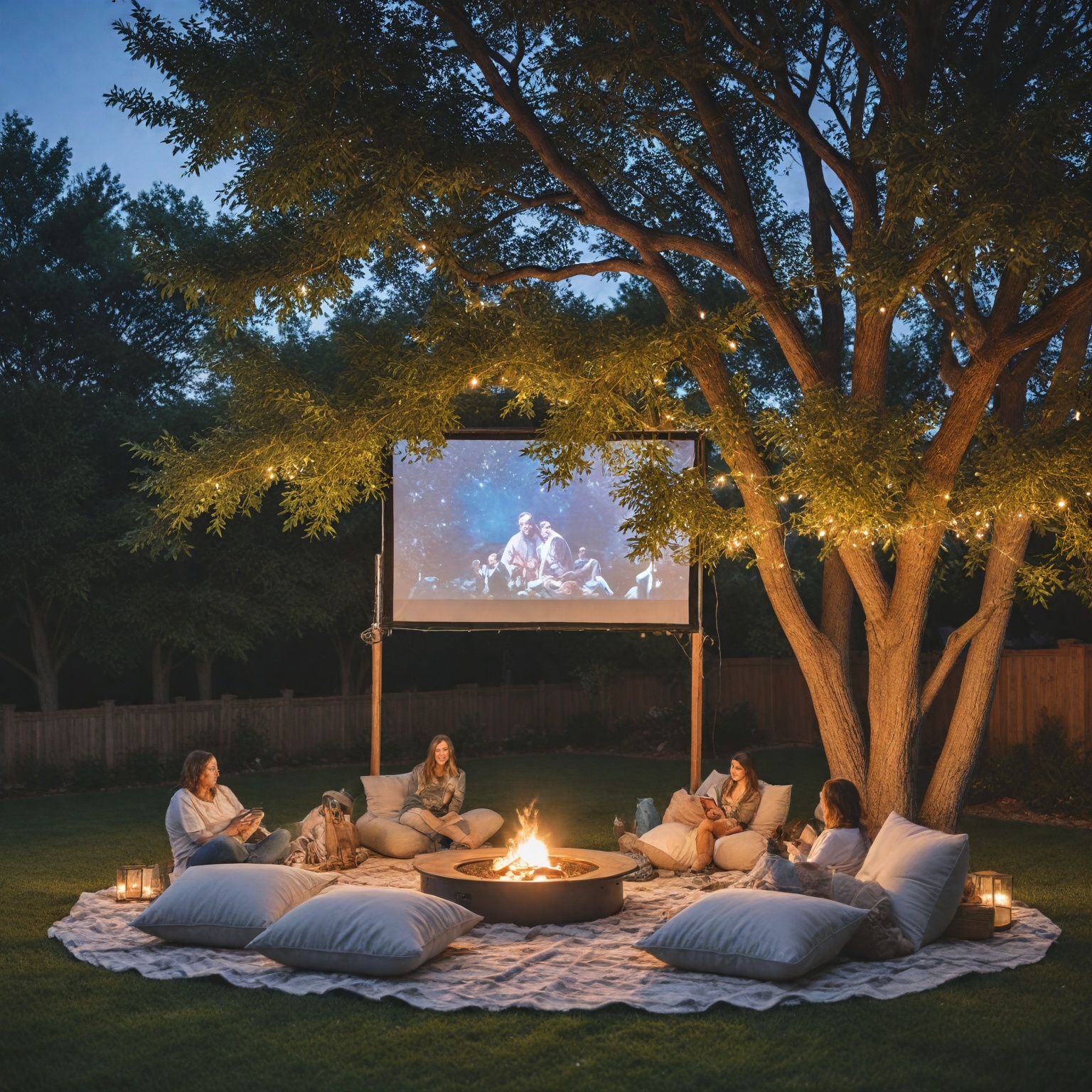
Using a quality outdoor projector screen like Elite Screens’s Yard Master Series can significantly enhance picture brightness and clarity in outdoor settings. Additionally, planning the placement of speakers and ensuring they are waterproof or water-resistant will help maintain audio performance and equipment longevity. Renting complementary accessories such as gas fire pits can also enhance the ambiance of backyard movie nights, adding warmth and a cozy atmosphere.
Setup and Use Guidelines
Setting up an outdoor movie night can be both enjoyable and straightforward with the right approach and gear. To begin, it is recommended to set up the projection screen first to have a clear surface for image alignment and adjustment. Using an actual outdoor screen, such as the Elite Screens Yard Master Plus or Yard Master 2, is ideal as they come with sturdy frames and ground stakes to withstand windy conditions. The Yard Master Plus offers height adjustability and sizes ranging from 100 to 200 inches, while the Yard Master 2 has a fixed height with a maximum screen size of 135 inches.
Positioning the projector correctly is crucial. A stable tripod, like the Vanguard Alto Pro2+, is preferred over a small table or TV tray to allow precise height adjustment and image positioning, especially on uneven lawn surfaces. The projector itself can be placed either in front of or behind the screen, providing flexibility in setup and placement to suit different backyard layouts.
Audio setup can vary depending on preference and complexity. While the projector’s built-in speakers are sufficient for casual viewing, connecting Bluetooth or portable speakers enhances sound quality and enables surround sound effects. However, it is important to note that connecting Bluetooth speakers disables the projector’s built-in audio, so these cannot be used simultaneously as separate sound sources. For those seeking a true surround sound experience, bundled systems such as the Yamaha YHT-5960U offer a simplified setup with an AV receiver, multiple speakers, and subwoofer, but these systems require setup and teardown each time due to lack of weatherproofing.
When planning the audio arrangement, be mindful of neighbors by keeping volume at a considerate level or inviting them to join the fun. Many portable projectors also function as Bluetooth speakers themselves, allowing for versatile use beyond the outdoor movie night.
Given the outdoor environment, weather considerations are essential. While fully weatherproof projectors remain rare, opting for weather-resistant equipment and having a backup plan for sudden rain or wind is advisable. Screens and projectors that can tolerate light rain and wind contribute to a more resilient setup. Additionally, protecting speaker wires and connections with shrink tubing and waterproofing methods such as silicone caulk can help maintain audio equipment integrity while allowing seasonal disconnection and storage.
For enhanced comfort, having extras like a cooler for refreshments, blankets for chilly nights, and effective bug repellents can significantly improve the outdoor movie experience. Finally, ensuring audio and video synchronization helps maintain immersion and prevents distraction during viewing.
Benefits of Hosting Outdoor Movie Nights
Outdoor movie nights offer a unique and enjoyable way to bring people together in a relaxed, open-air setting. They create opportunities for neighbors, friends, and family members to gather, socialize, and share memorable experiences under the night sky, fostering a sense of community and connection. Unlike indoor movie nights, watching films outdoors allows participants to enjoy fresh air and the ambiance of their backyard or local outdoor spaces, making the event feel more special and engaging.
Historically, outdoor cinema has been a beloved social activity, with families arriving early to picnic and children playing before showtime, highlighting its role as a weekly social highlight that brings communities closer. Today, outdoor movie nights continue this tradition, offering a versatile entertainment option that can be tailored for all ages and occasions—from family-friendly screenings to romantic date nights or casual get-togethers with friends.
Beyond the social benefits, outdoor movie nights encourage creative use of outdoor spaces and provide a cost-effective alternative to going to the theater. With the right equipment, such as an affordable projector and comfortable seating, anyone can create an immersive cinematic experience at home without breaking the bank. This blend of accessibility, fun, and community engagement makes hosting outdoor movie nights an increasingly popular and rewarding activity.
Maintenance, Storage, and Longevity
Proper maintenance and storage are essential for maximizing the lifespan and performance of outdoor movie night gear. Since most setups are designed to be portable and flexible, taking care during assembly and disassembly helps ensure the equipment remains in good condition over time.
The screen, for example, requires a bit of care when packing away. It tends to take more time to disassemble carefully and fold back into its carrying pouch, so many users opt to pull it apart at the corners and loosely toss it inside for quick overnight storage. This method allows for a faster breakdown, with thorough packing done later when more alert. Despite this, the screen collapses down compactly, making it easy to store in a closet or other small spaces without damage.
Overall, setup times generally take about 15 minutes, while breakdown can be done in less than 5 minutes if done carefully. All parts of typical outdoor movie sets fit conveniently into included storage bags, which aids in keeping components together and safe during transport or when stored for long periods. This portability encourages seasonal disconnection of equipment, allowing users to store sensitive electronics like speakers indoors during winter months to avoid damage from moisture or freezing temperatures.
When weatherproofing is a concern, some users apply protective measures such as silicone caulking around connectors to keep water out of wire jackets, ensuring durability without permanent outdoor installation. Although weatherproof projectors and accessories are becoming more available, they remain rare and typically more expensive; therefore, many rely on seasonal setup and takedown to preserve equipment longevity.
In addition to physical storage, attention to environmental factors during use can extend gear life. Using bug repellents or mosquito-control devices can prevent insects from interfering with equipment or user comfort, reducing the need for excessive handling or movement of gear during operation. Furthermore, storing equipment in dry, climate-controlled conditions when not in use helps prevent degradation of materials such as screen fabric and electronic components.
Ultimately, balancing careful handling with the convenience of portable, ad hoc setups contributes to the durability and enjoyment of outdoor movie night gear, allowing users to transform their backyard repeatedly with minimal wear and tear.
The content is provided by Sierra Knightley, Home Upgrade News