Summary
Video doorbells and security cameras are two of the most popular home protection devices, each offering distinct features designed to enhance residential security through video surveillance and real-time alerts. Video doorbells primarily focus on front-door interaction, allowing homeowners to see, communicate with visitors, and monitor deliveries via smartphone apps, while security cameras provide broader surveillance coverage around the property with flexible installation options and often higher video quality. Both device types typically include motion detection, night vision, and two-way audio, but they differ in coverage area, technical capabilities, and user convenience.
The choice between video doorbells and security cameras depends on specific security needs, budget, and installation considerations. Video doorbells offer ease of installation and direct visitor interaction but generally have a narrower field of view limited to the front entryway. Security cameras, although sometimes more complex to install and potentially costlier when multiple units are needed, deliver comprehensive surveillance with advanced features such as pan-tilt-zoom (PTZ), higher resolution, and deterrent tools like built-in sirens and floodlights. Both device types increasingly incorporate artificial intelligence to reduce false alerts and enhance detection capabilities.
Despite their benefits, video doorbells and security cameras raise significant privacy and security concerns. Vulnerabilities to hacking, data privacy issues related to cloud storage, and partnerships between device manufacturers and law enforcement have sparked debates over surveillance ethics, user consent, and potential misuse of recorded footage. Additionally, legal and regulatory frameworks governing video and audio recording vary widely by jurisdiction, complicating the responsible use of these devices.
As smart home technology advances, the market for video doorbells and security cameras continues to grow, driven by innovations in AI, improved connectivity, and increasing consumer demand for effective yet user-friendly home security solutions. Ultimately, the decision to use a video doorbell, security camera, or a combination of both hinges on balancing convenience, coverage, cost, and privacy considerations to achieve the optimal home protection strategy.
Overview of Home Security Devices
Home security devices primarily include video doorbells and security cameras, both designed to enhance property safety through video monitoring and real-time alerts. These devices share several features such as motion detection, two-way audio communication, and night vision capabilities, making them effective tools for home protection.
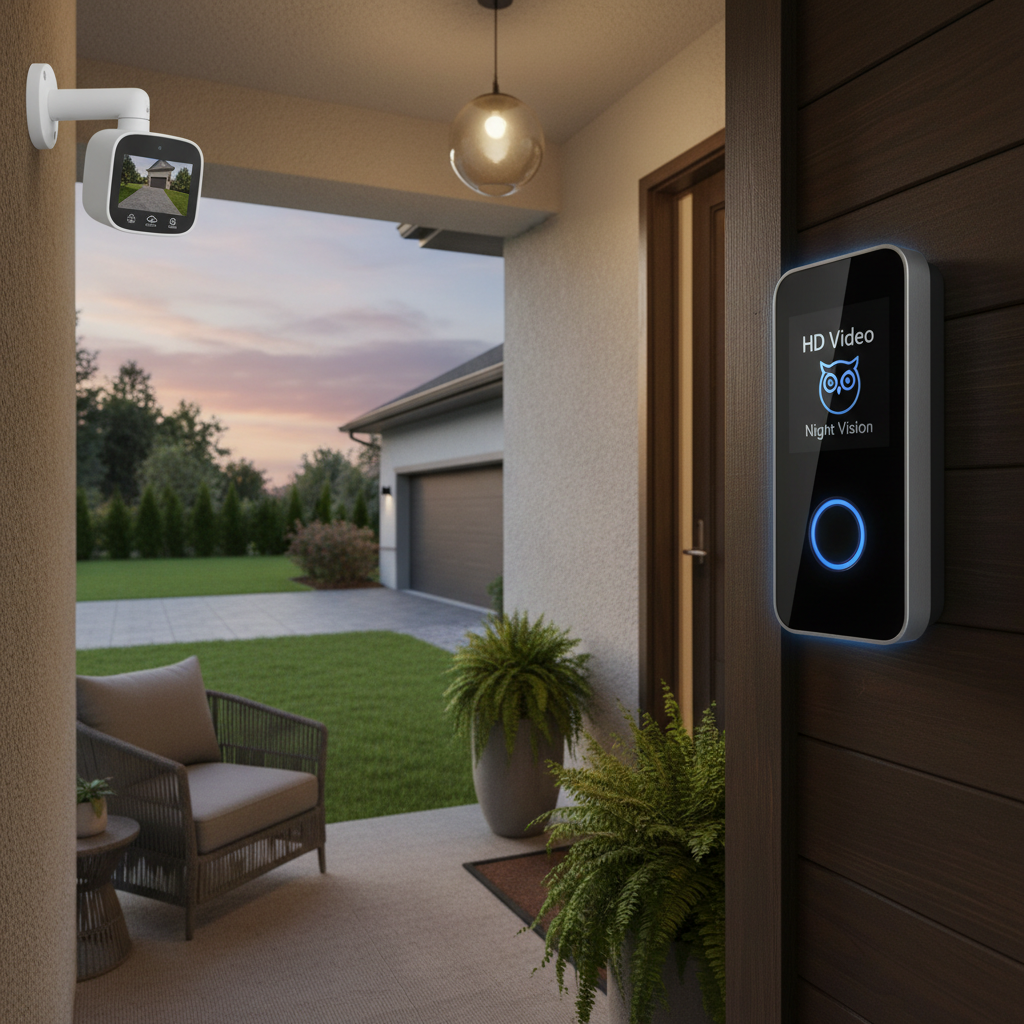
Video doorbells are specifically designed for front-door interaction, allowing homeowners to see and communicate with visitors or delivery personnel directly through a mobile app. They typically need to be installed at eye level, about four feet from the bottom of the door, to capture faces, packages, and forms accurately. Their wide-angle lenses provide a decent field of view of the porch and entryway, and they deliver instant notifications when someone approaches or rings the bell. This makes video doorbells particularly convenient for monitoring front-door activity while also acting as a deterrent against potential burglars.
Security cameras offer more versatile installation options, allowing homeowners to place them discreetly around the property to monitor various areas beyond just the front door. These cameras can be mounted in corners or disguised within exterior features, providing a broader and often more subtle surveillance coverage. They come with high-definition video capabilities, some offering 2K or 4MP Super HD resolution, and can operate on battery or solar power, ensuring continuous monitoring with options for local or cloud storage.
When choosing between the two, factors such as installation flexibility, coverage area, and the specific security needs of the household play crucial roles. Security cameras generally offer greater customization and coverage, while video doorbells emphasize convenience and direct front-door interaction. Regardless of the choice, proper installation with attention to privacy laws and security best practices—such as strong passwords, two-factor authentication, and keeping firmware updated—is essential to maximize the effectiveness of these devices while protecting user privacy.
Technical Specifications Comparison
When comparing video doorbells and security cameras, several technical specifications distinguish the two, influencing their suitability for different home protection needs. Key aspects include field of view, video quality, night vision capabilities, storage options, and connectivity.
Field of View
Video doorbells generally have a narrower field of view, typically ranging from 100 to 120 degrees, as they are primarily designed to monitor the immediate area around the front door. In contrast, security cameras often offer a much wider coverage area, with fields of view between 180 and 360 degrees. Some advanced security cameras also include pan, tilt, and zoom (PTZ) functionalities, enabling users to adjust viewing angles and zoom into specific areas for detailed surveillance. This broader coverage makes security cameras more suitable for monitoring large spaces.
Video Quality and Resolution
Video doorbells tend to focus on convenience and sufficient video quality for recognizing visitors at the doorstep, offering HD resolution but generally less advanced video processing compared to security cameras. Security cameras often come with higher resolutions, including 2K and 4K options, to provide more detailed surveillance footage. However, higher resolution alone does not guarantee better performance; factors such as frame rate, compression algorithms, and lens quality also affect the clarity and smoothness of the video. Some security cameras may have lower frame rates, resulting in choppy or laggy motion capture, which can detract from real-time monitoring effectiveness.
Night Vision
Both video doorbells and security cameras typically include night vision capabilities, allowing them to capture footage in low-light or dark conditions using infrared LEDs or spotlights. Security cameras often have superior night vision range and features, with some models capable of seeing up to 150 feet in total darkness, and even offering full-color night vision that improves visibility without sacrificing range. Video doorbells usually have a shorter night vision range, around 115 feet, which is generally sufficient for the area immediately outside the door but less effective for broader property surveillance.
Storage Options
Storage for both device types can be local or cloud-based. Video doorbells often store footage on built-in microSD cards or cloud servers, with cloud storage sometimes requiring a subscription fee. Similarly, security cameras may offer local storage options such as microSD cards or network video recorders (NVRs), as well as cloud services. Efficient compression algorithms are essential for maintaining footage integrity while optimizing storage use, especially for high-resolution cameras.
Connectivity
Most modern video doorbells and security cameras rely on Wi-Fi connections to transmit video feeds and notifications to users’ smartphones or other devices. Wi-Fi is favored due to its high data transmission rates, essential for smooth video streaming and real-time alerts. Some devices may also incorporate Bluetooth for initial setup or pairing with smart home systems, although it is less common for continuous video transmission. The dependency on stable Wi-Fi means that connectivity issues can affect the performance of both device types.
Additional Features
Video doorbells commonly emphasize convenience features, such as motion detection with specific object recognition (e.g., people, pets, packages), two-way audio communication, and smart home integration. Security cameras, while also supporting these features, often include more robust deterrent capabilities like built-in sirens, floodlights, and greater hardware durability. Furthermore, security cameras provide more flexible placement options beyond the front door, enhancing overall property coverage.
Feature Comparison
Video doorbells and security cameras share several core features but differ significantly in their design, capabilities, and optimal use cases. Both devices typically include motion detection, two-way audio communication, and night vision, enabling homeowners to monitor their property effectively both day and night. However, security cameras generally offer superior video quality and advanced detection capabilities, making them more suitable for comprehensive surveillance.
Motion Detection and Alerts
Both video doorbells and security cameras employ motion sensors to detect activity and send notifications to smartphones. These alerts can often be customized to focus on specific areas within the camera’s field of view and to recognize human movement, reducing false alarms triggered by pets, vehicles, or environmental factors like swaying leaves. Video doorbells have further enhanced their motion detection with package detection features, alerting users when packages are delivered or removed from the doorstep. Some advanced security cameras incorporate AI-powered analysis to detect anomalies or potential threats, including person detection, facial recognition, and activity zones.
Video Quality and Field of View
Security cameras typically provide higher resolution video and better image quality compared to video doorbells. While many video doorbells feature wide-angle lenses sufficient to cover the front door area, security cameras offer more extensive fields of view and improved night vision capabilities, sometimes reaching distances of up to 98 feet with color night vision enabled by built-in spotlights. This makes security cameras ideal for broader surveillance of outdoor spaces such as driveways, yards, or entire property perimeters.
Installation and Placement
Video doorbells are designed to be installed at the front door or entry points, combining the functions of a traditional doorbell with video surveillance. Their installation is generally straightforward, requiring wiring compatible with existing doorbell systems or wireless configurations. In contrast, security cameras offer greater flexibility in installation and placement, allowing users to customize coverage for multiple areas around the home. Depending on the model, security cameras can be easily mounted indoors or outdoors and may include features like floodlights and sirens to deter intruders actively.
Integration and Smart Features
Both device types often support integration with popular voice assistants such as Amazon Alexa and Google Assistant, enabling voice control and seamless operation within smart home ecosystems. Video doorbells increasingly leverage AI technologies to recognize faces, specific vehicles, and custom objects, and can generate text summaries of detected events, enhancing situational awareness. Security cameras similarly benefit from AI enhancements, providing advanced detection and the ability to trigger automated deterrent measures like sirens or spotlight activation.
Storage and Accessibility
Storage options vary between devices but generally include cloud-based subscriptions and local storage via microSD cards. Many video doorbells offer cloud storage for saving video clips and accessing recorded footage remotely, with some models providing no-subscription options through local storage. Security cameras likewise support both local and cloud storage solutions, enabling users to review recorded footage for security verification or to assist law enforcement if necessary.
Installation and Setup
Installing video doorbells is generally more straightforward compared to traditional security cameras, making them an attractive option for many homeowners and renters alike. Most video doorbells are either battery-powered or hardwired into an existing doorbell and chime setup, and typically come with the necessary hardware for mounting, requiring only basic tools like a drill for installation. For wireless models, no special electrical work is needed, allowing many users to handle the process themselves without professional assistance.
The installation process for a video doorbell usually takes between 30 to 60 minutes, depending on factors such as the area that needs to be monitored and the complexity of the setup. Optimal placement involves installing the camera at a height that captures clear video of visitors’ faces while providing a wide field of view focused primarily on the porch or front door area.
In contrast, security cameras often present more installation challenges. They are typically placed under eaves or ceilings to maximize viewing angles, and considerations such as power source, wiring, and Wi-Fi range can complicate the setup. While wireless security cameras alleviate some wiring concerns, they still may require careful planning to ensure proper placement and connectivity.
Wireless communication plays a key role in the installation and operation of video doorbells, with most devices relying on Wi-Fi for real-time monitoring and alerts. Wi-Fi’s high data transmission rates make it well-suited for video streaming, while some wireless doorbells also utilize Bluetooth or radio frequency bands like 433 MHz or 2.4 GHz for communication. Wired installations, while sometimes mandatory for compatibility with indoor doorbell chimes, can be more restrictive and require careful attention to device compatibility and wiring requirements.
For renters or those unable to make major modifications to their homes, wireless video doorbells offer a viable security upgrade without the need for hardwiring or permanent alterations. While professional installation is available for both video doorbells and security cameras, many users find video doorbells more accessible for do-it-yourself setup due to their simpler installation requirements. Overall, the ease of installation and setup is a significant factor when choosing between video doorbells and security cameras, with video doorbells generally providing a quicker, less invasive installation experience.
Advantages and Disadvantages
When deciding between video doorbells and security cameras for home protection, it is important to consider their distinct advantages and disadvantages based on factors such as installation, coverage, features, and cost.
Video Doorbells
Advantages
Video doorbells offer convenience and enhanced interaction with visitors. They allow homeowners to see and communicate with anyone at their front door through live video and two-way audio directly on their smartphones or on the doorbell’s display. Their installation is generally straightforward, often requiring just a few screws to mount on the door frame, making them accessible for most users without professional help. Many models feature advanced AI person detection, distinguishing humans from other objects, which reduces false alerts. Additionally, video doorbells tend to be weather-resistant, commonly rated IP67, allowing outdoor installation without concerns about damage from rain or snow.
Disadvantages
However, video doorbells usually have a narrower field of view compared to security cameras, limiting their coverage mostly to the front door area. Their visibility can be a disadvantage for discretion, as they need to be installed at eye level and are noticeable to passers-by. While they improve convenience and front-door security, they may not be as effective as a deterrent to intruders compared to more comprehensive camera systems. Video doorbells may also involve subscription costs for cloud storage and additional features, although some models offer free basic services.
Security Cameras
Advantages
Security cameras provide extensive surveillance options due to their flexible placement possibilities. They can be installed in various locations around a property, including hard-to-reach or hidden spots such as corners or higher elevations, enhancing coverage beyond the front door. Many security cameras incorporate advanced AI detection features for improved monitoring and threat identification. The option to outfit a home with multiple cameras offers broad and customizable coverage, which greatly increases peace of mind. While installation can be more complex than video doorbells, many modern models are designed for easier setup, and multi-camera packages often reduce overall costs.
Disadvantages
The main drawback of security cameras is that their installation can be more challenging, especially for traditional wired or network video recorder (NVR) systems, sometimes requiring professional assistance. The total cost of equipping a home with multiple cameras can add up quickly, particularly when factoring in subscription fees for cloud storage or professional monitoring services. Unlike video doorbells, security cameras generally do not offer direct interaction features, such as two-way audio at the front door, limiting their use for visitor communication.
Cost Analysis
When comparing video doorbells and security cameras, cost is a significant factor that influences the decision-making process. Generally, video doorbells are more affordable as stand-alone devices, with prices typically ranging from $50 to just over $100. In contrast, security cameras tend to be more expensive, especially when outfitting a home with multiple units or opting for outdoor and dual-purpose models, with prices ranging from $20 up to $500 or more depending on features and quality.
Subscription fees also contribute to the overall cost. Many security cameras and video doorbells offer cloud storage and enhanced features such as person detection and motion-activated video previews, often requiring a monthly subscription. These subscriptions commonly start at around $8 per month for a single camera and $18 for unlimited cameras, which is generally lower than many other security service fees. However, users who prefer to avoid recurring fees can find options that support local storage on micro-SD cards, allowing for video retention without ongoing costs.
The value proposition varies depending on the features desired. Premium security
Privacy and Security Concerns
Video doorbells, while offering significant convenience and security benefits, raise a number of privacy and security issues that have drawn scrutiny from consumers, experts, and lawmakers alike. One major concern is that these devices can be vulnerable to hacking, potentially allowing unauthorized users to take control of the doorbell, access other devices on the same network, or conscript the doorbell into a botnet to carry out wider cyberattacks. Such breaches not only compromise the privacy of the doorbell user but can also lead to identity theft and other malicious outcomes.
Beyond technical vulnerabilities, privacy issues also arise from how video doorbell footage is managed and accessed. Questions remain unresolved regarding who legally owns the footage captured and who can gain access to it, especially as these devices increasingly intersect with law enforcement and public surveillance initiatives. For example, some companies, such as Ring, have formed partnerships with police departments that allow law enforcement special access to user video feeds and the ability to request footage via dedicated portals. This practice has sparked ethical debates and concerns about mass surveillance, racial profiling, and the erosion of neighborhood privacy without explicit user consent.
Another privacy risk involves the potential misuse of video doorbell footage by users themselves. Owners can shame or wrongfully accuse individuals based on recordings, and the companies manufacturing these devices might have access to video data in ways that are not transparent to customers. Furthermore, former intimate partners or other unauthorized individuals gaining access to accounts can create serious privacy violations unrelated to inherent device flaws.
From a security standpoint, many video doorbells have been found to contain vulnerabilities that expose sensitive data such as home IP addresses and WiFi network names without proper encryption, making them susceptible to cyberattacks. While manufacturers often release software updates to address these issues, users must remain vigilant in applying patches and adopting best practices such as using strong, unique passwords and enabling two-factor authentication. Consumer advocacy groups continue to test devices for security lapses and push for improved safeguards to protect consumer data.
Privacy laws also complicate the landscape. The legality of recording video and audio with these devices varies, governed by expectation of privacy rules and one- or two-party consent laws, which differ by jurisdiction. This legal ambiguity adds to the challenges consumers face in understanding the rights and risks associated with video doorbells.
In response to these concerns, some users opt for local storage options like microSD cards to avoid cloud vulnerabilities, although this comes with risks such as loss of footage if the device or storage media is stolen or damaged. Ultimately, while video doorbells provide valuable home protection and convenience, they also demand careful consideration of privacy and security implications to ensure users’ safety and data integrity.
Legal and Regulatory Framework
When installing and using video doorbells or security cameras for home protection, it is important to understand the legal and regulatory framework that governs their use. While there is no specific federal law regulating home security cameras, national consent and privacy laws apply to video surveillance, alongside various state and local regulations.
Federal Laws and Privacy Expectations
At the federal level, two main sets of laws influence the legality of security cameras: expectation of privacy laws and consent laws. Expectation of privacy laws generally permit video recording in public spaces, including areas monitored by doorbell cameras and other security devices. However, individuals have a right to privacy in places such as their homes, dressing rooms, and hotel rooms, where video surveillance is prohibited under federal law. Installing hidden cameras in these protected areas can lead to significant legal issues.
Consent Laws for Video and Audio Recording
A key distinction exists between video and audio recording laws. While video recording is usually permitted if done openly and in public areas, audio recording is subject to one-party or two-party consent laws depending on the state. Some states require that all parties consent to audio recordings, which adds complexity to the use of devices with two-way audio features. Homeowners must be mindful of these rules to avoid potential violations.
State and Local Regulations
Beyond federal statutes, video surveillance laws vary widely across states and local jurisdictions. Many cities, counties, and states have their own regulations regarding where and how security cameras can be used, including requirements for posting signs or restrictions on recording in certain locations. While posting signs indicating video surveillance is not generally required if cameras are in plain sight, it may be advisable in states with strict consent laws to prevent disputes over consent.
Practical Considerations
Given the convoluted nature of these laws, especially when audio recording is involved, users of video doorbells and security cameras should educate themselves about the specific laws applicable in their region. Failure to comply with these regulations can result in legal penalties and privacy infringements. Understanding the legal framework helps users effectively balance home security needs with respect for privacy rights.
AI and Software Innovations
Recent advancements in AI and software technologies have significantly enhanced the capabilities of video doorbells, setting them apart from traditional security cameras. One of the most notable innovations is the integration of advanced AI detection features, which allow video doorbells to distinguish between humans, packages, vehicles, and even specific objects with high accuracy. This expanded AI detection goes beyond simple motion sensing to include facial recognition (where legally permitted), package identification, and the ability to analyze activities in recorded clips, generating concise text summaries for quick review.
These AI-powered features improve notification relevance by reducing false alerts triggered by irrelevant motion such as passing cars, animals, or environmental factors. Users can customize motion detection zones and receive alerts only when specific events—like a person approaching or a package being delivered—occur, thereby enhancing situational awareness without overwhelming the user with unnecessary notifications. Furthermore, some video doorbells incorporate two cameras to monitor visitors and packages simultaneously, complemented by features like color night vision enabled through built-in spotlights, which enhances video quality in low-light conditions.
Integration with voice assistants such as Amazon Alexa and Google Assistant provides a seamless smart home experience, allowing users to control and receive updates from their video doorbells via voice commands and dedicated apps. The software ecosystem also supports cloud storage for video clips, ensuring that users can access and review footage remotely at any time.
In addition to enhancing convenience and security, these AI-driven innovations contribute to crime deterrence, particularly against package theft. The presence of a smart video doorbell capable of recording and identifying suspicious activity can dissuade potential thieves by increasing the risk of being caught on camera. Overall, the fusion of AI and software advancements has transformed video doorbells into sophisticated home protection devices that offer real-time, intelligent monitoring tailored to modern security needs.
Market Trends and User Adoption
The market for video doorbells and security cameras has experienced significant growth as consumers increasingly prioritize home security. Video doorbells have gained popularity due to their integration of wide-angle lenses that provide a broad field of view of the front of a house, as well as innovative features like object and facial recognition. These advancements have contributed to a surge in user adoption, particularly among homeowners seeking enhanced surveillance capabilities combined with ease of use.
Subscription pricing models have become a common trend in the industry. Many video doorbell manufacturers offer tiered subscription plans, starting as low as $8 per month for a single camera and $18 for unlimited cameras, which is generally lower than many other security services. However, some users remain hesitant to commit to ongoing fees, which has driven interest in alternatives that do not require monthly subscriptions. This dynamic shapes how consumers evaluate their options, balancing the cost of subscriptions with desired features and functionality.
User preferences also influence market trends. While video doorbells often appeal to those valuing high resolution and seamless usability—even at the expense of monthly fees—security cameras attract users who prioritize avoiding recurring costs and prefer potentially more flexible placement options despite more complex installation processes. This divergence highlights that consumer adoption patterns depend heavily on individual needs, budget constraints, and willingness to engage with technology.
Privacy concerns remain a critical factor affecting user trust and adoption rates. Industry evaluations assess numerous factors related to privacy practices and data security, reflecting evolving technology and increased consumer awareness. Investigations into companies like Ring have underscored ethical considerations and the importance of transparent data collection and sharing policies, which influence user confidence and market behavior. Manufacturers continue to improve privacy settings and security measures in response to these concerns.
Finally, user testimonials and comparative ratings play a vital role in shaping consumer decisions, reinforcing the importance of informed purchasing choices in a competitive and fast-evolving market. Ultimately, the decision between video doorbells and security cameras depends on specific user priorities, but both have become essential components of modern home protection strategies.
The content is provided by Blake Sterling, Home Upgrade News