
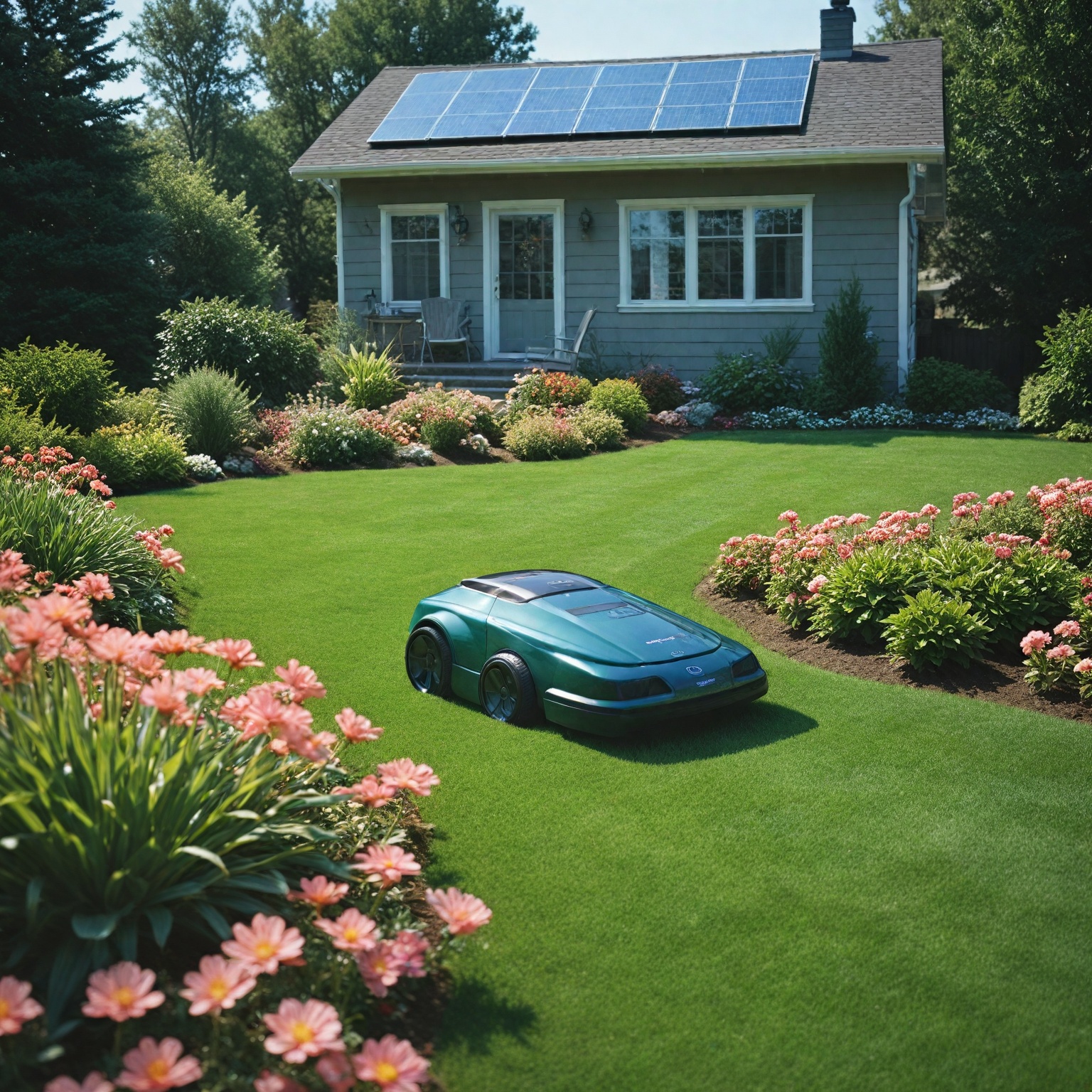
Summary
Modern mowing technology has undergone significant transformation, integrating smart features, automation, and energy-efficient designs that are redefining lawn care and household maintenance. Traditionally, gas-powered lawn mowers were the norm for residential lawn care, but advancements in technology have led to the introduction of robotic and electric mowers. Robotic mowers offer enhanced precision and systematic mowing patterns, while electric mowers contribute to reduced emissions and noise pollution. However, these advancements are not without challenges, including issues of sustainable battery supply, environmental governance, and geopolitical tensions within the battery value chain. Despite these complexities, the continued evolution of mowing technology presents promising prospects for more efficient, eco-friendly, and user-friendly lawn care solutions.
The push towards environmentally friendly mowing technology has seen a rise in popularity of robotic and electric mowers. Robotic mowers not only reduce water consumption but also eliminate harmful emissions, making them a preferred choice for homeowners keen on sustainable practices. Similar to other automated household appliances, these mowers require minimal human intervention to maintain lawns, offering homeowners greater convenience. Meanwhile, electric mowers are lauded for reducing air and noise pollution, though they face challenges such as limited battery life and range.
The shift towards sustainable mowing technology is further reinforced by the increasing concern for environmental impacts. Electric mowers produce lower CO2 emissions compared to their gas-powered counterparts and contribute to improved air quality. Yet, despite these positive strides, it is important to continually strive for further improvements in sustainability and minimize mower use where possible.
The market for robotic mowers is projected to grow substantially, with a forecasted market size of 15,937.1 million by 2030, almost 2.2 times compared to 2022. This increase in demand is attributed to factors such as affordability, environmental considerations, and consumer inclination towards smart, eco-friendly products. Yet, the successful transition towards advanced mowing technologies requires comprehensive strategies and innovative solutions to address the existing challenges and complexities.
Evolution of Mowing Technology
Modern mowing technology has transformed dramatically over the years, incorporating smart features, automation, and energy-efficient designs. This evolution has had a profound impact on home maintenance, redefining the way homeowners care for their lawns.
Gas-powered lawn mowers, which had been the standard for residential lawn care for decades, have gradually been replaced by more advanced technologies. Significant developments have been witnessed in the field of robotic lawn mowers, which have been significantly improved thanks to lessons learned from manufacturers such as Bosch.
These robotic lawn mowers have evolved from haphazard, random movement patterns to more systematic and efficient mowing patterns. Whether following a spiral or grid pattern, these innovative machines ensure complete coverage of the lawn while minimizing overlap and missed spots.
Moreover, the reliance on ground wire for delineating mowing areas has been eliminated thanks to advanced technologies such as Real-Time Kinematic (RTK) base station guidance, RTK+, and AI Vision.
In the future, the focus of vendors will likely be on introducing and promoting these tech-advanced robotic mowers, as consumer demand for convenient, smart home technology continues to grow. Incorporation of technologies such as GPS and Wi-Fi into lawn mowing devices is expected to continue shaping the market growth in this sector.
However, meeting this growing demand is not without challenges. The pursuit of advanced mowing technologies requires balancing technological advancements, fresh investments, and potential conflicts between competing goals. Further, complexities such as sustainable battery supply, environmental and social governance, as well as geopolitical tensions throughout the battery value chain, may influence the success of these technologies.
In addition to robotic mowers, electric motor technology is another area that has seen significant advancements over the past decade. The technology has been revolutionizing various industries, including manufacturing and transportation, offering efficiency, reduced emissions, and enhanced performance. Its adoption in mowing technology promises a more sustainable future, paving the way for more energy-efficient and environmentally friendly lawn care practices.
Shift towards Environmentally Friendly Mowing Technology
Robotic Mowers
Robotic mowers are leading the transition towards environmentally friendly mowing technology. They not only reduce water consumption but also completely eliminate harmful emissions, making them an attractive choice for homeowners interested in sustainable practices. The technology behind robotic mowers is quite similar to other automated household appliances like robo-vacuums. With just a few simple settings, these mowers can keep your yard well-maintained, freeing up homeowners to enjoy their leisure time.
Electric Mowers
Electric mowers are another eco-friendly alternative to gas-powered mowers. They reduce air and noise pollution, contributing to a cleaner and quieter environment. However, electric mowers face challenges, including limited battery life and range. Fortunately, advances in technology are constantly improving battery life and capacity.
Cordless electric mowers rely on rechargeable batteries that can have limited run times before requiring recharging. While these limitations may necessitate adjustments in mowing habits, especially for larger lawns, improvements in battery technology are expanding the versatility and adaptability of electric mowers.
The cost of operation can be a concern as replacing batteries can range from $100 to $300 or more. Nevertheless, these costs can be offset as most manufacturers offer other tools that can share the same battery. It is also noteworthy to mention that with increased competition and advancements in technology, the prices of electric mowers are becoming more affordable.
Despite these promising developments, Li-ion batteries, which are common in electric mowers, still have limitations in terms of their longevity, which can be a concern for professional landscapers. Therefore, efforts are underway to secure a sustainable supply of battery minerals and metals for electric vehicles, which could also benefit electric mowers.
Environmental Impact of Mowing Technology
In addition to the individual benefits, the shift towards more sustainable mowing technology also has wider environmental impacts. Electric mowers produce significantly lower CO2 emissions compared to gas-powered mowers. Furthermore, by eliminating exhaust fumes, they contribute to cleaner air quality.
These changes are in line with regulations such as the ‘Phase I’ rules introduced in 1998 that mandated a 32% reduction in emissions from engines, and the Phase 3 exhaust emissions standards that came into effect in 2011 or 2012.
However, the journey towards greener mowing technology is not over. Even as electric mowers present a preferable alternative, it is important to reduce mower use as much as possible and strive for continual improvements in sustainability.
Proliferation of Robotic Mowing Technology
There has been an increased adoption of robotic lawn mowers in recent years, thanks to these technological advancements as well as other factors like affordability and consumer inclination towards tech-savvy and environment-friendly products . The market size for robotic mowers is projected to exceed 15,937.1 million by 2030, a growth of almost 2.2 times compared to 2022 .
Robotic lawn mowers not only offer the convenience of automated mowing but also a fine finish, addressing safety and security concerns often associated with their usage . Indeed, robotic mowers have become integral to the cutting edge of automated lawn maintenance . They are part of a broader trend of smart home automation that integrates technologies such as the Internet of Things (IoT) and Artificial Intelligence (AI) to improve user experience .
Environmental considerations have also influenced the growing adoption of robotic mowers. Traditional gas-powered mowers have been found to contribute to air pollution and greenhouse gas emissions . Replacing them with eco-friendly alternatives, such as robotic models, can contribute significantly to environmental preservation and sustainability . These mowers not only reduce carbon emissions but also minimize noise pollution, enhancing the overall quality of life for homeowners and their neighbors .
Robotic mowers also align with sustainable lawn care trends that emphasize water conservation, soil health improvement, and biodiversity . They form part of smart technology innovations like automated irrigation systems that are being integrated into lawn care for increased efficiency and sustainability . Despite the complexities and challenges of technological advancement, it is clear that robotic mowing technology is transforming household upkeep, contributing to a cleaner environment, and setting the stage for a sustainable future .
Contribution of Cutting-edge Mowing Technology in Household Upkeep
Modern mowing technology has significantly evolved over the years, integrating smart features, automation, and energy-efficient designs to offer homeowners convenience in maintaining a well-manicured lawn. These advancements, which include robotic mowers, electric alternatives, and innovative blade systems, are redefining home maintenance, shifting from the traditional gas-powered lawn mowers.
Just like robotic vacuums, robotic lawn mowers have been developed to automate the lawn mowing process, giving homeowners more free time to do other activities they love. While they are more expensive than electric push mowers and gas-powered mowers, the price can be seen as a one-time investment into the health and betterment of your lawn and a tool to save valuable time on household chores.
The transition from random bouncing to systematic and efficient mowing patterns has made robotic mowers more efficient. Following a predefined pattern, like a spiral or grid, these mowers ensure complete coverage of the lawn, minimizing overlap and missed spots. With technological advancements, many companies are now utilizing real-time kinematic (RTK) base station guidance, RTK+, or AI Vision to eliminate the need for a ground wire to delineate mowing areas.
Despite their high initial cost, robotic mowers offer numerous benefits, such as convenience, precision, eco-friendliness, and the ability to operate autonomously, delivering a consistently well-maintained lawn. They are electric, thus better for the environment than traditional gas-powered devices, with no harmful emissions. However, traditional mowers still have their place, providing a wider range of options, lower initial cost, and the ability to tackle complex or irregularly shaped lawns.
Despite the concerns about unemployment, recent research has shown that robotics has increased economic efficiency in various areas. Therefore, it becomes crucial to consider factors such as lawn size, convenience, environmental impact, budget, and personal preferences when making a decision on whether to adopt this technology. This convergence of design and technology is causing a breakthrough in the world of home interiors, providing solutions that connect more elements in a house.
Latest Advancements in Robotic Mowing Technology
Introduction to Robotic Mowers
Robotic mowers are small, battery-powered devices capable of executing lawn mowing tasks with minimal human intervention. The boundaries of the mowing area are defined by a boundary wire, and once the mower is programmed, it autonomously carries out the mowing. This revolutionary technology is making lawn care easier, especially for homeowners who prioritize precision and consistency.
Cutting-Edge Features
Advanced robotic mowers employ Real-Time Kinematic (RTK) positioning, popularized by Husqvarna as EPOS, which uses satellite signals to provide exact positioning. The precision of RTK is beneficial for large lawns and open areas like sports fields. More companies are incorporating RTK+ and AI Vision technologies, eliminating the need for ground wires to delineate mowing areas. AI technologies and machine vision cameras are used to effectively map the edges of the lawn and recognize obstacles such as dustbins and cables.
Safety is a significant consideration in the design of robotic mowers. The blades are positioned well away from the mower’s outer edge, reducing the risk of injuries to humans and pets. The technology also serves as a safer alternative to traditional petrol lawnmowers.
Control and Automation
The advent of Bluetooth technology has revolutionized how robotic mowers are controlled and monitored. Users can now seamlessly automate their mowing systems and control Internet of Things (IoT) devices, adding another layer of convenience to this cutting-edge technology.
The technological advancements in robotic mowers are redefining how homeowners carry out their lawn care tasks, providing them with efficient, precise, and safe mowing solutions. With ongoing innovations, robotic mowing technology is poised for further growth and improvements.
Future Prospects of Mowing Technology
The future of mowing technology is marked by significant advancements, primarily driven by modern technologies and consumer preference towards smart, efficient, and environmentally friendly products.
Robotic Mowing Technology
The popularity of robotic mowers is projected to skyrocket, with the market segment surpassing 15,937.1 million by 2030, indicating a demand almost 2.2 times that of 2022. This growth is attributed to the increasing affordability of these products, which have resulted in their wider adoption in developed markets. Over the coming years, manufacturers will focus on introducing advanced robotic mowers that integrate GPS, Wi-Fi, and other technologies, catering to consumers seeking convenience and tech-savvy products.
Electric Mowing Technology
In parallel, electric motor technology has significantly evolved over the past decade, contributing to enhanced efficiency, compact designs, and better performance. These advancements have spurred the adoption of electric motors across various industries, including the lawn mowing business, and are expected to pave the way towards a more sustainable future.
Environmental Considerations
Today’s environmental concerns necessitate an evaluation of the impacts of traditional gas-powered lawn mowers, which are associated with significant air pollution and greenhouse gas emissions. With traditional mowers consuming about 1.2 billion gallons of gas every year and contributing to 12 percent of carbon monoxide emissions, the urgency to adopt alternatives is evident. As such, robotic lawn mowers offer a promising solution due to their environmental benefits.
Challenges and Opportunities
Despite the positive trajectory, the adoption of modern mowing technology is not without its challenges. Uncertainties in the sustainable supply of battery minerals, complexities in environmental, social, and governance matters, and geopolitical tensions throughout the battery value chain have raised global and regional concerns. These complexities underline the need for comprehensive strategies and innovative solutions to successfully transition towards advanced mowing technologies.
The content is provided by Avery Redwood, Home Upgrade News