Summary
Uncovering the Mystery: Why Aren’t More Homes Being Rebuilt After the LA Fires examines the complex and multifaceted challenges hindering the reconstruction of homes destroyed during the devastating 2024–2025 wildfires in Los Angeles and surrounding areas. Despite the destruction of over 16,000 buildings and extensive displacement of residents, rebuilding efforts have been markedly slow and uneven, with only a small fraction of destroyed homes under reconstruction by mid-2025. This delay has drawn significant attention due to its implications for housing affordability, community recovery, and disaster resilience in one of the nation’s most populous and economically vital regions.
The slow pace of rebuilding is primarily attributed to a combination of regulatory, financial, and social factors. Complex and fragmented permitting processes across multiple jurisdictions have caused substantial delays, despite state-level executive orders aiming to expedite approvals by suspending environmental reviews and waiving certain fees. Zoning restrictions also limit homeowners’ ability to rebuild or densify fire-affected lots, particularly since the fire zones were excluded from California’s recent SB 9 reforms that promote housing density. Meanwhile, rising construction costs, labor shortages, and an unstable insurance market—characterized by high premiums, inadequate coverage, and disputes over claims—further restrict homeowners’ capacity to finance rebuilding.
Economic and market conditions in Los Angeles exacerbate these challenges. The wildfire destruction intensified an already severe housing shortage, pushing rental prices higher and reducing the availability of homes for sale. Many displaced residents face the financial strain of paying mortgages on destroyed properties while securing costly temporary housing. Government initiatives including disaster relief grants, loan programs, and workforce development efforts aim to mitigate these barriers, yet rebuilding timelines commonly extend from 12 to 36 months, reflecting enduring systemic hurdles.
The ongoing situation has sparked debate among policymakers, community advocates, and experts regarding the balance between rapid recovery and environmental protection, the adequacy of current housing policies, and the role of technological innovation in streamlining rebuilding. While some progress has been made in accelerating permits for “like-for-like” reconstruction, significant obstacles remain for homeowners seeking to expand or enhance fire resilience in their rebuilding projects. This article explores these issues in detail, offering case studies and outlining government responses and future outlooks for restoring housing in fire-impacted Los Angeles.
Background
In late 2024 and early 2025, devastating wildfires swept through Los Angeles and its surrounding communities, destroying over 16,000 buildings and scorching more than 57,000 acres. This event, recognized as one of the most destructive wildfire seasons in the region’s history, displaced thousands of residents and put more than $40 billion in real estate value at risk. Despite the extensive destruction, efforts to rebuild have been slow and uneven. By the end of 2024, construction had begun on only a fraction of the destroyed homes, with approximately 511 homes underway in the Eaton fire area and about 370 in the Palisades region.
The aftermath revealed that the wildfire devastation was not solely due to natural causes but was significantly exacerbated by policy and planning failures. Land-use regulations concentrating housing development in fire-prone suburban areas, while restricting new construction in more centrally located, well-serviced regions, intensified the damage and complicated recovery efforts. Additionally, a sluggish permitting process has hindered rebuilding progress, preventing many displaced residents from returning to their homes even when the land and infrastructure remain viable.
These challenges underscore the complexity of housing recovery following large-scale natural disasters, especially in high-cost coastal metropolitan areas like Los Angeles. The local housing market has faced intense pressure, with rental housing emerging as a crucial component for both affordability and the resilience of housing systems during market disruptions. The slow pace of rebuilding not only reflects logistical and regulatory hurdles but also highlights broader systemic issues in urban planning and housing policy in the region.
Regulatory and Permitting Challenges
The process of rebuilding homes destroyed by the 2025 Los Angeles wildfires has been significantly hindered by complex regulatory and permitting obstacles. Despite initial optimism and executive orders aimed at expediting recovery, many homeowners face prolonged delays that prevent swift reconstruction.
Governor Gavin Newsom issued several executive orders intended to accelerate the rebuilding process. These included suspending the California Environmental Quality Act (CEQA) and the California Coastal Act for development projects related to fire damage, aiming to reduce bureaucratic hurdles and fast-track permit approvals. On paper, these measures suggested urgency, with promises that rebuild permits would proceed within thirty days of local review. However, in practice, by mid-2025 only a small fraction of permit applications—approximately 13%—had been approved, with an average permit processing time of 51 days, far longer than anticipated.
One significant issue is the layered nature of approvals required from multiple city and county jurisdictions. Depending on the location, homeowners may need to obtain sign-offs from various agencies, undergo discretionary planning reviews, and comply with special geographical ordinances, all of which add complexity and delay. In contrast, other cities like Dallas report median permit times as short as eight days, highlighting the relative inefficiency in Los Angeles.
Zoning restrictions also play a crucial role in limiting rebuilding efforts. Many homeowners are effectively trapped, as regulations restrict rebuilding in certain fire-damaged areas and prevent new construction in potentially safer locations. Notably, the fire zones were excluded from California’s SB 9 zoning reform, which otherwise permits duplexes and smaller lots by right, thereby blocking potential densification and rebuilding options for displaced residents.
Although efforts exist to expedite permits for “like-for-like” reconstruction—where homes are rebuilt within 110% of their original footprint—these only apply to modest rebuilds. Homeowners wishing to build larger or incorporate new safety features face additional regulatory hurdles and longer review processes. Moreover, all rebuilt structures, even those replicating the original, must comply with updated building and fire codes, including fire-resistant materials and seismic safety standards, which can increase costs and complexity.
Environmental concerns add another layer of challenge. While CEQA suspensions have been enacted to accelerate rebuilding, critics argue that such waivers may undermine important environmental protections, potentially causing long-term harm. To balance recovery with environmental safety, the state developed a plan to mitigate risks such as flooding and debris flows related to the wildfires.
Beyond regulatory delays, other obstacles include high construction costs, labor shortages partially due to immigration enforcement, and difficulties with insurance payouts. Insurance companies often price risk realistically, refusing to insure or inadequately compensating for losses in high-risk zones, further discouraging rebuilding.
Financial Barriers to Rebuilding
Rebuilding homes after the devastating Los Angeles fires has proven financially challenging for many survivors, with several interrelated factors contributing to the difficulty. A primary issue is the rising cost of insurance premiums and insufficient insurance coverage. Experts attribute the increasing insurance costs to higher risks from natural disasters and soaring rebuilding expenses, which have placed significant strain on the state’s insurance industry liquidity. Many homeowners find that their insurance payouts do not fully cover the cost of reconstruction, forcing them to manage ongoing mortgage payments on destroyed properties while also paying rent in an expensive housing market.
Additionally, insurance companies have become increasingly reluctant to underwrite policies in high-risk areas, limiting survivors’ access to adequate coverage. While California has implemented regulatory measures to expedite advance payments—such as requiring insurers to provide upfront funds for personal property replacement and living expenses without itemized claims—delays and disputes over claims remain widespread. Survivors often face unclear or delayed insurance payouts that hinder timely rebuilding, with some still navigating complex processes for rebuilding assistance that does not fully cover necessary upgrades or remediation costs.
The long-term financial uncertainty surrounding the costliest wildfires in U.S. history continues to impact survivors, with ongoing lawsuits against insurers for denied or delayed claims and expected premium hikes for most policyholders. Although state initiatives like new loan programs and expanded mortgage assistance funds aim to support rebuilding efforts, they have yet to fully alleviate the financial burden faced by fire survivors, particularly renters and those with contaminated but structurally intact homes.
Beyond insurance, survivors have access to federal disaster relief options such as FEMA grants, Small Business Administration low-interest loans, and emergency displacement assistance to help cover immediate needs and business losses. However, the cumulative financial barriers—including high construction costs, labor shortages exacerbated by immigration enforcement, and the complexities of securing permits and complying with building codes—continue to pose formidable obstacles to rebuilding. Efforts to streamline permitting and accelerate rebuilding approvals have been undertaken, yet significant challenges remain, particularly for projects subject to more stringent local planning requirements.
Economic and Market Conditions
The aftermath of the Los Angeles wildfires has significantly disrupted the local real estate market, exacerbating an already strained housing supply. As of December 2024, the Los Angeles metropolitan area reported an unsold inventory equating to just 2.9 months’ supply at the prevailing sales pace, a stark contrast to the balanced market benchmark of six months’ supply. This low inventory level highlights the severe shortage of homes available for sale, further complicated by the destruction wrought by the fires.
Construction costs in California remain notably high, compounded by a scarcity of labor influenced by factors such as deportations and workforce shortages. Although modular construction offers a potentially faster route to rebuilding due to streamlined permitting, demand for labor and fire-resistant materials continues to be a significant bottleneck. These economic and labor market conditions are delaying the transition from cleared lots to completed homes, despite a forecasted postfire “construction boom” involving extensive planning, materials, and workforce needs.
Regulatory and permitting delays further hinder recovery efforts. The Los Angeles metro area is known for its slow and cumbersome permitting systems, which have proven particularly dysfunctional in the wake of the fires. While expedited review processes have been introduced for certain repair and rebuilding projects, others—especially those within specific zones such as the Coastal Zone—still face lengthy planning requirements. These administrative challenges, combined with economic barriers, have resulted in many fire-damaged properties remaining on the market for extended periods, frustrating homeowners eager to rebuild.
Rental housing markets have also been affected by these constraints. Despite some softening, rents in Los Angeles remain elevated due to limited new supply stemming from rebuilding delays and permitting issues. One-bedroom apartments often command monthly rents in the low to high $2,000s, with two-bedroom units frequently exceeding $3,400 in many neighborhoods. This tight rental market underscores the broader challenge of housing affordability and system resilience amid ongoing recovery struggles.
Home sales in the region have declined, reflecting market uncertainty and the impact of fire-related disruptions. For example, Los Angeles County experienced a 7.9% drop in home sales in May 2025, while interest has increased in neighboring areas such as Orange County, particularly among younger families. Additionally, affluent buyers are incorporating advanced fire-resistant features into new home designs, signaling a growing awareness of wildfire risks and a trend toward more resilient construction.
Social and Community Factors
The pace of rebuilding homes after the devastating Los Angeles fires has been heavily influenced by social and community dynamics. A critical element affecting recovery is the varying resilience of different housing systems, with rental housing playing a central role in affordability and recovery debates. Communities that are more housing-dense, such as suburban areas impacted by the Marshall Fire, have experienced quicker recovery compared to more rural and forested regions, where rebuilding has lagged due to stricter permitting processes, complex building code requirements, and the need for customized home designs adapted to challenging terrain.
Financial constraints present a major barrier for many residents. Insurance coverage often falls short of the actual costs of rebuilding, forcing homeowners to manage ongoing mortgage payments for destroyed properties while also incurring high rental costs in some of the nation’s most expensive housing markets. The financial strain is exacerbated by slow insurance payouts, and some wildfire victims lacked insurance altogether, compounding the difficulty of funding reconstruction efforts. This combination of rising risks, decreasing property values, and escalating rebuilding expenses has led only a small fraction of affected Angelenos to plan for rebuilding their homes.
Community groups and local coalitions have stepped in to address information gaps and provide support. For instance, the Altadena Rebuild Coalition offers critical assistance to ensure residents are informed and can navigate the complicated rebuilding process as efficiently as possible. Furthermore, the City of Los Angeles has enacted emergency executive actions aimed at cutting red tape and streamlining rebuilding guidelines, with the goal of expediting the return of families to their neighborhoods while maintaining safety standards. Despite these efforts, survivors often face lengthy rebuilding timelines—typically 12 to 36 months—due to cumbersome permitting applications, inflated construction costs, and ongoing insurance disputes. These social and community factors collectively shape the slow pace of home reconstruction following the LA fires.
Government and Policy Responses
In the aftermath of the January 2025 wildfires in the greater Los Angeles area, state and local governments have enacted a series of executive orders and policy measures aimed at accelerating the rebuilding process. Governor Gavin Newsom issued Executive Orders N-4-25 and N-5-25, which suspend the California Environmental Quality Act (CEQA) and the California Coastal Act for development projects related to properties lost in the fires. These orders are intended to remove regulatory barriers and expedite demolition, repair, restoration, or replacement of damaged properties while ensuring that activities align with environmental protection plans balancing recovery and sustainability.
Local governments, in alignment with the Governor’s directives, established fast-tracked permitting pathways designed to eliminate redundant reviews and streamline bureaucratic procedures for fire rebuilds. Additionally, City departments were instructed through Emergency Executive Order 7 to suspend the collection of plan check and permit fees for reconstruction projects, pending further amendments by the City Council. These efforts aim to alleviate financial burdens and administrative delays faced by homeowners and small businesses trying to rebuild.
Despite these measures, progress in rebuilding has been slow. By mid-2025, only a small fraction of permit requests had been approved, with lengthy average processing times persisting even under the expedited frameworks. This sluggish pace is attributed to the complex layering of approvals across city and county jurisdictions, discretionary reviews by planning staff, and special geographic ordinances that continue to complicate the permitting process. Moreover, some property owners have abandoned rebuilding plans due to unresolved cost issues despite having permits, indicating that permit issuance alone is an insufficient indicator of reconstruction progress.
Beyond permitting, the state has also taken steps to mitigate risks associated with post-fire hazards, including directing CalOES, Cal Fire, and other agencies to develop plans addressing flooding, mudslides, and debris flows anticipated from winter storms in the region. Workforce recovery programs such as the Fire Recovery and Resilience Workforce Program provide hiring and training support to workers displaced by the fires, aiming to bolster local economic recovery.
Looking forward, there are initiatives exploring the adoption of advanced technologies, including Artificial Intelligence, to improve the efficiency of project review and permitting processes. The Department of Building and Safety has been tasked to report on the feasibility of integrating AI into rebuilding efforts, which could potentially reduce bottlenecks in approvals.
However, some experts and community advocates caution that expedited procedures should maintain a careful balance between rapid recovery and environmental protection. Concerns have been raised about the potential long-term ecological impacts of broad suspensions of environmental laws, underscoring the need for sustainable rebuilding practices.
Finally, while Los Angeles County has pledged improvements such as increasing personnel for emergency alerts and administrative support, the effectiveness of these reforms remains to be seen. Similar promises made after previous major fires, like the Woolsey Fire of 2018, have historically fallen short of full implementation.
Case Studies
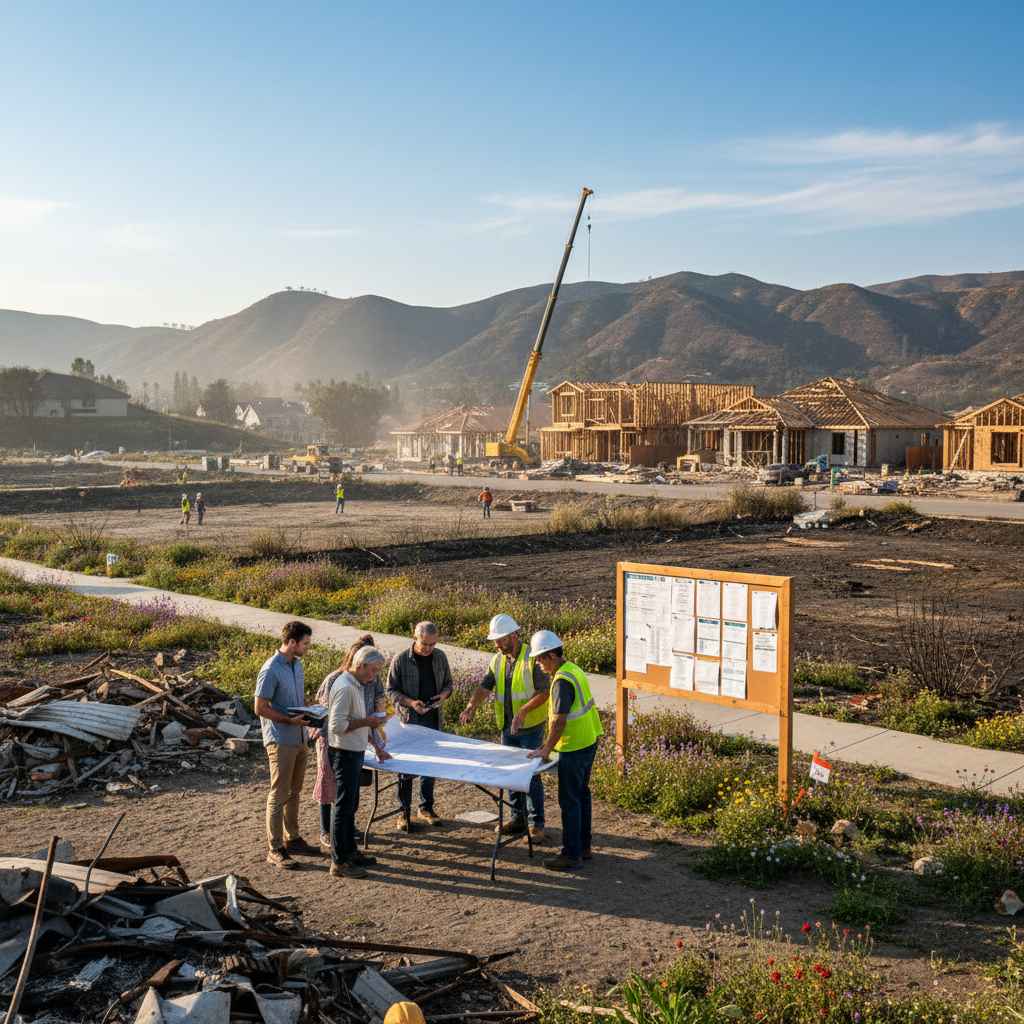
The aftermath of the January wildfires in Los Angeles has revealed significant challenges in the rebuilding process, particularly in the hardest-hit communities of Altadena and the Pacific Palisades. Residents in these areas continue to struggle with delays and obstacles in reconstructing their homes and neighborhoods, even a year after the fires devastated large portions of the city. The slow pace of permitting for fire-damaged properties has been a persistent concern, with affected communities expressing frustration over the extended wait times to obtain necessary approvals.
Efforts to expedite rebuilding have seen some progress. Local governments including the City and County of Los Angeles, Malibu, and Pasadena managed to increase permit issuance rates for single-family homes and accessory dwelling units to three times their pre-fire levels within the first year after the disaster. However, this acceleration largely benefits “like-for-like” reconstruction—rebuilding structures to roughly the same size and specifications as before, capped at
Future Outlook
The future of rebuilding homes after the Los Angeles wildfires involves a complex interplay of regulatory, economic, and technological factors. On the regulatory front, post-2025 building codes and wildfire-related regulations have evolved to enhance safety and resilience, requiring rebuilds to meet current standards even if replicating previous structures “like-for-like”. However, zoning restrictions remain a significant barrier, often preventing homeowners from rebuilding on their original lots or relocating to safer areas. This has contributed to a paradox where insurance markets price risk more honestly than policymakers, leaving many homeowners effectively trapped without viable options.
Economically, the high costs of construction and scarce labor—exacerbated by factors such as deportations and supply chain constraints—pose additional challenges to timely rebuilding. Insurance difficulties, including insufficient payouts and refusal to insure high-risk areas, further compound these hurdles. Despite these obstacles, relief efforts like those from the Small Business Administration offer displacement assistance, direct grants, and low-interest loans aimed at supporting impacted residents and businesses.
Technological advancements may play a pivotal role in accelerating the recovery process. The City of Los Angeles has initiated efforts to explore the feasibility of integrating Artificial Intelligence into the Department of Building and Safety’s project review procedures to streamline permitting and reduce delays. Modular construction also presents a promising avenue, enabling faster building through expedited state-level reviews and potentially alleviating some labor demands.
Workforce development programs, such as the Fire Recovery and Resilience Workforce Program, provide immediate hiring and training support to dislocated workers, addressing labor shortages and fostering local economic resilience. Furthermore, executive orders like Emergency Executive Order 5 promote resilient rebuilding strategies that enhance protection against future climate-driven disasters.
The content is provided by Blake Sterling, Home Upgrade News