Summary
Brew the Perfect Pour Over Coffee at Home: Tips from Young House Love is a comprehensive guide aimed at helping coffee enthusiasts master the art of pour-over coffee brewing in a home setting. Pour-over coffee, prized for its clean, nuanced flavors and customizable brewing process, has gained widespread popularity among both casual drinkers and coffee aficionados seeking greater control over their cup’s taste and aroma. This method involves slowly pouring hot water over freshly ground coffee beans using specialized equipment such as drippers, filters, and kettles, which together enable precise extraction of the coffee’s distinctive flavor notes.
The guide emphasizes the importance of essential equipment—including a burr grinder for uniform grind size, a gooseneck kettle for controlled pouring, and quality coffee beans roasted within two weeks—to achieve consistent and flavorful results. It details step-by-step preparation and brewing techniques, such as pre-warming the brewer, managing water temperature between 195°F and 205°F (90°C to 96°C), and employing a slow, circular pouring method to optimize extraction. Practical advice is provided for beginners and experienced brewers alike, highlighting how small adjustments in grind size, water temperature, and pouring technique can significantly influence the final cup.
Notable in the discussion are the variations of pour-over devices—from the cone-shaped Hario V60 to the flat-bottom Kalita Wave—each offering distinct brewing characteristics and requiring different filter types, enabling users to tailor their brewing experience to personal preference and lifestyle. The guide also addresses common mistakes, such as over-extraction caused by improper grind size or brewing time, and offers maintenance tips to preserve equipment and coffee freshness. By fostering an appreciation for the ritual and precision involved, the guide encourages integrating pour-over coffee into daily routines for a mindful and satisfying experience.
While pour-over coffee is celebrated for its clarity and customization, the guide acknowledges the learning curve and potential frustration faced by beginners in mastering timing and technique, underscoring the value of practice and experimentation. Through accessible instructions and expert insights, Brew the Perfect Pour Over Coffee at Home serves as an essential resource for anyone seeking to elevate their coffee-making skills and enjoy café-quality brew without leaving their kitchen.
Equipment Needed
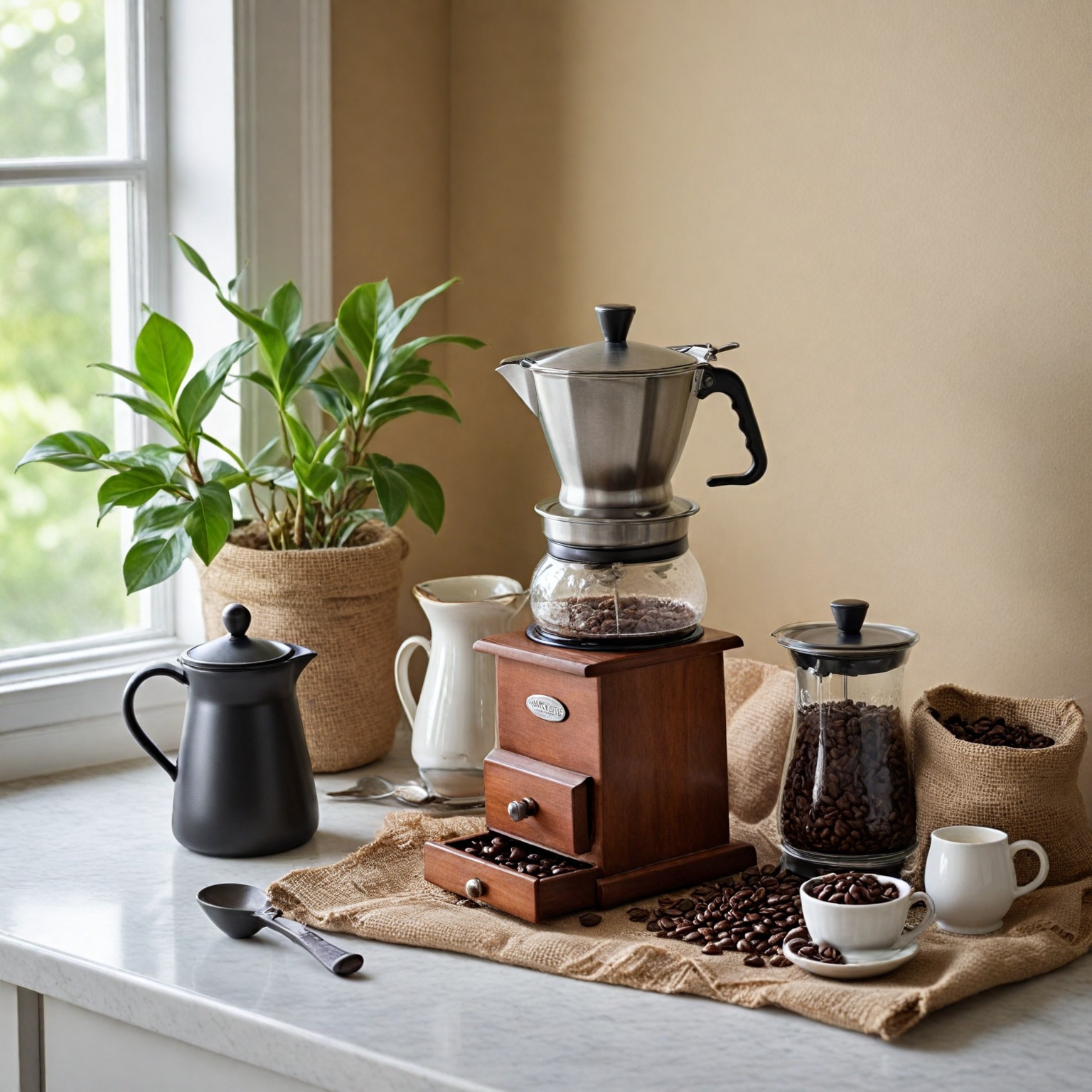
To get started with making pour over coffee at home, only a few essential pieces of equipment are necessary, helping you avoid clutter from unused gadgets while still achieving great results. The key items include a pour over brewer, a kettle, coffee filters, a grinder, and freshly roasted coffee beans.
Coffee Grinder
A burr grinder is preferred over a blade grinder because it produces a more uniform grind size, which is critical for even extraction and consistent flavor in pour over brewing. Freshly grinding whole coffee beans just before brewing preserves freshness and enhances taste. Recommended grinders include the Baratza Encore and Fellow Ode, both known for quality and durability. If a grinder is unavailable, specialty coffee shops can grind beans to your specific pour over method upon request.
Kettle
While any kettle can be used initially, a gooseneck kettle is highly recommended for pour over coffee because it provides precise pouring control, essential for evenly saturating coffee grounds and achieving optimal extraction. Capacity should be sufficient to brew the desired amount of coffee, especially if making multiple cups at once. For enhanced control, electric gooseneck kettles with temperature control and built-in timers, such as the Fellow Stagg EKG, are excellent investments. However, beginners can start with a standard stovetop kettle and upgrade later as their interest deepens.
Coffee Beans
Using freshly roasted beans, ideally roasted within the past two weeks, is crucial to highlight the bright, fruity, and floral notes that the pour over method accentuates. The grind size for pour over is typically medium-fine to medium, resembling the texture of sea salt or small grains of sand, although exact sizing can vary depending on the specific brewer used. Adjusting grind size and brewing parameters allows for experimentation to find the perfect cup tailored to your taste.
Together, these essentials form a practical and effective setup for anyone looking to master the art of pour over coffee at home without overwhelming themselves with unnecessary equipment.
Pour Over Brewer
There are several types of pour over brewers available, each with its unique design and brewing characteristics. Popular options include the Hario V60, Chemex, Kalita Wave, Bee House, Kone, Woodneck, and Walkure drippers. The traditional Chemex brewer is well-suited for brewing multiple cups at once, with the Six Cup size being the most recommended model for small to medium households due to its balance of capacity and ease of use. The V60 is favored for single cups because of its simple, cone-shaped design that encourages even extraction. When choosing a brewer, consider whether you prefer flat-bottomed devices like the Kalita Wave or cone-shaped ones like the V60 or Bee House, as this influences grind size and brewing technique.
Coffee Filters
Most pour over brewers use paper filters that should be moistened before brewing to remove any papery taste and preheat the brewer, reducing heat loss during extraction. Some brewers, like the Chemex, use proprietary thicker paper filters, while others accept standard #2 or #4 filters compatible with their shape and size. Alternative reusable filters such as the KONE can improve flavor and sustainability but are considered an investment beyond basic equipment.
Preparation Steps
Preparing a perfect pour over coffee at home involves several key steps to ensure optimal extraction and flavor. First, it is essential to measure out the right amount of coffee. A common recommendation is to use about 3 tablespoons (approximately 29–30 grams) of medium-ground coffee per cup, with a grind size similar to small grains of sand or sea salt. Grinding fresh whole beans immediately before brewing is preferred to maximize freshness, though pre-ground coffee can also be used if necessary.
Before brewing, pre-warm the pour over brewer and filter by rinsing them with hot water. This step removes any papery taste from the filter and helps maintain a stable temperature throughout the brewing process, which is crucial for a balanced extraction. Discard the rinse water before adding the coffee grounds.
The water temperature should ideally be between 195°F and 205°F (90°C to 96°C). Water that is too hot or too cool can negatively affect the taste, making the coffee bitter or under-extracted. Since pouring water between vessels causes about a 10-degree drop, it is recommended to start pouring about 30 seconds after boiling, once the water temperature has settled near 210°F (99°C).
The pouring technique is equally important. Water should be poured slowly and steadily in a circular motion over the coffee grounds to ensure even saturation. The initial pour, often called the “bloom,” wets the coffee to release carbon dioxide and should be completed within the first minute. Subsequent pours continue in rounds until the desired water volume is reached. The total brewing time varies but is generally between 2.5 to 4 minutes depending on grind size and pour rate.
Specialized equipment such as a burr grinder, a gooseneck kettle for controlled pouring, and quality drippers like the Hario V60, Chemex, or Kalita Wave can enhance precision and consistency in the brewing process. However, the simplicity of pour over coffee also allows for flexible methods and equipment, making it accessible even without specialized tools.
By carefully managing these preparation steps—measuring and grinding coffee accurately, pre-warming equipment, controlling water temperature, and pouring methodically—home brewers can enjoy a flavorful and satisfying cup of pour over coffee every time.
Brewing Process
The brewing process for a perfect pour-over coffee begins by preparing fresh, high-quality coffee beans, ideally ground just before brewing to prevent oxidation and staleness. Place the ground coffee into a moistened paper or cloth filter set inside the brewer, which sits atop a carafe or cup. Rinsing the paper filter beforehand is recommended to remove any papery taste and preheat the equipment.
Start the brew by pouring a small amount of hot water—about three times the weight of the coffee—over the dry grounds. This initial pour, known as the “bloom,” allows trapped carbon dioxide to degas from the coffee, facilitating even extraction. Gently stir the coffee and water mixture to ensure full saturation.
After approximately 30 seconds, continue adding hot water slowly and evenly in concentric circles, moving from the center outward and stopping roughly a quarter-inch from the edge of the brewer. This controlled pour helps maintain uniform extraction and prevents channeling. The total brew time should last around 3 to 3½ minutes to achieve optimal flavor balance.
Maintaining the water temperature between 93°C and 97°C (200°F to 207°F) is crucial; water that is too hot can lead to bitter or over-extracted coffee, while cooler water can result in under-extraction and weak flavor. Using a gooseneck kettle with temperature control aids in precise pouring and consistent temperature management throughout the brewing process.
Once the desired brew ratio is reached and the water has fully passed through the grounds and filter, remove the brewer and enjoy the freshly brewed pour-over coffee. Mastering this method requires practice and attention to timing, pouring speed, and grind size, but with experience, it can yield a clean, nuanced cup tailored to individual taste preferences.
Tips and Tricks
Brewing the perfect pour-over coffee at home involves attention to several key factors that influence flavor and extraction. One of the foundational steps is to use fresh, high-quality coffee beans, grinding them just before brewing to prevent oxidation and staleness. If grinding at home proves challenging, specialty coffee shops like Stumptown can grind the beans to the specific size suited for your brew device.
Water temperature plays a crucial role in flavor extraction. The ideal brewing temperature is generally between 93–97°C (200–207°F), which helps extract a balanced range of flavors from the coffee without introducing bitterness or weakness. Because pouring water between vessels causes a temperature drop of about 10 degrees, it is recommended to heat water to near boiling (around 210°F) and wait about 30 seconds after boiling before pouring to maintain the optimal temperature.
The grind size is another important factor, with a medium to medium-coarse grind being typical for pour-over methods. However, there is flexibility based on the specific dripper used, such as the V60, Chemex, or Kalita Wave. More importantly than the exact grind size is grind consistency—uniform particle size promotes even extraction, which enhances the coffee’s flavor profile.
When pouring, a slow and steady stream of water poured in concentric circles ensures even saturation of the grounds. The brewing process should take around three minutes and fifteen seconds to three minutes and thirty seconds, with gradual pours that allow water to fully draw down before the next addition. Using a scale to measure water volume (commonly up to about 320 mL) can help achieve repeatability and precision in brewing.
Additionally, proper storage of coffee beans away from air, moisture, heat, and light helps maintain their freshness for longer, preserving flavor. While the process is simple—just hot water and ground coffee—it requires patience and practice to master the timing and pouring technique necessary to draw out the best flavors from the beans.
Common Mistakes to Avoid
Brewing pour-over coffee at home can be a rewarding experience, but there are several common mistakes that can lead to a lackluster or unpleasant cup. Understanding and avoiding these errors is key to achieving a balanced and flavorful brew.
One frequent mistake is brewing for too long, which often results in over-extraction. Over-extracted coffee tends to taste watery and sour, losing the desirable flavor balance. For a single cup, typically using 20–23 grams of coffee to 300–340 grams of water, the brew time should not exceed three minutes to prevent this issue.
Using pre-ground coffee is another common pitfall. Pre-ground beans quickly lose freshness and flavor after grinding, which can cause the coffee to taste stale and flat. It is recommended to grind the beans fresh just before brewing to preserve the coffee’s aromatic qualities.
Incorrect grind size also affects the extraction process. The ideal grind for pour-over is medium-fine to medium, similar to the texture of small grains of sand. Too coarse a grind leads to under-extraction and weak flavor, while too fine a grind may cause over-extraction and bitterness.
Water temperature is crucial for optimal extraction. The water should be just off the boil, around 93–97°C (200–207°F). Water that is too hot can result in bitter flavors, while water that is too cool yields underdeveloped taste. Starting with near-boiling water (about 210°F) and allowing it to cool slightly before pouring helps achieve the ideal temperature. Some brewers experiment with temperature adjustments to bring out different tasting notes, but 205°F is generally considered optimal.
Pouring technique and timing also play significant roles. Starting the pour 30 seconds after wetting the grounds, pouring slowly and evenly in concentric circles, and maintaining a total brew time around three to three and a half minutes can enhance extraction and flavor balance. Patience and consistency in pouring ensure the coffee is neither over nor under-extracted.
Finally, it is important to accept that a poorly brewed cup cannot be fixed after the fact. The best approach is to acknowledge the mistake and start over, adjusting variables like grind size, water temperature, and brew time to improve the next brew.
By avoiding these common mistakes, home brewers can consistently produce a bright, flavorful, and enjoyable cup of pour-over coffee.
Variations and Alternatives
Pour-over brewing offers a variety of devices that cater to different preferences and needs. There are about seven main types of pour-over brewers available, including popular options such as the Chemex, V60, Kone, Bee House, Kalita Wave, Woodneck, and Walkure. The traditional Chemex brewer is often highlighted in tutorials, but for single-cup servings, the V60 is frequently recommended for its ease of use and consistent results.
When choosing a brewer, the shape of the device plays an important role. Flat-bottomed brewers like the Kalita Wave and Walkure Bayreuth provide a different extraction profile compared to cone-shaped brewers such as the Bee House, Hario V60, and Origami Dripper, each delivering unique flavor characteristics. For those new to pour-over brewing, both flat-bottom and cone-shaped devices are manageable and produce excellent coffee with proper technique.
Cost and convenience are additional considerations in selecting a pour-over device. While brands like Chemex and Hario are well-known and reliable, their brewers typically retail for around $50. More affordable alternatives, some priced under $20, have proven durable and effective with daily use over extended periods. Single-serving ceramic drippers, especially collapsible models, offer portability and require minimal storage space, making them ideal for solo drinkers or households with limited kitchen room.
These variations allow enthusiasts to tailor their pour-over experience to their taste preferences, brewing habits, and lifestyle, ensuring that quality coffee is accessible to a wide audience.
Cleaning and Maintenance
Proper cleaning and maintenance are essential for consistently brewing delicious pour-over coffee at home. While it may seem like more effort than disposing of a K-cup, cleaning a pour-over coffee maker is no harder or more time-consuming than washing any other kitchen item. Many coffee makers consist of just a few parts that can be easily rinsed daily in the sink. Using a reusable metal filter without paper simplifies cleanup further, as it can be rinsed clean and reused, eliminating the need to buy or dispose of paper filters.
It is recommended to clean your coffee equipment thoroughly every few months, with a three-month interval
Incorporating Pour-Over into Daily Routine
Integrating pour-over coffee into your daily routine can transform your mornings into a mindful and enjoyable ritual. Many coffee enthusiasts appreciate the simplicity and control that the pour-over method offers, allowing them to craft a cup tailored exactly to their taste preferences. Unlike electric coffee makers that often produce bitter or over-extracted coffee due to prolonged heating, the pour-over process involves pouring hot water slowly and steadily over ground coffee, which yields a cleaner, more balanced flavor profile.
One of the appealing aspects of pour-over brewing is its minimal equipment requirement. A pour-over brewer, a filter, fresh ground coffee, and a heat source are the essentials, making it a space-efficient option especially compared to bulky automatic machines. Moreover, a traditional electric heat source is not mandatory; you can use alternative methods such as a camp stove or even an open fire, making pour-over coffee an excellent choice for both home and travel.
To start, set up the pour-over brewer over a carafe and line it with a moistened paper filter to remove natural coffee oils. Then, pour boiling water slowly over the grounds, allowing the coffee to drip into the vessel below. This process requires a focused yet straightforward technique that can be mastered quickly with practice. It also offers the flexibility to experiment with different coffee roast types without committing to a full pot, enabling you to discover and perfect your personal brew.
Incorporating pour-over into your routine not only improves the quality of your coffee but also creates an opportunity for a calming, hands-on morning ritual. With fresh coffee, attention to grind size and proportions, and a willingness to experiment, anyone can become proficient in pour-over brewing and impress guests with a well-crafted cup. This method encourages mindfulness and precision, turning coffee preparation into an enjoyable daily practice rather than a rushed chore.
Benefits of Pour-Over Coffee
Pour-over coffee offers several advantages that appeal to both novice and experienced coffee enthusiasts. One of the primary benefits is the level of control it provides over key brewing variables such as water temperature, flow rate, grind size, and brew time. Unlike automatic coffee makers, which often limit user control, pour-over brewing allows you to tailor the flavor and texture of your cup to your precise preferences.
Another notable benefit is the quality of the brew itself. The use of a filter in pour-over coffee removes some of the oils and chemicals present in coffee beans, resulting in a cleaner, more balanced cup compared to methods like the French press. Additionally, this method accentuates the bright, fruity, and floral notes commonly found in lighter roasts and single-origin beans, preserving their unique characteristics through slower extraction.
Pour-over coffee is also appreciated for its simplicity and minimal equipment requirements, making it accessible without cluttering your kitchen with numerous gadgets. Furthermore, it offers a visually engaging brewing process that can impress guests and enhance the overall coffee-making experience.
Lastly, pour-over brewing is compatible with a variety of devices, including flat-bottom and cone-shaped drippers such as the Kalita Wave, Hario V60, and Bee House, providing flexibility for users to select equipment that suits their style and needs.
Additional Insights and Personal Tips
One of the key advantages of brewing pour over coffee at home is the ability to experiment with different variables to improve flavor continually. Since pour over methods allow precise control over grind size, water temperature, and brewing time, you can fine-tune each cup to your preference. Experts often recommend using a medium to medium-coarse grind as a starting point, but adjusting this based on taste is encouraged.
Experimentation can extend beyond grind size; isolating variables and keeping detailed notes can help you develop a personalized brewing formula that yields an impeccable cup tailored to your palate. This level of customization is a major reason why many coffee enthusiasts find pour over coffee superior in taste compared to machine-dripped methods.
When it comes to equipment, while specialized tools like gooseneck kettles facilitate more controlled pouring, beginners need not invest immediately. Using whatever kettle you have is perfectly fine to start, and you can consider upgrades as your appreciation for pour over grows. Additionally, different pour over brewers offer unique brewing experiences. Popular choices include the traditional Chemex, V60, Kone, Bee House, Kalita Wave, Woodneck, and Walkure, each with distinct characteristics and filter requirements.
For example, the Bee House dripper stands out with its ceramic body and wedge-shaped cone that fits standard #2 and #4 filters, making it more accessible and sustainable compared to brewers requiring specialized filters. The Kone filter system, while an investment, enhances body and acidity in coffee beyond what classic paper filters offer and carries a Made in the USA certification, appealing to those looking to elevate their Chemex setup.
Beyond technical considerations, mastering pour over coffee is also about enjoying the process and impressing guests once you have honed your skills. With patience, experimentation, and the right combination of gadgets and techniques, anyone can become a master brewer in a relatively short time.
The content is provided by Blake Sterling, Home Upgrade News