Summary
Sweet and sour meatballs combine savory meatballs with a tangy sauce, offering a unique balance of flavors that appeal to a wide range of tastes. Typically made with ground beef or pork, these meatballs are enhanced by a sauce of vinegar, sugar, soy sauce, and ketchup, often accompanied by ingredients like pineapple and bell peppers for texture. While rooted in ancient Chinese cuisine, particularly the “Four Joy Meatballs” from Shandong, American adaptations gained popularity in the mid-20th century, reflecting cultural fusion and immigrant influences.
Ingredients
The key ingredients for sweet and sour meatballs include ground meat (primarily beef or a beef-pork mix), binders such as bread crumbs and eggs, and seasonings like onion and garlic. A signature sauce combines sugar, vinegar, soy sauce, and ketchup, with optional variations like pineapple juice for added sweetness. This results in a dish that maintains moisture and delivers a flavorful punch, ideal for highlighting the meatballs’ texture.
Preparation
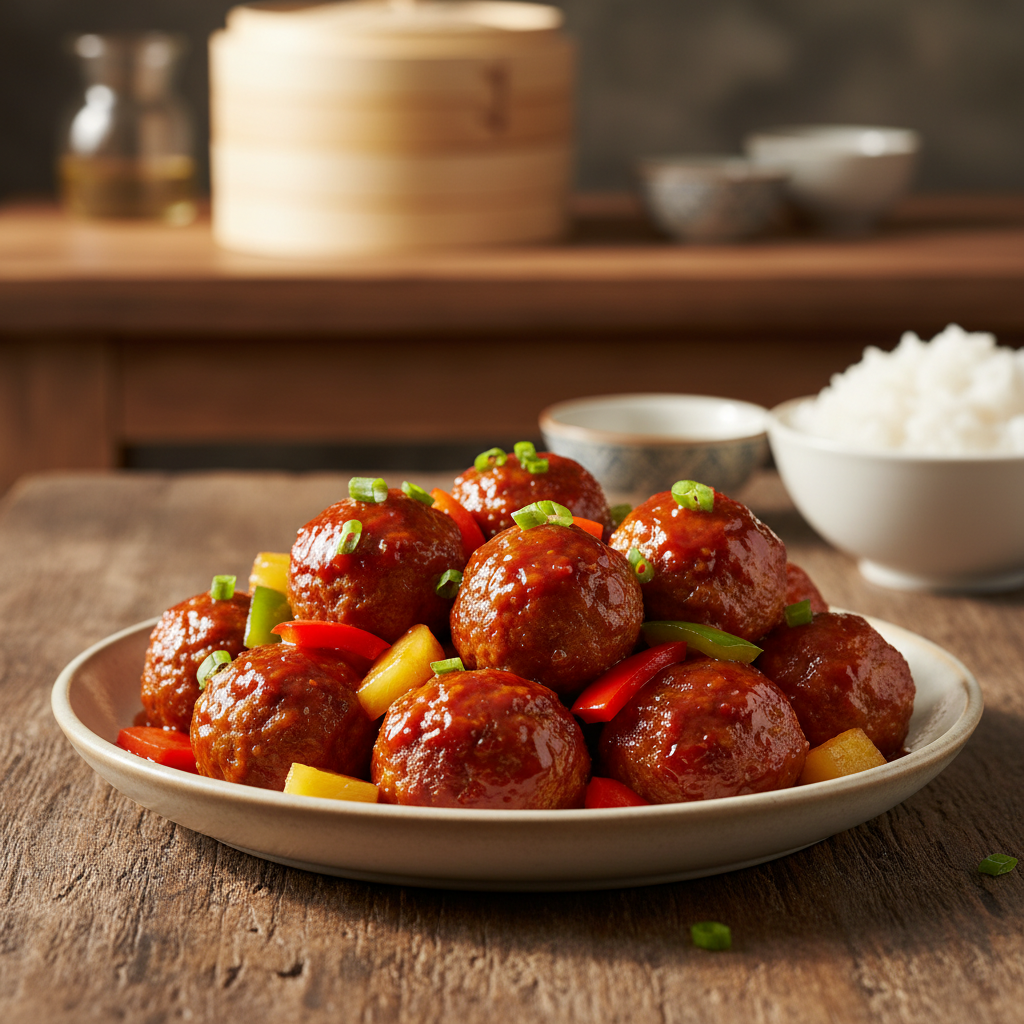
To prepare these meatballs, combine ingredients like Parmesan cheese, milk, garlic, and eggs in a bowl, then incorporate the ground meat and seasonings. Shape into balls and cook them in olive oil until browned. The sauce is created by simmering sugar, vinegar, soy sauce, and pineapple juice, thickening it with cornstarch if desired. Combine the meatballs with the sauce and heat briefly to meld flavors, making for a delectable dish served typically over rice.
Flavor Profile and Culinary Characteristics
Sweet and sour meatballs are characterized by their tangy and sweet flavor balance, a fusion of multiple culinary traditions. The sauce is pivotal, using components like pineapple juice and ketchup to ensure a harmonious taste. Lightly textured meatballs, often enriched with binders, and the vibrant sauce make this dish versatile enough for appetizers or main courses, catering to diverse palates.
Historical Background
This dish’s history spans various cultures, with origins in ancient China and European adaptations. In the U.S., it emerged prominently during the 1950s, marrying Asian-inspired ingredients with classic American recipes. Traditional variations exist globally, from Chinese meatballs served in sour sauces to Italian agrodolce, illustrating how immigrant influences have shaped its evolution over time.
Cultural Adaptations and Fusion Variations
Sweet and sour meatballs have adapted through cultures, influenced by Asian and European traditions. In the U.S., they reflect the culinary innovations of immigrant communities, combining local tastes with classic preparations. Variations exist globally, showcasing how this dish can be modified to suit local ingredients and preferences, solidifying it as a beloved cultural symbol.
Differences Between Chinese and Western Preparations
Chinese sweet and sour meatballs tend to be lighter, often featuring pork and served in broth, while Western variations favor a thicker, sweeter sauce using ground beef or pork. Both styles share a sweet and sour flavor but differ significantly in texture and preparation, highlighting how the dish adapts to fit cultural preferences.
Serving Suggestions
These meatballs can be enjoyed over steamed rice, pilaf, or mashed potatoes for a hearty meal. They serve well as appetizers at gatherings, cooked in a slow cooker for convenience. Adjustments can be made by adding spices to the sauce, making them versatile for different cuisines, from Asian-inspired dishes to casual dining staples.
Nutritional Information
Complete nutritional information for sweet and sour meatballs might not be fully available, as it depends on the specific ingredients and quantities used in individual recipes.
Popularity and Cultural Impact
Since the mid-20th century, sweet and sour meatballs have gained popularity in the U.S., often associated with Polynesian culinary influences from restaurants of the era. Versions of this dish appear in various cuisines globally, revealing its adaptability. Despite being rooted in American adaptations, they are linked to both European and Asian culinary traditions, showcasing their ongoing appeal and influence in comfort food today.
The content is provided by Avery Redwood, Home Upgrade News