
Summary
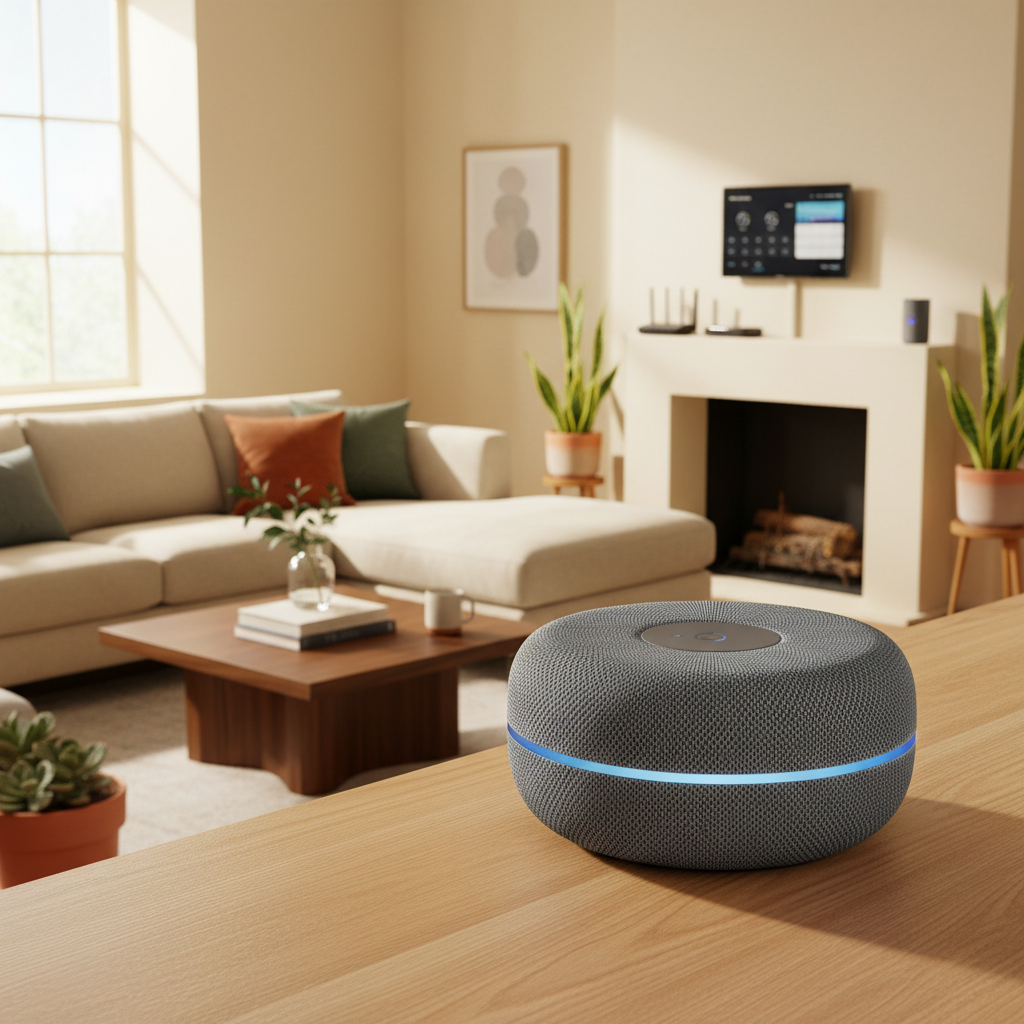
The Echo Dot Max is a mid-tier smart speaker developed by Amazon, positioned between its entry-level Echo Dot models and higher-end devices like the Echo Studio. Released as part of Amazon’s evolving Echo lineup, the Dot Max aims to deliver enhanced audio performance and smarter home integration through upgraded hardware and software features. Its distinctive circular design with an indented center and a premium 3D knitted mesh covering sets it apart visually from other Echo devices, while front-facing controls and improved gesture responsiveness enhance user interaction.
Central to the Echo Dot Max’s appeal is its upgraded AZ3 chip, which boosts Alexa’s conversational capabilities, wake word detection, and support for Amazon’s Omnisense fusion platform for local AI processing. The device offers nearly three times the bass output of standard Echo Dots, achieved through an internal redesign that increases airspace and includes a dual-driver speaker system powered by a 20W Class-D amplifier. Additionally, the Dot Max functions as a smart home hub supporting Matter, Thread, and Zigbee protocols, making it a versatile option for connected home environments.
Despite these advancements, the Echo Dot Max’s audio quality has drawn mixed reviews. While praised for its stronger bass and louder volume relative to previous Echo Dot models, some critics note that the overall sound lacks the clarity and crispness of earlier generations, resulting in a somewhat muffled listening experience. This limitation, coupled with a $100 price point—double that of standard Echo Dots—has sparked debate about the device’s value proposition, especially for audiophiles and budget-conscious consumers.
Overall, the Echo Dot Max represents Amazon’s strategic effort to bridge the gap between affordable smart speakers and premium audio devices by integrating advanced processing, improved smart home functionality, and enhanced—but not flagship-level—sound performance. Its blend of innovative features and design improvements make it notable within the Echo ecosystem, though its sound limitations and pricing have led to a divided reception among users and reviewers alike.
Design and Build
The Echo Dot Max features a distinctive circular body with an indented center, reminiscent of a speaker dust cap, emphasizing its premium audio design language. Its overall shape has been compared to a Death Star, a design choice that may be divisive among users, but is complemented by a sleek 3D knitted mesh covering that significantly elevates the build quality compared to previous models. This knit fabric exterior contributes both to aesthetics and acoustics, giving the device a refined appearance.
Unlike the HomePod Mini, which places controls on the top, the Echo Dot Max relocates its control panel to the front, a design choice praised for convenience. This front-facing control layout makes muting or adjusting volume easier, especially when the speaker is positioned on a shelf or mantelpiece, as users can quickly access buttons without reaching blindly. Gesture controls have also been improved, with a simple tap on the top surface to pause or play music, eliminating the need for a hard press that earlier Echo Dot models required. The LED ring light, now positioned on the front, offers a softer and less obtrusive illumination than previous Echo devices, enhancing user experience without distraction.
Internally, the Echo Dot Max is built around a processor PCB connected via a flat flex connector to the top switching and microphone PCB. The main PCB houses the WiFi/Bluetooth IC and is shielded over the CPU and RAM for protection and performance stability. Surrounding the edge of the main PCB are 12 RGB LEDs driven by a W4970 3246 RGB LED driver, contributing to the device’s visual feedback system. The internal speaker system is powered by a Maxim MAX98396EWB Digital Input Class-DG Amplifier, capable of delivering up to 20W into 8 ohms or 19W into 4 ohms, balancing compact size with respectable audio output.
Hardware Specifications
The Echo Dot Max features a single flat flex connector that links the processor PCB with the top switching and microphone PCB, integrating multiple components to optimize performance. At the heart of the device lies Amazon’s AZ3 chip, designed to enhance conversation detection and improve the responsiveness of Alexa+ by filtering out background noise and increasing wake-word detection accuracy by over 50%. This processor also supports AI edge models and is paired with Amazon’s Omnisense fusion platform, which processes data locally from microphones, ultrasound, Wi-Fi radar, and other sensors to enable faster and more personalized smart home interactions.
The audio hardware consists of dual speakers and a smaller woofer compared to larger Echo devices. Although it does not offer stereo sound or the multi-driver setup found in the Echo Studio, the Echo Dot Max includes 12 RGB LEDs driven by a W4970 3246 LED driver that provide visual feedback. The internal speaker system is powered by a Maxim MAX98396EWB Digital Input Class-D amplifier capable of delivering up to 20W into 8 ohms, producing richer bass and louder volume relative to standard Echo Dots, nearly tripling the bass output for room-filling sound in medium-sized spaces.
Physical controls are positioned on the front panel for easier access, a design choice that improves usability when the device is placed on shelves or mantelpieces. Additionally, the top surface supports gesture controls such as tapping to play, pause, or snooze alarms, offering a more responsive and intuitive user experience without requiring forceful taps as seen on previous Echo models.
Features
The Echo Dot Max introduces several advancements in both audio performance and smart home capabilities, positioning itself as a middle-tier smart speaker within Amazon’s lineup. Its design features a circular body with an indented center, reminiscent of a speaker dust cap, combined with a 3D knitted mesh covering that significantly elevates build quality and conveys a premium audio aesthetic.
At the heart of the Echo Dot Max is the AZ3 chip, which enhances conversation detection and natural language processing. This processor allows Alexa to respond faster and handle more complex, multi-step commands simultaneously—such as adjusting multiple smart home devices while streaming music—showcasing improved AI capabilities compared to previous models. The AZ3 chip also supports future edge-based AI computing through Amazon’s Omnisense fusion platform, enabling local processing of data from microphones, ultrasound, Wi-Fi radar, and cameras on compatible devices.
Audio-wise, the Echo Dot Max employs a dual-driver system that pairs a dedicated woofer for bass frequencies with a custom tweeter for high notes. This configuration, combined with a rearchitected sound system that doubles the internal air space, aims to deliver fuller bass and clearer sound than the standard Echo Dot (5th Gen). Amazon claims the device produces nearly three times the bass response of standard Echo Dots, though some reviews note that despite its louder volume and enhanced bass, the overall sound may lack the crispness and definition found in earlier models, resulting in a somewhat muffled listening experience.
In terms of connectivity and smart home integration, the Echo Dot Max supports Wi-Fi 6E, Bluetooth 5.3, and includes Amazon Sidewalk along with LE Audio. It also functions as a hub for Matter, Thread, and Zigbee protocols, making it a versatile device for managing various smart home ecosystems. The speaker is equipped with multiple sensors—ambient light, temperature, ultrasonic, and Wi-Fi radar—that enable it to detect user presence even without sound, further enhancing its smart home capabilities.
Additionally, the Echo Dot Max improves wake word detection by approximately 50% over older models, contributing to a more responsive user experience. The front-facing control panel provides convenient access to volume and mute functions, a design shift that is often preferred over the traditional top-mounted controls found in other Echo devices.
Setup and User Experience
Setting up the Echo Dot Max begins by downloading or updating the Alexa app on a mobile device. Once the app is installed, users need to plug in their Echo Dot Max and open the Alexa app to start the configuration process. Within the app, users navigate to the “Devices” section, select “Add Device,” then choose “Amazon Echo” followed by “Echo, Echo Dot, Echo Pop and more” to initiate pairing. The Echo Dot Max must be turned on and show an orange light, confirming it is ready for setup. After tapping “Yes” in the app, on-screen instructions guide users through the remainder of the setup process, including account creation and granting necessary permissions such as Bluetooth access.
From a user experience perspective, the Echo Dot Max addresses common usability issues found in previous smart speakers. Unlike the HomePod Mini, which features controls on top, the Max positions its control panel on the front, making it more convenient to quickly mute or adjust volume without blind fumbling. The device supports responsive gesture controls; for example, tapping the top pauses or plays music, and this interaction is more sensitive than prior Echo models. Additionally, the LED ring light has been relocated to the front and softened in brightness, reducing obtrusiveness while still providing clear visual feedback.
Performance-wise, the Echo Dot Max benefits from upgraded processing power, which improves its ability to handle complex voice commands and multiple simultaneous requests. This enhancement also boosts Alexa’s wake word detection by about 50% compared to older models, contributing to a more responsive and seamless interaction. These improvements, combined with the thoughtful placement of controls and enhanced gesture functionality, reflect Amazon’s strategic move toward delivering premium audio experiences and better smart home integration, although this comes with a higher price point.
Performance Evaluation
The Echo Dot Max represents a significant step forward in Amazon’s Echo lineup, delivering enhanced audio capabilities alongside faster processing speeds. Equipped with the new AZ3 chip, the device offers quicker Alexa responses and improved handling of complex voice commands, which contributes to a more fluid and responsive user experience. This upgrade is particularly evident when managing multiple smart home devices simultaneously or executing layered commands, where the additional processing power shines.
From an audio standpoint, the Echo Dot Max claims nearly three times the bass response of standard Echo Dots, achieved by doubling the internal air space within the device—a critical factor for bass reproduction. This internal redesign allows bass frequencies to develop more fully, reducing the typical low-end constraints faced by compact speakers. Additionally, the introduction of spatial audio and Dolby Atmos support enhances the listening experience by creating an immersive soundstage, making it feel as though sound originates from multiple directions rather than a single source.
Despite these advancements, professional reviewers have noted some drawbacks in the Max’s audio performance. While the device delivers impressive bass for its size and can fill larger rooms more effectively than its predecessors, it tends to lose the crispness and clarity that characterized earlier Echo Dot models. The sound is often described as muffled and lacking definition, which may detract from the overall listening experience, especially for users with more discerning audio preferences. Side-by-side comparisons with higher-end models like the Echo Studio highlight these limitations, with the Max producing slightly muddled vocals and less depth in bass reproduction.
Comparison with Other Echo Devices
The Echo Dot Max occupies a unique position within Amazon’s Echo lineup, representing a new middle-tier category that bridges the gap between entry-level and flagship smart speakers. Compared to earlier Echo Dot models, the Max is closer in size to the standard Echo Dot, measuring 4.3 by 4.3 by 3.9 inches, while replacing the larger 4th-generation Echo speaker that is being phased out globally.
In terms of audio performance, the Echo Dot Max delivers nearly three times as much bass as the traditional Echo Dot, marking a notable upgrade in Amazon’s entry-level offerings. However, some reviewers have noted that despite these improvements, the Max does not quite match the sound quality of older Echo models, such as the 2020 Echo or the 4th-generation Echo, which are praised for their richer audio experience. The 5th-generation Echo Dot, for instance, offers slightly better sound quality for some listeners due to a more powerful speaker, even though its audio adaptability is somewhat less than that of the Max.
Beyond sound, the Echo Dot Max also incorporates enhanced physical controls, including tap gestures for playing, pausing music, and snoozing alarms, providing more interactive options beyond traditional button presses. Additionally, the Echo Dot Max can be integrated into a multi-speaker Alexa Home Theater setup, pairing with Echo Studio devices and Fire TV sticks for immersive surround sound, highlighting its role in a connected smart home environment.
Ultimately, while the Echo Dot Max advances Amazon’s smart speaker range with improved bass and new interactive features, its sound quality limitations compared to older and flagship models mean that it may not fully satisfy audiophiles or those seeking premium audio experiences. Nevertheless, it stands out as a versatile device that balances affordability, size, and enhanced functionality within the Echo ecosystem.
Pricing and Value
The Echo Dot Max is positioned at a $100 price point, which is notably higher than previous Echo Dot models that were priced around $50. This increase places the Dot Max at the same cost as the former flagship Echo speaker, signaling a shift in Amazon’s pricing strategy for its smart speaker lineup. The design of the Echo Dot Max reflects this premium positioning, featuring a circular body with an indented center that evokes high-end audio equipment aesthetics.
Despite the price jump, the Echo Dot Max offers improved sound quality and now includes a smart home hub, enhancing its overall value. However, the higher cost can feel somewhat disproportionate given the device’s relatively small size and its heritage as an affordable speaker option. Cheaper alternatives within Amazon’s range, such as the standard Echo Dot priced at $50, offer similar smart speaker functionalities, albeit with less powerful audio and fewer premium features.
Amazon appears to be redefining its product roles, with the Echo Dot Max potentially taking over the space once held by the primary Echo, while other models like the Echo Pop serve as more affordable options. Although the Dot Max is not labeled as a new generation model, its enhanced sound and chip performance make it an appealing choice for users seeking a future-proof smart speaker experience. Ultimately, the Echo Dot Max offers good value for those prioritizing sound quality and smart home integration, but it may be less compelling for users who already own previous Echo devices or who are more price-sensitive.
User Reviews and Reception
The Echo Dot Max has received a mixed reception from users and professional reviewers alike, with particular attention paid to its audio performance and smart home capabilities. Many users appreciate the device’s advanced smart features, such as faster Wi-Fi, broader Matter and Thread hub support, and instant access to Alexa+ during the rollout, positioning it as a future-proof option for those seeking the latest in smart home technology. Alexa’s improved natural language processing and ability to handle complex commands and multiple simultaneous requests have been highlighted as significant enhancements over previous models. The updated assistant, Alexa Plus, offers a more conversational experience, greater knowledge, and new functionalities like booking restaurant reservations, which contribute to the device’s appeal.
In terms of user interface, the repositioned and touch-sensitive controls address longstanding issues with button placement, offering easier access and responsiveness. The softer front-facing LED ring and more intuitive gesture controls, such as tap-to-pause, improve usability, especially when the device is placed on a shelf or mantelpiece.
However, audio quality remains a contentious point among reviewers. While Amazon touts the Echo Dot Max’s improved bass response—nearly three times that of standard Echo Dots—achieved partly through doubling the internal air space of the device, the speaker still faces inherent physical limitations due to its compact size. Some reviewers note that, despite delivering impressive bass for its form factor and filling larger rooms effectively, the overall sound can feel muffled and lacks the crispness and clarity found in earlier Echo Dot generations. This loss of sharpness and cohesion makes the listening experience less rewarding, particularly for audiophiles or those accustomed to higher fidelity.
Compared to Amazon’s higher-end Echo Studio, the Echo Dot Max falls short in bass depth and sound detail, with some sounds, such as vocal duets or acoustic elements, becoming
The content is provided by Harper Eastwood, Home Upgrade News