Summary
**Uncover the Thriving World of Secret Tunnels, Bunkers, and Arsenals in the Panic Industry** explores the extensive and often concealed realm of subterranean structures designed for security, survival, and strategic advantage. These underground facilities—ranging from secret tunnels and fallout shelters to fortified arsenals—have evolved over centuries in response to shifting military, political, and societal threats. Rooted in historical practices such as smuggling routes and Cold War-era bunkers, the panic industry today encompasses a sophisticated network of private and governmental installations aimed at protecting individuals and institutions from perceived or real dangers including nuclear attacks, pandemics, civil unrest, and espionage.
The panic industry has grown substantially in recent decades, driven by rising global anxieties and advances in technology. Modern bunkers and secret tunnels incorporate cutting-edge security features such as advanced air filtration systems, geothermal power, and stealthy access points disguised as ordinary household elements. This market caters not only to governments and militaries but also to private citizens—including affluent doomsday preppers and increasingly middle-class individuals—reflecting a cultural shift toward self-reliance and preparedness amid geopolitical and social uncertainties.
Technological innovations have transformed both the construction and security of underground facilities. Engineering challenges related to excavation, structural integrity, and concealment are met with sophisticated project management and materials, while security systems employ discreet sensors, ballistic-resistant panels, and automated threat detection derived from military research. Concurrently, the development of offensive capabilities such as nuclear bunker busters poses ongoing challenges to the effectiveness of these shelters, perpetuating an arms race between defensive subterranean architecture and penetrating weaponry.
Despite their practical and strategic significance, the panic industry is not without controversy. Critics argue that it thrives on moral panic and commercializes fear, sometimes exacerbating societal anxieties without clear evidence of proportional threat. The secrecy surrounding many facilities fuels conspiracy theories and mistrust, raising concerns about transparency and accountability. Nonetheless, secret tunnels, bunkers, and arsenals remain integral to national security strategies and personal protection, underscoring humanity’s enduring impulse to seek refuge beneath the surface amid an unpredictable world.
Historical Background
Secret tunnels and underground bunkers have a long and varied history, often enveloped in mystery and secrecy. These subterranean structures were initially constructed for diverse purposes, including military defense, clandestine transportation, smuggling, and protection from natural or man-made disasters. From the labyrinthine “Shanghai Tunnels” beneath Portland’s streets—used in the late Victorian Era to facilitate covert movement to illegal establishments—to vast military complexes built during World War II and the Cold War, these underground spaces reflect the evolving needs and fears of societies across time.
During World War II, the development of secret underground facilities intensified, driven by the demands of scientific research and military strategy. The Office of Scientific Research and Development (OSRD) contributed to numerous projects, some of which were conducted in hidden locations to maintain secrecy and strategic advantage. Military technology advancements, particularly since World War I, greatly influenced the construction and purpose of these bunkers and tunnels, embedding scientific innovation within national defense frameworks.
The Cold War era marked a peak in underground bunker construction, aimed at safeguarding government officials, military personnel, and critical infrastructure against nuclear attacks. Notable examples include the Cheyenne Mountain nuclear bunker and Project Greek Island in the United States, as well as Canada’s Emergency Government Headquarters. Fallout shelters became common in tornado-prone and nuclear-threatened regions, serving as protective safe rooms designed to shield occupants from radioactive fallout and blast effects.
In more recent times, underground facilities have evolved to incorporate modern amenities such as gyms, greenhouses, and secure tunnels linking bunkers to residences, reflecting contemporary concerns about pandemics, civil unrest, and global instability. Despite advancements in bunker design and fortification, modern weaponry—including nuclear bunker busters and precision-guided munitions—poses new challenges to underground security, highlighting an ongoing arms race between defensive structures and offensive capabilities.
Together, these historical developments illustrate how underground tunnels and bunkers have transitioned from secretive shelters and smuggling routes to complex, multi-functional spaces embedded in the panic industry, revealing a deep-rooted human inclination to seek refuge and security beneath the surface.
The Panic Industry Explained
The panic industry encompasses a range of security and survival-oriented products and services designed to protect individuals from perceived or real threats such as intrusions, pandemics, nuclear events, civil unrest, and other emergencies. Central to this industry are panic rooms, secret tunnels, bunkers, and clandestine arsenals that provide secure environments for their users.
Modern panic rooms have evolved beyond the traditional concrete-lined safe spaces popularized in media, such as the 2002 film *Panic Room*. Today’s designs integrate advanced features including air filtration units to protect occupants from airborne contaminants, addressing contemporary fears like the release of dirty bombs in urban areas. These fortified spaces are sought not only by the wealthy but increasingly by working-class individuals who aim to safeguard themselves amid growing social and geopolitical uncertainties.
Secret tunnels and bunkers also play a crucial role in the panic industry. The construction and planning of these underground structures involve complex project management and engineering considerations, balancing economic and political factors to ensure feasibility and effectiveness. Technological advancements have enhanced the detection and monitoring of such subterranean facilities; for instance, innovations like handheld underground sensing devices and drone-mounted sensors enable precise mapping and surveillance, addressing defense challenges related to hidden tunnels and bunkers.
Complementing these defensive structures, companies specializing in secret passageways create concealed portals disguised as everyday household features—such as bookcases or wardrobes—offering discreet escape routes or secure entrances that blend seamlessly into residential environments. This facet of the industry caters to those seeking both security and privacy.
The panic industry’s growth is fueled by widespread anxieties over a range of threats, including nuclear warfare, pandemics, financial collapse, and societal instability. This has led to a burgeoning market in the United States and beyond for home fortification products such as escape tunnels, secret arsenals, and even unconventional measures like flammable moats. The demand reflects a broader cultural shift toward self-reliance and preparedness in uncertain times, highlighting the industry’s role in addressing both practical security needs and psychological comfort.
Construction Methods and Materials
The construction of secret tunnels, bunkers, and underground arsenals involves careful planning of both horizontal and vertical alignments to optimize ground and water conditions. It is a common practice to position tunnels deeper than minimally required to excavate through solid rock or other stable materials, which provide easier structural support during construction. This depth also contributes to the durability and concealment of the facility.
Economics and political considerations heavily influence decisions regarding construction techniques and site selection. Civil engineers employ project management methods to estimate the duration, labor, and materials necessary for these major undertakings. Excavation techniques vary depending on the purpose and environment, often borrowing methods used in military contexts, such as constructing bunkers and habitable underground areas capable of withstanding armed conflict.
Hard rock locations, while more difficult and expensive to excavate, offer enhanced protection by increasing resistance to penetration from bunker-buster weapons. However, hard rock also transmits shock forces more efficiently than softer soils, which can influence design decisions. The challenges in drilling and construction within such materials contribute to longer build times and a higher risk of detection by hostile forces.
Concrete remains the primary structural material for underground bunkers, with its fundamental design evolving little over the past seventy years despite advances in other construction technologies. Many bunkers extend extensively underground, sometimes spanning tens of thousands of square feet and descending as far as 30 stories deep. They often feature sophisticated concealed access points, such as rotating fireplaces or floors that lift to reveal staircases, facilitating secrecy.
Some complex installations incorporate multiple secure entrances, equipped with features such as 100-ton pressurized doors designed to withstand nuclear blasts. These doors may also be customized for specialized use, such as accommodating fixed-wing aircraft in underground hangars. Additional defensive mechanisms can include tunnels that generate heat through molecular friction to deter intruders.
In certain countries, construction codes mandate the inclusion of nuclear, biological, and chemical (NBC) shelters within large buildings. For example, Finland requires all structures exceeding 600 m² to have NBC shelters, while Norway imposes similar requirements for buildings over 1000 m². Former Eastern Bloc nations integrated bomb and fallout shelter functions into mass-transit and subway tunnels to maximize civilian protection during conflict.
Technological Innovations and Security Features
The panic industry has seen remarkable advancements in technological innovations and security features that significantly enhance the safety, comfort, and functionality of secret tunnels, bunkers, and arsenals. Modern bunkers are often equipped with geothermal power systems, sustainable food supplies, private wells for water, and comprehensive medical facilities, ensuring long-term survivability in isolated conditions. Beyond basic necessities, some high-end bunkers include luxury amenities such as amphitheaters, restaurants, health spas, and even custom-designed promenades with artistic ceilings and personalized displays, blending comfort with security.
Security systems in these environments are engineered to be discreet and seamless, integrating into the interior architecture so that they remain undetectable to visitors. These systems often utilize hidden cavities reinforced with steel structural supports to maintain the integrity of protective spaces. The use of patented custom panels, doors, and advanced materials provides enhanced ballistic and forced-entry resistance. Companies like Technokontrol Security Home Engineering© collaborate with global security experts to design specialized panic rooms, secret floors, and interconnected bunker complexes that can serve various purposes, including medical units, fuel storage, telecommunications, and operational bases adaptable to any climate or region.
A notable technological leap in bunker security involves the incorporation of advanced detection sensors capable of identifying threats from significant distances—such as individuals lurking half a mile away—and automatically adjusting the security response accordingly. Many of these innovations have origins in military technology, resembling devices from espionage fiction yet providing real-world peace of mind to owners. Modern panic rooms also integrate air filtration units to protect against chemical, biological, radiological, and nuclear (CBRN) threats, including the risk of dirty bombs, marking a significant upgrade from earlier designs focused solely on ballistic protection.
On the offensive side, technological progress in weaponry has influenced bunker design and security measures. Nuclear bunker busters, or earth-penetrating weapons, represent a critical development intended to neutralize underground facilities by penetrating soil, rock, or concrete before detonation. These weapons counteract many traditional hardening techniques by delivering devastating effects underground, negating countermeasures such as thick reinforced concrete walls and shock-absorbing mounts that were once effective against conventional bunker busters. The increasing precision of modern weapon systems means that even near misses can render underground missile silos and bunkers ineffective, driving continuous innovation in both offensive and defensive technologies.
In the broader defense context, detection of subterranean tunnels and bunkers remains a significant challenge. Agencies such as the Defense and Security Accelerator (DASA) have funded ultra-precise gyroscope technologies and other innovations aimed at improving navigation and detection in GPS-denied environments, reflecting the growing importance of underground domains in modern warfare and security planning. The U.S. Department of Defense, for instance, is actively considering “underground” as a new operational domain due to the anticipated rise in urban and subterranean warfare scenarios.
Lastly, emergency communication and alert systems have evolved with the integration of technologies like Bluetooth-connected panic buttons linked to comprehensive safety applications. These systems provide redundancy and hands-free operation, essential during emergency situations, further bolstering the security infrastructure of panic industry installations. Taken together, these technological and security innovations underscore the sophistication and evolving nature of secret tunnels, bunkers, and arsenals in the panic industry.
Types of Secret Tunnels
Secret tunnels serve a variety of purposes, often shaped by their intended use, location, and the needs of those who construct them. Broadly, these tunnels can be categorized into military tunnels, smuggling tunnels, wildlife crossings, and underground bunkers, each with distinct characteristics and functions.
Military Tunnels
Military tunnels have historically been constructed to provide strategic advantages during armed conflict. These tunnels enable safe movement, surprise attacks, or secure escape routes. For example, the Cu Chi Tunnels in Vietnam were used extensively for covert operations and movement of troops. Modern military tactics continue to employ sophisticated underground facilities, with the growing use of tunnels and underground structures by both regular and irregular forces increasing the complexity of subterranean warfare. This trend suggests a high likelihood of encountering military-purposed tunnels in future battlefields.
Smuggling Tunnels
Another common type of secret tunnel is built for smuggling purposes. These tunnels facilitate the clandestine transport of weapons, contraband, or people, often connecting areas separated by political or physical barriers. The smuggling tunnels in the Gaza Strip that link it to Egypt exemplify this use, serving as vital covert passages for goods and individuals circumventing official checkpoints.
Wildlife Crossings
Apart from human-centric uses, specialized tunnels are constructed to allow wildlife to safely traverse human-made barriers such as highways or urban developments. These wildlife crossings mitigate habitat fragmentation and reduce animal-vehicle collisions, representing a unique category of tunnels designed to preserve ecological connectivity.
Underground Bunkers and Continuity Facilities
Secret tunnels also form part of extensive underground bunkers and facilities designed to protect inhabitants from external threats. Often linked to “Continuity of Government” plans, these bunkers provide safe havens for high-ranking officials and civilians in times of crisis. Notable examples include vast subterranean shelters such as the facility beneath the Greenbrier Resort in West Virginia, which was prepared as a relocation site for U.S. government members. These bunkers are equipped with heavy blast doors and extensive living quarters, reflecting significant engineering efforts to ensure survivability during emergencies.
Tunnel Networks
Many secret tunnels are interconnected, forming complex tunnel networks that enhance their strategic or functional utility. These networks can extend over considerable distances and include cross passages, allowing movement within the system while maintaining secrecy and protection.
Bunkers
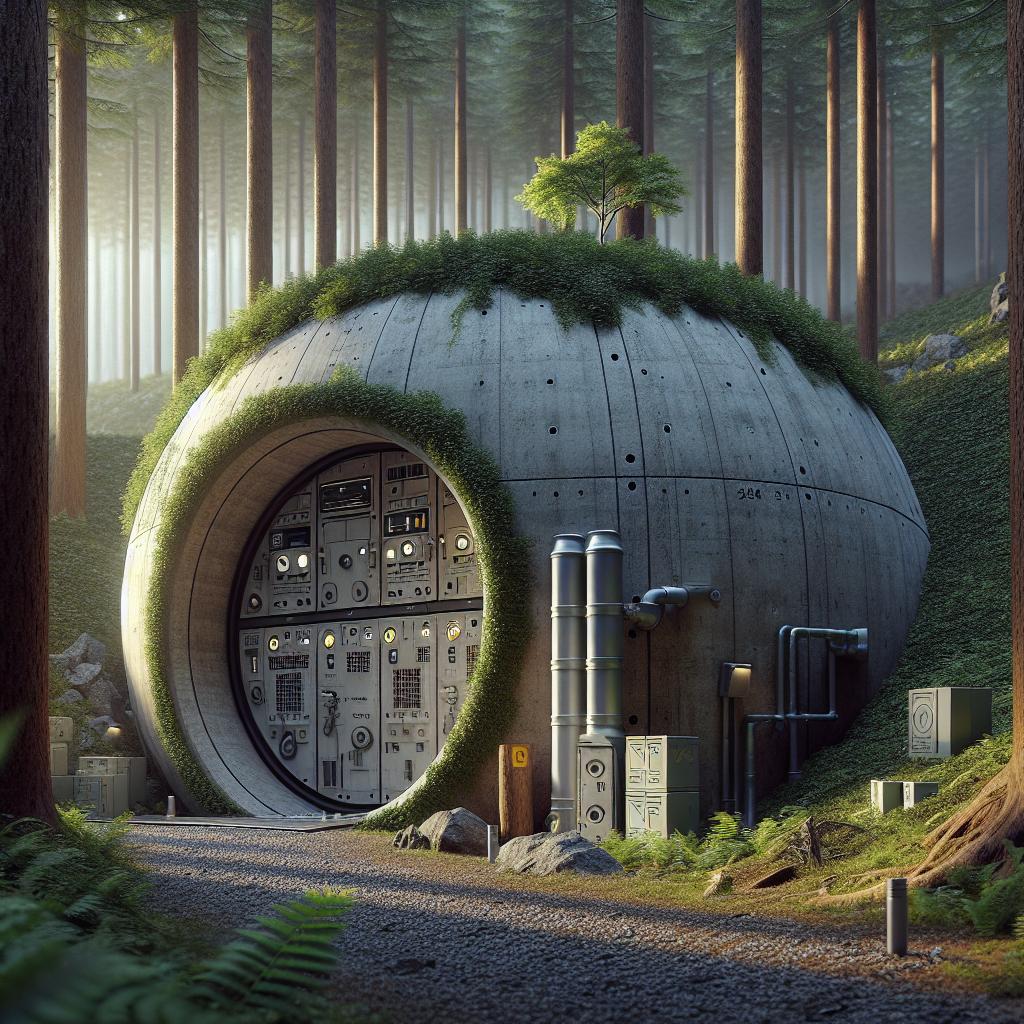
Bunkers in the panic industry are extensive underground structures that can span tens of thousands of square feet and reach depths of up to 30 stories below ground. These facilities are often concealed in plain sight, with access through secret passageways such as rotating fireplaces or floors that lift to reveal staircases leading underground. Designed for long-term sustainability and self-sufficiency, many bunkers operate on geothermal power and are equipped with their own wells, sustainable food supplies, and full medical facilities.
The interiors of these bunkers can be remarkably elaborate and comfortable, featuring amenities like amphitheaters, restaurants, health spas, and even promenades with ceilings painted to resemble blue skies. Some are customized with displays of family heirlooms and other personal touches to create a homely atmosphere. Additional features found in certain bunkers include parking spaces, gyms, and greenhouses, enhancing their ability to support inhabitants over extended periods.
Structurally, bunkers are typically built with thick concrete walls—around 15 inches thick—that provide protection against external threats. They incorporate essential systems such as ventilation, sewage, and fresh water supplies, and often include air-sealed door access and generators to ensure continuous power. The construction materials and methods have remained relatively consistent over the past seven decades, with concrete structure designs not significantly changing during that time.
While locating bunkers in hard rock may seem advantageous for reducing penetration by bunker-buster weapons, the high shock transmission properties of such rock can be a drawback. Furthermore, building within hard rock increases construction complexity, time, expense, and the risk of detection by adversaries. The planning and construction of tunnels and bunkers involve careful consideration of economic and political factors, with civil engineers employing project management techniques to balance time, labor, and material requirements effectively.
Beyond their military and governmental origins—such as Cold War fallout shelters for officials and strategic facilities—modern bunkers serve diverse purposes. They can function as medical units, fuel storage, telecommunications hubs, or interconnected operational bases supporting industrial, military, law enforcement, research and development, or exploration activities across various regions and climates.
Arsenals
Arsenals play a critical role within the broader landscape of secret tunnels, bunkers, and panic industry facilities. These secure storage sites are designed to house weapons, ammunition, and other essential supplies while maintaining a high level
Notable Examples Worldwide
Secret tunnels, bunkers, and underground arsenals have played critical roles in military defense, government continuity, and civilian protection across the globe. These facilities range from Cold War-era fallout shelters to modern-day private bunkers, reflecting a diverse history and evolving purposes.
United States
The United States hosts several top-secret underground facilities designed for government continuity and national security. One of the most notable is the Mount Weather High Point Special Facility in Virginia, located about an hour from Washington, D.C. This highly secure bunker functions as a miniature government with its own police, fire department, and laws, intended to serve as a fallback site for the U.S. president and essential officials during a disaster. Another key site is Site R, near Camp David in Pennsylvania, rumored to be connected to the presidential retreat by a 6 km tunnel, allowing the president to command the nation in the event of a nuclear war. Additionally, the Deep Underground Command Center (DUCC) beneath the White House is a reinforced nuclear radiation-proof bunker built in the 1960s for emergency use, though details about its current status remain classified. The Mount Pony facility in Virginia also gained attention for its use in evacuating Congressional leadership after the September 11 attacks.
Private sector interest in underground bunkers has surged recently, with companies like Atlas Survival Shelters building customized luxury bunkers for wealthy clients. These modern bunkers often include amenities such as gyms, greenhouses, and secret access tunnels, demonstrating a growing doomsday-preparedness market valued at billions of dollars.
Russia
Russia’s Cold War legacy includes extensive underground facilities such as Bunker-42 in Moscow, a sprawling complex over 200 feet underground that initially served as a secret communications center for air defense. Today, it operates as a Cold War museum, showcasing its historic role in Soviet military strategy. More recently, an extensive underground bunker has been constructed beneath Russian President Vladimir Putin’s Gelendzhik Palace, featuring a network of tunnels approximately 50 meters below ground, emphasizing ongoing strategic investments in subterranean security infrastructure. The Kremlin Bunker, equipped with advanced communications and rumored to connect to key government buildings via tunnels, remains an enigmatic symbol of Russia’s preparedness and resilience.
China
China’s military infrastructure includes vast underground complexes built during and after the Mao era. Notably, a massive bunker complex constructed from 1967 over 17 years covers more than 25 acres and contains 18 large man-made caves originally intended for plutonium production and nuclear weapons development. In addition, China has transformed natural caverns and resort islands into naval bases with underwater tunnel entrances capable of housing nuclear submarines, reflecting the strategic importance of subterranean facilities for modern military operations.
Vietnam
The Viet Cong’s extensive tunnel network during the Vietnam War exemplifies tactical underground warfare. Over tens of thousands of miles of tunnels were dug to enable stealth movement, troop hiding, and launch points for attacks. After the war, the tunnels, once secret and deadly, have been partially opened to the public as historical sites, providing insight into guerrilla warfare and underground survival.
United Kingdom
Beneath the Rock of Gibraltar lies a mile-long bombproof tunnel that once housed a covert surveillance team during potential enemy occupation. British plans involved sealing six men within this bunker to monitor enemy activity, highlighting the strategic use of underground spaces for intelligence and defense.
Canada and Other Examples
During the Cold War, Canada developed the Emergency Government Headquarters, a fallout shelter for high-ranking officials, paralleling similar U.S. facilities like Cheyenne Mountain and Project Greek Island. Globally, underground facilities continue to evolve, serving as defensive bunkers, communication centers, or storage sites for weapons, with some adapted for civilian uses such as wildlife crossings or smuggling tunnels.
—
These notable examples demonstrate the widespread and enduring significance of secret tunnels, bunkers, and arsenals in global security, historical conflict, and contemporary preparedness, reflecting a complex subterranean world often hidden from public view.
Role in Major Conflicts and Events
Secret tunnels, bunkers, and arsenals have played critical roles throughout major conflicts and historical events, serving as protective refuges, command centers, and strategic assets. During World War II, the escalating threat of nuclear warfare prompted both the United States and the Soviet Union to construct extensive underground bunkers to shield leaders and military personnel from potential nuclear strikes. These subterranean facilities were designed not only to provide immediate safety but also to ensure continuity of command in the event of catastrophic attacks.
The Cold War era further intensified the development and utilization of such hidden infrastructures. One notable example is the top-secret bunker built beneath the Greenbrier Resort in West Virginia, which functioned as a relocation site for members of Congress in case of a nuclear attack on U.S. soil. This facility, known as “Project Greek Island,” symbolized the extensive lengths governments went to safeguard political continuity amid heightened tensions with the Soviet Union.
Advancements in military technology have also influenced the effectiveness and design of these protective structures. The development of more accurate nuclear and conventional weapons, including nuclear bunker busters, has diminished the protective advantages of traditional hardening technologies, as near misses can now incapacitate underground silos and bunkers by obstructing critical access points with debris. Despite these challenges, secret tunnels and bunkers remain integral to modern security strategies, often incorporating cutting-edge materials and security systems developed through collaboration between military and private sector experts.
Beyond military uses, some Cold War-era bunkers have been repurposed or exposed, revealing their historical significance. For example, a Cold War command center once hidden under tranquil countryside has become a site of public interest, and a secret nuclear bunker in a Bosnian mountain has been transformed into a modern art exhibition space, highlighting the enduring legacy of these once-top-secret facilities.
In addition to their physical roles, specialized units trained in nuclear emergency response were established to extract and relocate key government figures. One such unit operated with lead-lined suits and advanced protective gear to rescue the president from potential nuclear blasts and transport him to secure locations, including bunkers or a specially equipped “Floating White House”. Though disbanded as the nature of nuclear threats evolved, modern analogs of these units continue to exist, with heightened alert status during crises such as the aftermath of the 9/11 attacks.
Thus, secret tunnels, bunkers, and arsenals have been pivotal in shaping strategic defense and governmental continuity across multiple major conflicts and remain relevant in contemporary security frameworks.
Impact on Society and Culture
The panic industry, encompassing secret tunnels, bunkers, and arsenals, has deeply influenced society and culture, often fueling moral panics that shape public perception and policy. Video games, for instance, have been repeatedly targeted as catalysts for violent behavior, prompting widespread media concern and academic debate. Despite these controversies, landmark legal decisions such as the 2011 U.S. Supreme Court ruling in *Brown v. Entertainment Merchants Association* have recognized restrictions on video game sales to minors as unconstitutional, highlighting the contested nature of these moral panics.
Historically, moral panics have played a significant role in shaping societal fears and governmental responses. The Cold War era exemplifies this phenomenon with the Red Scare leading to Hollywood blacklists and McCarthyism in the 1950s, where fear extended to individuals associated with left-wing activism. This period also reflected racial and cultural tensions, as African American musical forms like blues and jazz were stigmatized by the white establishment, fearing the “corruption” of white youth. Rock music and its associated dances were similarly condemned, embodying broader anxieties about morality and social order.
These cultural fears often intersect with technological and military advancements. The development of military technology throughout the 20th century, especially during and after World War I, has transformed scientific research and fueled secrecy and speculation. Facilities associated with advanced military projects, such as Area 51, have become focal points for conspiracy theories and public fascination. These sites, often linked to secretive military activities and rumored extraterrestrial research, contribute to a culture of suspicion and intrigue that permeates societal narratives about security and control.
Moreover, the desire for security and preparedness drives the panic industry’s expansion into personal safety technologies, such as advanced panic button solutions. These devices underscore society’s growing preoccupation with emergency readiness and the mitigation of perceived threats, reflecting a broader cultural trend towards constant vigilance and risk management.
In sum, the panic industry shapes society by amplifying fears through media, culture, and technology, influencing legal frameworks, social behavior, and even entertainment. This complex interplay fosters an environment where secrecy, suspicion, and preparedness coexist, leaving a lasting imprint on cultural consciousness.
Controversies and Criticisms
The panic industry, encompassing secret tunnels, bunkers, and arsenals, has faced various controversies and criticisms, particularly regarding the motivations behind its growth and the societal implications of its products. A notable critique stems from the broader phenomenon of moral panics, where fears—sometimes fueled by media sensationalism—escalate disproportionately relative to actual threats. This dynamic has been observed in different contexts, such as the UK’s reaction to dangerous dog breeds, which led to rushed legislation criticized as a knee-jerk response lacking thorough scrutiny.
Similarly, the burgeoning market for private bunkers and survival shelters taps into widespread anxieties about disasters and threats, ranging from dirty bombs to societal collapse. Critics argue that this commercialized fear exploits public insecurities, creating a cycle where demand for elaborate protective measures feeds on perceived dangers rather than objective risk assessments. This is underscored by the booming business of companies like Atlas Survival Shelters, whose high-end bunkers include luxury amenities and are marketed to wealthy clients preparing for doomsday scenarios—a trend driven by a significant portion of the population engaged in prepping activities.
Moreover, the secrecy surrounding many of these installations invites skepticism and fuels conspiracy theories, further complicating public perception. Military and intelligence facilities, often shrouded in mystery, are fertile ground for speculation about undisclosed activities, contributing to a climate of mistrust. This opacity, while sometimes necessary for security, also raises concerns about accountability and transparency.
In the construction and planning phases, practical considerations such as economics and politics heavily influence decision-making, occasionally leading to criticism about resource allocation and prioritization. However, the lack of public insight into these processes can exacerbate suspicions and heighten controversy over the true purpose and necessity of certain secret projects.
Current Trends and Future Outlook
The panic industry has seen significant growth driven by increasing global anxieties related to pandemics, nuclear threats, financial instability, and civil unrest. This surge in concern has expanded the market beyond elite clientele to include more working- and middle-class individuals seeking personal security solutions such as bunkers, secret arsenals, and fortified escape routes. Modern underground shelters now integrate advanced security and safety technologies that blend seamlessly into their surroundings, featuring hidden cavities reinforced with steel supports and patented materials to maintain structural integrity and operational security. These innovations position the industry as a leader in combining both traditional physical protection and cutting-edge technology.
Technological advancements originally developed for military applications have trickled down into residential security, with sophisticated sensors capable of detecting threats at great distances becoming increasingly accessible to affluent homeowners. Moreover, panic rooms and bunkers have evolved beyond mere ballistic protection to include environmental safeguards like air filtration systems designed to mitigate threats from chemical, biological, and radiological agents, responding to concerns such as dirty bomb attacks in urban centers. This shift reflects a broader understanding of security that extends past forced entry scenarios to encompass a wide range of potential hazards.
Geopolitical dynamics also influence the industry’s trajectory. In South Asia, the nuclear arms race involving India, Pakistan, and China exacerbates regional instability and drives demand for advanced protective infrastructure. The anticipated rise in urban warfare has prompted military strategists to consider underground environments as critical new domains, foreshadowing increased relevance for subterranean security solutions. Furthermore, cyber-espionage targeting mid-sized companies and critical infrastructure is expected to grow in complexity, underlining the need for integrated physical and cyber defenses within secure facilities.
On the civil side, the prevalence of terrorist threats—including biological, chemical, and cyber attacks—has made underground bunkers a practical addition for families in major cities worldwide. Excavation and construction techniques for these structures often draw upon military and historical precedents, such as tunnels used for chemical weapon storage or covert movements during conflicts. As threats diversify and become more sophisticated, the panic industry is likely to innovate further, combining physical fortification with smart technologies to address a broad spectrum of risks.
The content is provided by Avery Redwood, Home Upgrade News