
Summary
Unlock the Secrets to Pothos Propagation: A Beginners Guide from Young House Love provides concise guidance for novice gardeners eager to propagate pothos plants. Celebrated for their hardiness and adaptability, pothos (Epipremnum aureum) can thrive in various environments, making them ideal for indoor gardening. This guide focuses on practical propagation techniques, including water and soil methods, ensuring beginners feel confident in their ability to grow new plants.
Essentially, the guide simplifies key aspects like environmental conditions—light, temperature, and humidity—that influence rooting success. It outlines necessary tools and materials and addresses common pitfalls, such as overwatering and pest management, to help users maintain healthy pothos. Overall, this resource empowers readers to engage with plant propagation sustainably, enhancing their gardening skills and experience.
Overview of Pothos Plants
Pothos plants, or Epipremnum aureum, are popular for their glossy, heart-shaped leaves and trailing vines. Often found in lush green or variegated varieties, they adapt well to various indoor conditions. While native to tropical areas, pothos are resilient enough to thrive in diverse environments, making them a top choice for houseplant enthusiasts.
This species rarely flowers in cultivation, focusing on vegetative reproduction via cuttings. Their ideal growth conditions include filtered light and humidity, but they can adapt to less-than-perfect settings. Understanding these characteristics enhances the potential for successful propagation.
Pothos Propagation Techniques
Propagation is straightforward, with several effective methods such as water propagation, soil propagation, division, and using alternative mediums like sphagnum moss. These techniques offer beginner-friendly approaches to expanding their plant collection.
Water Propagation
Water propagation is engaging and simple. Cut a healthy vine above a leaf node to promote root growth, ensuring no leaves touch the water. Place the cutting in bright, indirect sunlight, and within one to two weeks, roots should develop—transfer them to soil once they reach a few inches.
Soil Propagation
For soil propagation, plant the cutting directly into a well-draining mix. Keep the soil moist but not overwatered, and provide bright, indirect light to encourage root establishment. Recognizing successful rooting involves gentle resistance when tugging the cutting after a few weeks.
Alternative Mediums
Using sphagnum moss or aerated substrates can be effective for seasoned growers. This method maintains moisture and supports root development similar to soil propagation while allowing flexibility in growing conditions.
Division
Division allows propagation by separating a mature plant’s root ball into smaller sections, each producing new plants. This method refreshes the parent plant while efficiently creating multiple new plants.
Environmental Conditions for Successful Propagation
Understanding light, temperature, and humidity significantly impacts propagation success. Pothos prefer bright, indirect light but can tolerate lower conditions; avoiding excessive direct sunlight protects the leaves.
Maintaining a warm environment, ideally between 65°F and 85°F, is essential. Cold drafts can hinder growth, potentially damaging cuttings. Humidity levels should be between 40% and 70% to promote robust root development. Increasing humidity can be done through misting or other means like using propagation domes.
Tools and Materials Needed
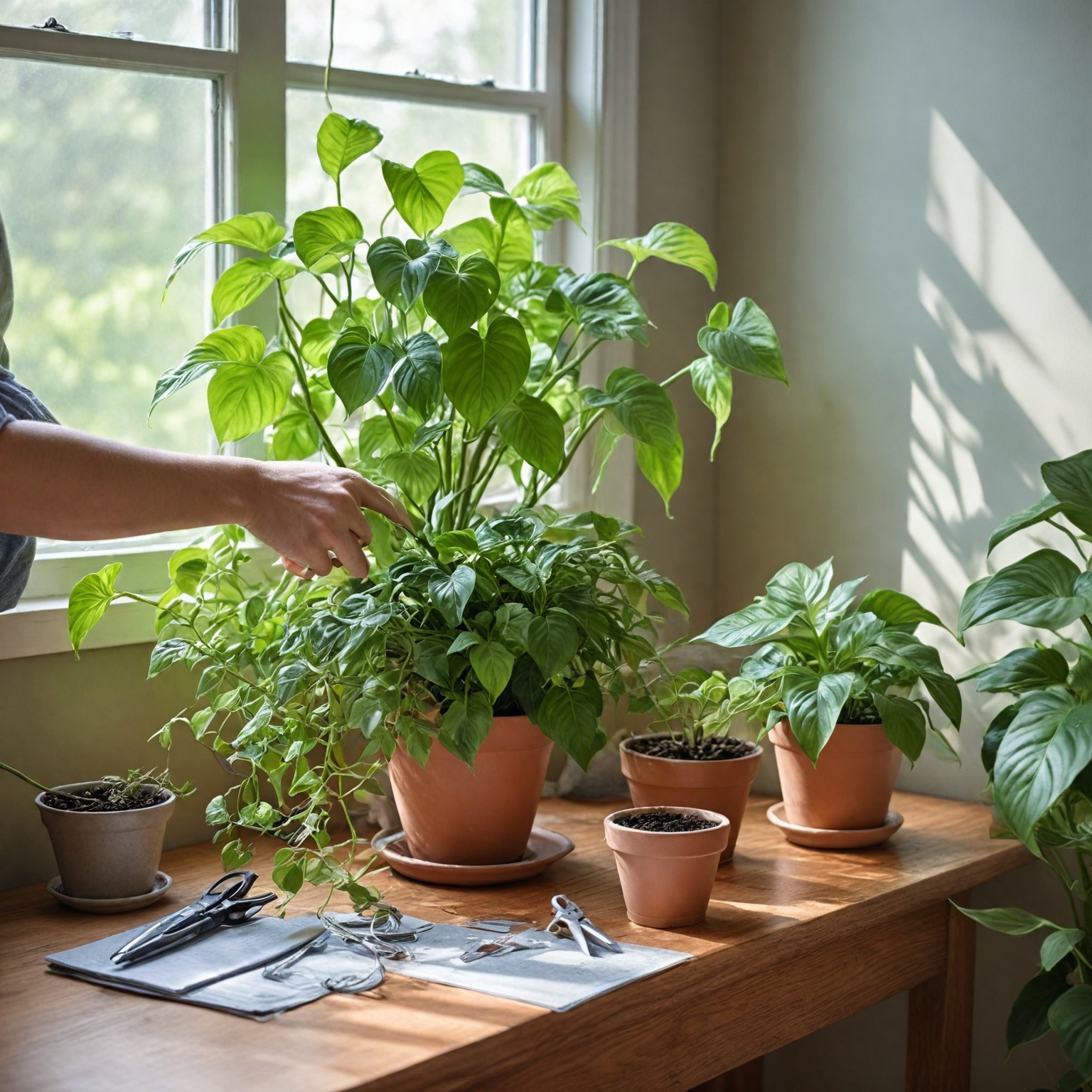
Basic tools for propagating pothos include sharp scissors for clean cuts and clear containers for water propagation. Utilizing household items makes it accessible and cost-effective. Some growers may enhance rooting with biostimulants, though this is optional.
Step-by-Step Guide for Beginners
Start by selecting a healthy vine section, cutting it above a leaf node, and placing it in a clear vessel filled with water. Position it in bright, indirect sunlight, monitoring the water level regularly. Roots will typically begin to appear within weeks; wait until they are a few inches long before transplanting into soil.
After transplanting, keep the plants in bright light and maintain even soil moisture. Avoid fertilizing immediately to minimize stress on new roots. This process empowers beginners with the rewarding experience of nurturing new growth.
Common Challenges and Troubleshooting
New growers may face challenges like overwatering or insufficient light, causing yellowing leaves or leggy growth. These issues can often be remedied by adjusting watering practices or improving light conditions. Early recognition and addressing of these symptoms can significantly foster healthy plant growth and propagation success.
Pest and Disease Management
Pothos plants generally face minimal pest issues, but occasional infestations from common houseplant pests can arise. Addressing these through simple methods, like rinsing the plant, can effectively manage pests without heavy interventions.
Tips and Recommendations from Young House Love
Pruning serves as an excellent opportunity for propagation while promoting healthy growth. Young House Love highlights pothos as excellent starter plants due to their resilience and low-maintenance requirements. They recommend a balanced fertilizer during active growing seasons, advocating for routine attention to common issues to ensure robustness in the plant collection. This promotes a fulfilling connection between gardeners and their plants, bolstering confidence in propagation endeavors.
Benefits of Propagating Pothos
Propagating pothos is a low-risk venture that allows for the expansion of one’s indoor plant collection with minimal investment. Regular pruning fosters a fuller, healthier plant and transforms cuttings into vibrant new plants. This sustainable practice enriches the gardening experience, deepening the connection between the gardener and their plants.
The content is provided by Avery Redwood, Home Upgrade News