
Summary
Unlock the Power: Why You Should Trust a Licensed Austin Electrician to Install Your 240V Garage Outlet explores the importance and benefits of hiring licensed professionals for installing 240-volt outlets in residential garages, particularly within the Austin, Texas area. These outlets provide critical power capacity for high-demand equipment such as electric vehicle chargers, heavy-duty power tools, and other specialized appliances, enhancing the functionality and value of a garage space. The article emphasizes the growing demand for 240V outlets as modern technology and energy needs evolve, especially in homes not originally equipped with such infrastructure.
The installation of a 240V garage outlet involves complex electrical work that must adhere to strict safety standards and local codes, including those set by the National Electrical Code (NEC) and Austin-specific regulations. Licensed electricians possess the specialized training, certifications, and up-to-date knowledge required to perform these installations safely and legally, significantly reducing risks such as electrical shock, fires, and costly property damage. Additionally, licensed professionals ensure proper permitting and inspection processes are followed, protecting homeowners from legal and insurance complications.
In Austin, licensing requirements regulated by the Texas Department of Licensing and Regulation (TDLR) govern who can perform electrical work, making it mandatory to hire qualified electricians for complex installations like 240V outlets. The article outlines the detailed steps, common challenges, and safety considerations involved in these installations, highlighting why professional expertise is crucial for compliance and reliability. It also discusses potential hazards and code violations that frequently arise from unlicensed or DIY electrical work, which can jeopardize both safety and legality.
Ultimately, the article argues that trusting a licensed Austin electrician not only ensures a safe, code-compliant installation but also provides peace of mind and long-term cost savings. While professional services carry upfront expenses, they mitigate significant risks and potential liabilities, making them an indispensable choice for homeowners seeking to upgrade their garage’s electrical capabilities.
Overview of 240V Garage Outlets
240V outlets are commonly installed to power high-demand appliances such as electric stoves and dryers, and they can also greatly enhance the functionality of a garage by enabling the use of heavy-duty tools and electric vehicle (EV) chargers. While not typical in older properties—especially those built between the 1950s and 1970s—it is increasingly desirable to have 240V power in a garage for modern needs.
Having a professionally installed 240V outlet in the garage offers significant advantages. It provides the flexibility to power larger equipment, such as cabinet saws, jointers, and other stationary machines that require 240V for their motors, often 2 horsepower or greater. This makes the garage a versatile workspace suited for both hobbyists and professionals. Additionally, for EV owners, a 240V outlet is essential for faster charging capabilities and can be conveniently positioned either inside the garage or near the garage door to suit charging preferences.
From a safety and compliance standpoint, installing a 240V outlet requires adherence to electrical codes and standards, which is why licensed electricians are critical. They ensure the installation meets all safety requirements, including proper circuit design and avoidance of hazards such as circuit overloads and fire risks. The 2017 National Electrical Code (NEC) mandates at least one dedicated 120V, 20-amp circuit for new garages, but adding a 240V outlet generally involves more complex work that should only be handled by qualified professionals to maintain safety and code compliance.
Importance of Hiring a Licensed Electrician
Hiring a licensed electrician to install a 240V outlet in your garage is crucial for ensuring safety, compliance with electrical codes, and the longevity of your electrical system. Electrical work, especially involving high-voltage outlets like 240V, requires specialized knowledge and training that only licensed professionals possess. Attempting to perform this work without proper expertise can lead to severe hazards such as electrical shocks, fires, and costly repairs.
Licensed electricians have undergone rigorous training and certification processes, equipping them with the latest knowledge of safety codes, proper wiring techniques, and the use of specialized tools. This expertise is essential when installing a 240V GFCI breaker, which current codes mandate for garage outlets to protect against electrical faults. Unlicensed or inexperienced individuals may overlook critical safety measures such as surge protection or proper grounding, increasing the risk of electrical accidents.
In addition to safety concerns, local and state regulations often require that any significant electrical work—including installing new outlets or altering wiring—be performed by a state-licensed electrician. This ensures compliance with the National Electrical Code (NEC) and local amendments, which are updated regularly to reflect technological advancements and improved safety standards. Many jurisdictions restrict permits for electrical work to licensed professionals, reinforcing the importance of hiring qualified electricians for complex tasks.
Moreover, licensed electricians typically conduct thorough safety inspections after completing work, which helps identify and mitigate any potential hazards that might otherwise go unnoticed. Their adherence to code requirements also ensures that installations meet both residential and workplace electrical safety standards, reducing risks associated with improper wiring or faulty equipment use.
Ultimately, entrusting your 240V garage outlet installation to a licensed electrician not only safeguards your property and loved ones but also guarantees that the work is done correctly and up to code. This professional approach helps avoid unexpected costs, legal issues, and potential dangers, allowing you to confidently power your tools and appliances without worry.
Licensing, Certification, and Training Requirements in Austin
In Austin, electricians must adhere to licensing and certification standards regulated primarily by the Texas Department of Licensing and Regulation (TDLR) under the Texas Electrical Safety and Licensing Act. The state does not prohibit licensed electrical apprentices, journeymen, or masters from performing industrial electrical work, although holding a journeyman industrial electrician license is optional.
Apprenticeship programs typically span four to five years, requiring a minimum of 8,000 hours of on-the-job training combined with 576 hours of classroom instruction. Apprentice electricians must work under supervision but are not required to log specific hours before beginning work on a job site. Upon completion of apprenticeship requirements, candidates may apply to take the journeyman electrician license exam by submitting the application form along with a $30 fee to the TDLR.
Austin aligns its electrical regulations with the National Electrical Code (NEC), with the city recently proposing the adoption of the 2023 NEC, replacing the 2020 version. This update includes clarifications and additional requirements related to ground-fault circuit interrupters (GFCI), surge protection, and medium voltage installations. The adoption aims to simplify and standardize code requirements within the city, with an expected effective date of September 2023, consistent with statewide adoption.
Because electrical codes can vary by municipality, electricians and consumers are encouraged to consult local licensing or inspecting authorities and the TDLR for technical assistance and jurisdiction-specific requirements. This ensures compliance with local amendments and safety standards. Given the complexity of electrical codes and potential local variations—for example, in requirements related to neutral wiring for 240V circuits—hiring a licensed professional familiar with Austin’s codes is critical for safety and code compliance.
Reasons to Trust a Licensed Austin Electrician
When it comes to installing a 240V garage outlet, trusting a licensed electrician in Austin is crucial for several important reasons. Electrical work is inherently complex and hazardous; improper installation can lead to severe consequences such as electrical shocks, fires, or costly repairs. Licensed electricians undergo rigorous training, possess the necessary tools, and stay updated on the latest safety codes and local regulations, ensuring that the installation is done safely and correctly.
Austin’s unique infrastructure and rapid development make it especially important to hire an electrician familiar with local codes and city requirements. A licensed professional can navigate these standards effectively, avoiding potential legal and safety issues that might arise from noncompliance. Additionally, licensed electricians can assess whether your existing electrical panel can accommodate a new double-width breaker for the 240V circuit or if upgrades are necessary—something that requires specialized knowledge and experience.
Attempting a DIY installation without proper expertise and equipment can be risky. Even for those with some electrical experience, the nuances of local electrical codes and specific requirements—such as the correct use of neutral wires or the need for conduits and wire burial—are often overlooked, which can compromise safety and legality. While minor electrical repairs like replacing switches or outlet covers may be acceptable for homeowners, any significant wiring work integral to the building’s electrical system must be handled by a licensed professional.
Moreover, most electrical projects involving substantial alterations or safety concerns require permits and inspections to ensure compliance with building codes. Licensed electricians are knowledgeable about the permitting process and can help avoid costly delays or violations by ensuring that all work meets regulatory standards. Their expertise not only guarantees the quality and safety of the installation but also provides peace of mind that the job is done right the first time.
Common Safety Hazards and Code Violations from Unlicensed Installations
Unlicensed electrical work, particularly involving the installation of 240V garage outlets, poses numerous safety hazards and is frequently fraught with code violations that can jeopardize both property and personal safety. One of the primary risks is that unlicensed electricians may fail to follow critical safety regulations, such as using the correct wire sizes and tools, which can lead to overheating and potentially cause fires. Improper handling of older wiring systems, like aluminum wiring, is another serious concern, as incorrect upgrades can create significant fire hazards. Additionally, unlicensed practitioners often skip essential safety inspections after completing work, leaving dangerous issues undetected.
Code violations common in unlicensed installations include failure to install necessary ground-fault circuit interrupters (GFCI) or surge protectors, which are critical for protecting the home from electrical spikes and shocks. The improper installation of outlets and switches further increases the risk of electrical shocks and fire. Specific challenges arise with multi-wire branch circuits (MWBCs), which require adherence to strict code rules such as using a two-pole breaker that trips both sides simultaneously; violations of these rules can result in dangerous electrical conditions and are common in non-compliant installations.
Moreover, unlicensed work often neglects local zoning laws and permitting requirements, which not only makes the installation illegal but also can lead to costly fines or denial of insurance claims in the event of damage. Even with permits, the presence of a licensed and insured electrician does not guarantee safety if proper standards are not met, but unlicensed work significantly increases the risk of liability, especially if fires or injuries occur that affect neighboring properties or individuals. This liability can extend to severe legal consequences, including criminal charges in cases of fatal accidents caused by negligent electrical work.
Electrical injuries frequently stem from hazards such as contact with live power lines, missing or discontinuous grounding paths, and improper use of electrical equipment and cords, all of which can be exacerbated by unqualified workmanship. DIY or unlicensed installations often do not comply with the National Electrical Code (NEC), increasing the risk of electrocution, circuit damage, power outages, and house fires. Because installing or upgrading a 240V outlet involves higher voltage and complexity, it requires specialized expertise to ensure both safety and code compliance, making it imperative to hire a licensed professional.
Detailed Steps Involved in Installing a 240V Garage Outlet
Installing a 240V outlet in a garage involves several crucial steps that ensure safety, code compliance, and functional efficiency. Whether upgrading from an existing 120V supply or adding new capacity, it is essential to approach the project with proper planning and professional expertise.
Installation Process
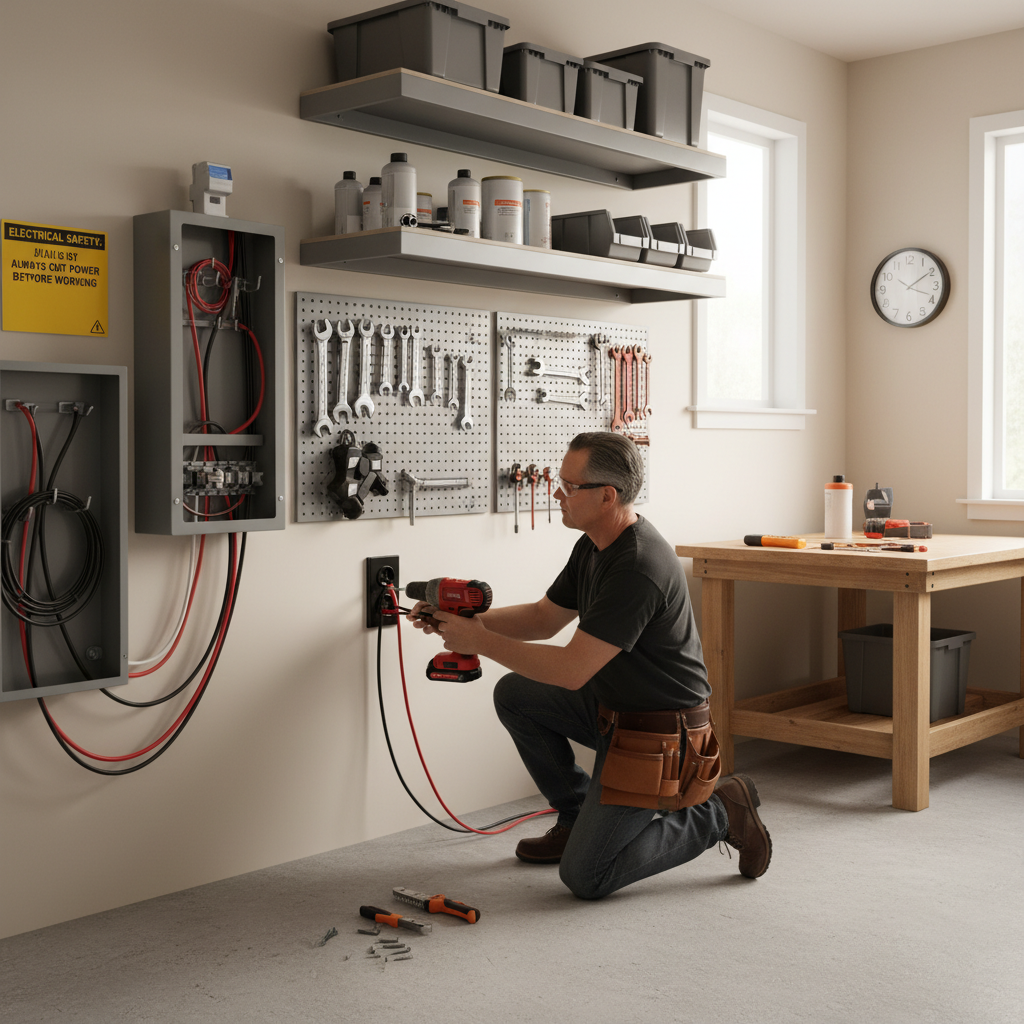
- Power Shutdown and Safety Checks: Before any wiring, the main panel must be powered down to prevent electrical shocks. Proper tools and personal protective equipment are essential.
- Breaker Panel Preparation: Remove existing breakers if necessary, replacing them with an approved 240V breaker that matches the amperage requirements and torque specifications as recommended by manufacturers like Eaton.
- Wiring Installation: Run NM cable or conduit from the breaker panel to the garage outlet location. Cable must be secured according to code—typically within 12 inches of the panel and every 4.5 feet thereafter—to prevent sagging or damage.
- Outlet Installation: Install the 240V outlet in a suitable location, ensuring it is mounted securely and wired correctly. The equipment grounding conductors must be joined with wire connectors inside outlet boxes for proper grounding and safety.
- Code Compliance and Inspection: After installation, the setup must be inspected to verify compliance with local electrical codes and safety standards. This includes checking breaker compatibility, wire gauge, grounding, and GFCI protection where required.
Planning and Preparation
The first step involves assessing the current electrical setup to determine if the existing circuit can support a 240V outlet or if new wiring and breakers are necessary. This often includes verifying that the garage circuit is on its own dedicated breaker to avoid overloading or fire hazards. If adding a 240V outlet specifically for high-demand equipment like electric car chargers or heavy power tools (e.g., table saws with 2hp or greater motors), adequate amperage and proper breaker sizing must be considered.
It is advisable to obtain at least three estimates from licensed electricians to ensure fair pricing and quality work. Additionally, local codes and regulations—such as those enforced in Austin, Texas—may require permits and inspections, which must be arranged before installation begins.
Materials and Tools
The installation requires specific materials including a 240V circuit breaker, appropriate NM cable rated for the load, a compatible 240V outlet (e.g., NEMA 14-50 for EV chargers), conduit, wire connectors, and safety devices such as GFCI breakers if mandated by code. Using the correct components is critical as 220V and 240V outlets may look similar but differ in wiring and safety requirements.
Post-Installation Considerations
Hiring a licensed electrician is strongly recommended to ensure all wiring and components are installed safely and to code, minimizing risks of electrical hazards such as shocks or fires. Licensed professionals also provide proper documentation and can assist with scheduling inspections and permits, protecting homeowners from potential liability and unexpected expenses.
Costs for professional installation vary, but typical prices in Austin range around $700 for a complete 240V outlet installation near the panel, though cheaper quotes may exist from unlicensed providers, which carry risks.
Common Challenges in Installing 240V Garage Outlets in Austin
Installing a 240V outlet in a garage presents several challenges that homeowners and contractors must carefully navigate to ensure safety, compliance, and functionality. One primary challenge is verifying the electrical panel’s capacity to handle the additional load. A licensed electrician must assess whether the existing panel can support a new 240V breaker or if upgrades are necessary to accommodate the outlet safely. Without this evaluation, there is a risk of overloading circuits, which can lead to fire hazards or equipment failure.
Another challenge involves adhering to local electrical codes and regulations. Electrical codes in Austin, as guided by the National Electrical Code (NEC) and updated approximately every three years, set strict requirements for safe electrical installations in residential areas. These codes can dictate how wiring must be run—such as requiring wires to be buried underground or installed in conduit—and determine permitting requirements. Failure to comply with these codes can result in failed inspections or unsafe installations.
The complexity of wiring a 240V outlet also demands expertise, as it involves working with multiple wires and connections that differ significantly from standard 120V outlets. Incorrect installation or use of improper tools can lead to errors, injury, or electrical hazards. Given the intricacies, even experienced DIYers are advised to consult professionals when in doubt.
Furthermore, obtaining the necessary permits from the City of Austin can add to the process’s complexity. While the actual cost of permits may vary, any installation requiring new wiring or panel upgrades typically necessitates a permit and inspection to ensure code
Safety and Legal Advantages of Hiring a Licensed Electrician
Hiring a licensed electrician to install your 240V garage outlet is crucial for ensuring both safety and legal compliance. Electrical work, especially involving high-voltage installations like a 240V outlet, requires specialized knowledge and skills to prevent potentially dangerous situations such as electrical shocks, fires, and costly damage to your property. Licensed electricians undergo rigorous training and are up to date with the latest safety codes and regulations, enabling them to perform installations that meet industry standards and minimize risks.
From a safety perspective, attempting to install a 240V outlet without proper expertise can lead to severe hazards. Unlicensed or inexperienced individuals may overlook critical electrical issues or fail to adhere to local electrical codes, increasing the chance of long-term safety problems and accidents. Moreover, improper wiring or faulty installation can cause fires that not only endanger your home but also neighboring properties. In such cases, homeowners may face significant liability, including potential legal consequences if injuries or fatalities occur.
Legally, most municipalities require permits and inspections for electrical installations, and only licensed electricians are authorized to obtain these permits. Failing to secure the proper permits can jeopardize your homeowners insurance claims should an accident happen, as insurance companies may deny coverage if work was done without adherence to code or without professional involvement. Furthermore, adherence to laws such as the Texas Electrical Safety and Licensing Act ensures that electricians meet the necessary standards and qualifications to perform electrical work safely and legally.
Cost Considerations
When installing a 240V garage outlet, such as a NEMA 14-50 plug, the cost can vary significantly depending on several factors including labor, parts, and permit fees. For example, parts alone, like 6-gauge wiring and a 30-foot cable, can cost around $128 at a retailer like Home Depot. However, the majority of the expense typically comes from hiring a licensed electrician, whose rates usually range between $50 and $150 per hour.
Electricians often charge between $137 and $319 just to replace an outlet, and installation of new 240V circuits can be more expensive due to the complexity and safety requirements involved. These costs can also include necessary permits, which may vary widely depending on local regulations. In Austin, for instance, permit fees for such electrical work have been reported to range from $250 to $700, adding another layer of variability to the total cost.
While some homeowners may consider doing the installation themselves to save money, this approach carries risks. Unlicensed or inexperienced individuals might overlook critical electrical hazards or local code requirements, potentially compromising safety and leading to more costly repairs in the future. Thus, despite the upfront cost, hiring a licensed electrician ensures that the work meets safety standards, is compliant with local codes, and ultimately protects both property and personal well-being.
The content is provided by Jordan Fields, Home Upgrade News