
Summary
Could This LA Home Hold the Key to Solving America’s Energy Crisis? explores how an innovative residential model in Los Angeles exemplifies potential solutions to the United States’ escalating energy challenges. Faced with rising energy demands driven by population growth, urbanization, and climate concerns, the integration of smart home technologies, renewable energy systems, and sustainable design has become critical for reducing greenhouse gas emissions and fostering energy independence. This LA home embodies cutting-edge approaches—including solar power, advanced insulation, passive ventilation, and water-wise landscaping—that collectively demonstrate how residential buildings can transition from energy consumers to net-zero or even net-positive contributors.
California, and Los Angeles specifically, has been a national leader in setting ambitious clean energy targets, such as achieving 100% renewable electricity by 2045. The home’s design aligns with these goals through a “house as a system” methodology, optimizing building materials, HVAC efficiency, and energy storage to maximize performance and resilience. Policy support and community programs—like the Self-Generation Incentive Program and the Clean Energy Partnership—further accelerate adoption of these technologies, ensuring equitable access and integration into the local grid.
Despite its promise, the transition embodied by this LA home also highlights significant challenges. Coordinating energy efficiency initiatives with housing policies, overcoming financial barriers, and addressing the social complexities of energy behavior change remain ongoing obstacles. Furthermore, accelerated clean energy transitions could result in higher electricity rates, disproportionately impacting lower-income households unless mitigated by targeted policies and subsidies. These factors underscore the importance of integrated, community-focused approaches to ensure a just and sustainable energy future.
By combining technological innovation, supportive policy frameworks, and sustainable design principles, the LA home serves as a microcosm for addressing America’s broader energy crisis. Its success offers valuable insights into how residential architecture and community engagement can contribute to decarbonization, grid modernization, and energy equity, providing a scalable model for cities nationwide confronting the urgent demands of climate change and energy security.
Background
The United States is facing an unprecedented energy crisis driven by factors such as population growth, urbanization, and industrialization, which place increasing demands on global energy resources. In response, the integration of smart home technologies and renewable energy systems has become a pivotal strategy to address environmental challenges including greenhouse gas emissions and climate change. Renewable energy sources—such as hydroelectric, solar, wind, geothermal, and biomass—accounted for about 9% of total U.S. energy consumption in 2012, reflecting growing efforts to diversify and decarbonize the energy supply.
California, and Los Angeles in particular, has been at the forefront of adopting aggressive clean energy goals. The city has committed to achieving reliable, 100% renewable electricity by 2045, with plans to accelerate deployment of wind, solar, and energy storage technologies in the near term. These goals are supported by initiatives aimed at modernizing the electricity infrastructure and promoting widespread electrification of buildings and vehicles. Expanding the renewable power supply not only reduces greenhouse gas emissions but also improves air quality, provides sustainable energy resources, and decreases dependence on imported fossil fuels.
On the residential front, energy-smart home design incorporates architectural features that maximize natural light and ventilation to reduce reliance on mechanical heating and cooling. For example, east-facing windows capture soft morning light, while west-facing windows are carefully managed to avoid heat and glare. Cross-ventilation through strategically placed windows enhances cooling naturally, particularly in coastal environments. Interior design considerations, such as avoiding furniture placement that obstructs sunlight and using light, pastel colors in frequently used rooms, further optimize daylight use and comfort.
In addition to passive design strategies, the choice of sustainable construction materials plays a crucial role. Renewable and non-toxic materials, such as advanced insulation options that reduce air infiltration, can improve energy efficiency and lower utility costs. Financial incentives and programs encourage homeowners to adopt renewable energy systems, involving thorough planning that considers electricity use, local codes, and technology options.
Together, these approaches exemplify how a single home in Los Angeles could embody innovative solutions to help solve America’s broader energy challenges through smart design, renewable energy adoption, and policy support.
The LA Home
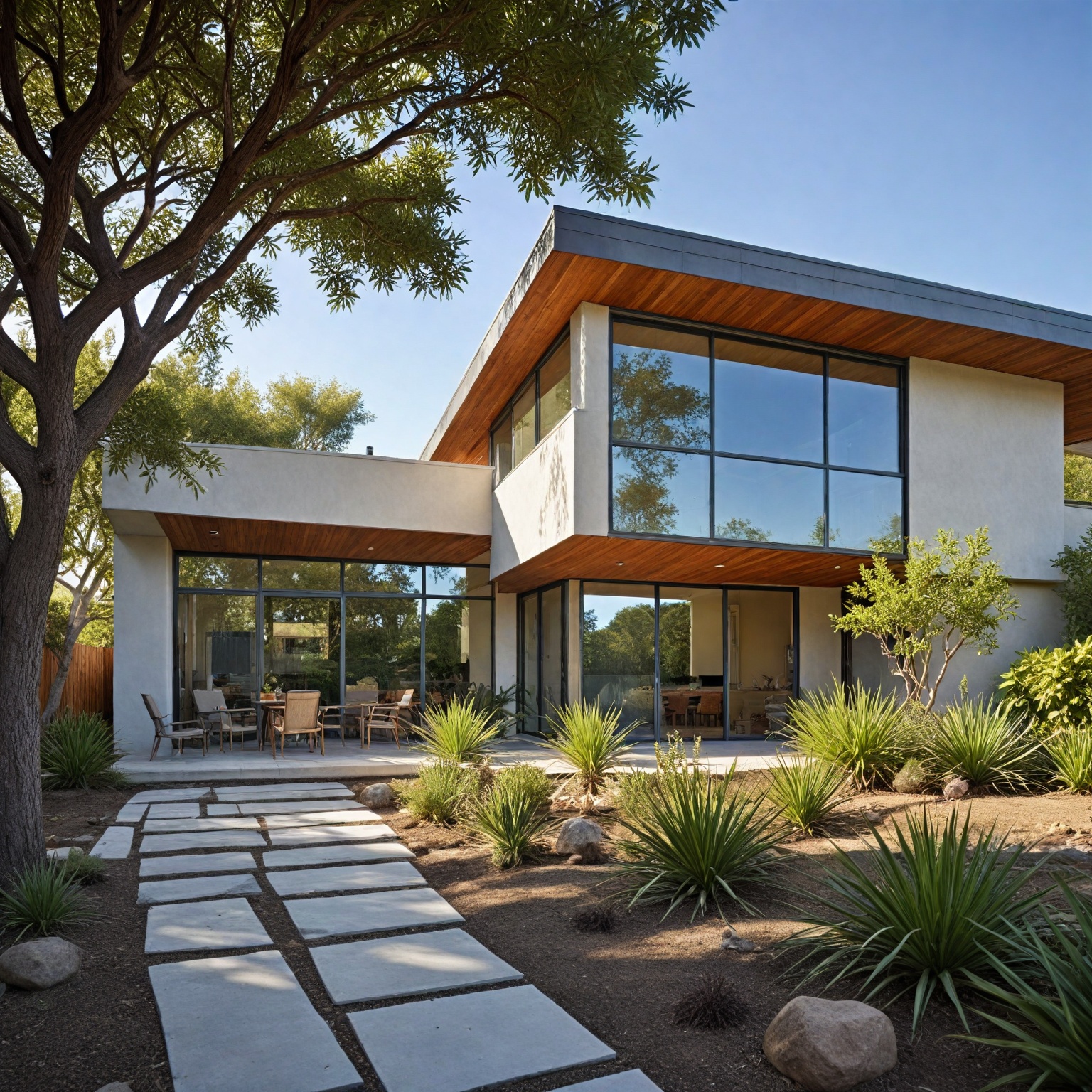
The Los Angeles home represents a forward-thinking model of eco-friendly residential design, combining energy efficiency, renewable energy, and sustainable landscaping to reduce its environmental footprint. Homeowners in LA are increasingly adopting features such as solar power systems, smart home technologies, and drought-resistant plants, all of which contribute to lowering carbon emissions while also offering potential long-term financial savings.
This home integrates a “house as a system” approach, which emphasizes the synergy between various building components and systems to maximize overall performance. Employing traditional materials and building practices alongside modern energy standards like ENERGY STAR Version 3.0, the design pushes the boundaries of sustainable residential construction. Insulation plays a critical role in this efficiency, with high-performance materials properly installed to minimize air leaks and thermal losses. Additionally, HVAC systems are optimized for energy savings, often incorporating smart thermostats and advanced heat pumps to reduce the largest energy consumption source in the home: heating and cooling.
Natural ventilation is another key feature of the LA home’s passive design strategy. By utilizing air pressure differences through well-placed openings and architectural elements, fresh air circulates effectively without reliance on mechanical systems. This passive airflow reduces indoor temperatures and improves thermal comfort, a tactic inspired by renowned designs such as the Lee House and FVB House. Furthermore, the home incorporates materials and design elements that enhance thermal mass and indoor air quality, such as reflective surfaces and indoor greenery.
Renewable energy systems, particularly rooftop solar panels, play a central role in the home’s energy profile. Photovoltaic technology converts sunlight into electricity, enabling the home to meet a substantial portion of its power needs independently. In some cases, energy storage solutions like lithium-ion or lithium iron phosphate (LFP) batteries are installed to store excess solar energy for use during non-sunny periods, enhancing energy autonomy. These solar solutions are increasingly accessible in the Los Angeles area, supported by programs expanding solar savings and enabling shared solar participation for multifamily residences.
Water conservation is addressed through the use of drought-resistant landscaping, which reduces irrigation requirements and conserves this vital resource in a region prone to water scarcity. Together, these integrated systems and strategies illustrate how a thoughtfully designed LA home can contribute to a greener future and serve as a potential model for addressing broader energy challenges in the United States.
Energy Production and Consumption Performance
The Los Angeles home exemplifies a new wave of residential energy innovation focused on achieving net-zero energy consumption. Despite increasing energy demands from larger homes equipped with more devices, advancements in energy efficiency have resulted in a roughly 10 percent reduction in energy use per household. This improvement is largely attributed to technology innovation and federal conservation standards, enabling homes to consume less energy even as total usage grows.
The LA home incorporates these principles by pairing highly efficient building systems with renewable energy technologies, notably solar panels, to generate as much electricity as it consumes on a warm summer day, achieving a net-zero energy status.
Energy management systems (EMS) play a crucial role in optimizing the consumption and production balance. These systems allow homeowners to harness solar power effectively by scheduling energy use, managing battery storage, and optimizing individual solar panel output, particularly when combined with module-level power electronics (MLPE). EMS technologies further enhance emission reductions by prioritizing renewable energy use and storing excess energy in batteries for peak demand periods.
Battery storage is fundamental to maintaining reliable energy supply and smoothing out the intermittent nature of solar generation. Short-term battery storage acts as an insurance policy by compensating for fluctuations caused by passing clouds, thereby ensuring a consistent power supply to the grid. Homeowners often choose between AC-coupled batteries, typically added to existing solar systems, and DC-coupled batteries, preferred for new installations integrating solar panels and storage simultaneously. Currently, lithium-ion batteries—especially lithium iron phosphate (LFP) variants—are considered the most effective for residential use due to their efficiency and safety features.
Together, these integrated systems allow the LA home to function not just as an energy consumer but as a small power plant, contributing electricity to the grid during peak demand times, such as summer afternoons. This model of distributed energy production and consumption points to scalable solutions for addressing broader energy challenges across America.
Policy and Community Influence
Local governments, cities, counties, and states play a critical role in shaping energy policies, programs, and projects by utilizing available resources to make informed decisions tailored to their communities’ needs. Effective energy policy-making relies not only on evaluating the success of energy interventions but also on understanding the behavioral mechanisms that drive individual and collective energy consumption patterns. Peer pressure—both online and offline—has been identified as a significant influence on energy-related behavior, regardless of communication channel. Factors such as the type of behavior targeted (energy efficiency versus conservation), householder characteristics (openness to change and environmental awareness), and prior influence events also shape the potential for behavioral change. These insights can help public policy redefine intervention strategies to enhance their effectiveness in modifying energy use behaviors.
Despite growing awareness of the importance of energy conservation, challenges remain in implementing cohesive energy policies. These challenges include a lack of funding, policy non-coordination, and insufficient understanding of the social and economic benefits of energy conservation, education, and flexible utility billing policies. A more coordinated, regional approach integrating home energy, weatherization, utility, and housing assistance programs is proposed to provide a coherent solution to these issues.
In Los Angeles, multiple collaborative efforts illustrate the integration of policy and community engagement to promote clean energy adoption and grid modernization. The Clean Energy Partnership, co-chaired by leaders from the Los Angeles Cleantech Incubator (LACI) and the California Energy Commission, involves stakeholders such as the LA Mayor’s Office of Sustainability, LADWP, Southern California Edison, and private sector partners. This partnership focuses on developing a smart, modernized local distribution grid to increase community resilience, enable clean technology innovation, improve affordability, create green jobs, and reduce health risks.
Financial incentive programs also play a significant role in accelerating residential adoption of clean energy technologies. The Self-Generation Incentive Program (SGIP), a California state initiative, provides funding for income-qualified residential customers to install solar and battery storage systems. These installations enhance grid reliability, reduce greenhouse gas emissions, and promote clean energy use, with rebates covering 15 to 100 percent of installation costs.
LADWP offers several residential solar programs designed to expand access to solar energy, particularly in multifamily dwellings and underserved neighborhoods. Programs such as Solar Rooftops, Shared Solar, and Virtual Net Metering (VNEM) help residents stabilize their electricity costs, support renewable energy development, create local jobs, and reduce the carbon footprint of the region’s energy supply. Additionally, LADWP’s Interconnection Program facilitates the integration of net energy metering (NEM), battery energy storage systems (BESS), and co-generation projects, further supporting renewable energy goals.
Building on these initiatives, the LA100 Equity Strategies program seeks to ensure a just and equitable transition to 100 percent renewable energy, benefiting all communities across Los Angeles. This effort was launched by LADWP at the request of the Mayor and City Council and involves convening advisory groups to outline necessary steps and investments to achieve a fully renewable energy supply. These policies and programs collectively demonstrate how coordinated community influence and targeted policy approaches can advance the clean energy transition and address systemic barriers to energy equity in urban settings.
Broader Impacts and Significance
The transition toward renewable energy and increased home energy efficiency holds substantial implications for both environmental sustainability and socio-economic equity. Achieving Los Angeles’s goal of a reliable, 100% renewable electricity supply by 2045, or even by 2035, is feasible through accelerated deployment of wind, solar, and energy storage technologies, alongside aggressive electrification efforts in buildings and vehicles. Such a transition promises numerous benefits, including significant reductions in greenhouse gas emissions, improved air quality, and decreased dependence on fossil fuels and foreign energy sources.
However, the broader impacts of this energy shift are complex and multifaceted. For instance, certain energy transition scenarios that involve accelerated timelines or the exclusion of specific energy options, like biofuels, may lead to higher electricity rates. These increases could disproportionately affect lower-income households unless counteracted by targeted subsidies or supportive policies. This highlights the critical importance of integrating economic instruments and social considerations into energy policy to ensure equitable outcomes.
Moreover, understanding the underlying factors that influence observed trends in energy consumption and emissions remains a challenge. External variables such as population growth, weather, and the effectiveness of local programs (e.g., home energy retrofit subsidies or building codes) complicate the assessment of policy impacts and hinder the formulation of optimized strategies. Addressing these complexities requires coordinated regional approaches that integrate energy conservation, education, and flexible utility billing policies to maximize social and economic benefits.
At a broader level, the energy transition engages a wide array of interconnected issues, including land use, environmental justice, technological dependency, behavioral change, and policy innovation. These dimensions underscore the need for interdisciplinary research and public participation to navigate challenges such as carbon lock-in and to promote just transitions.
Efforts like the Los Angeles County Office of Sustainability’s promotion of a single, regional residential efficiency program illustrate practical steps toward clearer, more consistent opportunities for home energy upgrades among millions of residents. Such initiatives, combined with financial incentives like those offered through the Energy-Smart Homes Program, are vital to accelerating adoption and maximizing the positive impacts of energy-efficient homes.
Ultimately, the collective advancement of renewable energy and home efficiency not only supports local and state climate goals but also contributes to national efforts to alleviate the energy crisis, providing a sustainable and equitable path forward.
Challenges and Limitations
Efforts to address energy efficiency and conservation in homes face several significant challenges and limitations. One major issue is the lack of coordination between housing and energy assistance policies, which often results in temporary fixes rather than sustainable solutions. This fragmentation is exacerbated by insufficient funding, policy non-alignment, and limited recognition of the social and economic benefits of energy conservation and education, as well as flexible utility billing policies. A more integrated, regional approach that aligns home energy and housing programs is suggested to provide a coherent policy framework capable of delivering longer-term impact.
Another challenge lies in the effectiveness of common intervention strategies such as social influence (peer pressure) and economic instruments (rewards and penalties). While peer pressure is acknowledged as a highly influential factor regardless of whether it is communicated online or offline, a global consensus on the overall effectiveness of these interventions remains elusive. Factors influencing their success include the type of targeted behavior (efficiency versus conservation), individual characteristics like openness to change and environmental awareness, and the presence of prior influence events. These complexities highlight the need for targeted research agendas to better understand and improve intervention outcomes.
Financial barriers also pose limitations to widespread adoption of home energy upgrades. Although affordable and accessible financing options have enabled some homeowners to spread out upgrade costs, facilitating increased program participation, challenges remain in assessing local efficiency markets and addressing infrastructure and workforce development needs. Additionally, considerations such as building codes and policies can extend program rollout timelines, requiring planners to allocate sufficient time for these factors.
Lastly, the scale and design of homes impact energy efficiency efforts. While smaller homes naturally use fewer materials and require less energy for heating and cooling, not all individuals interested in sustainable design choose to downsize. Larger homes consequently demand more resources and energy, presenting inherent challenges to efficiency gains. These factors, combined with varied local policy environments, further complicate the path toward effective, scalable solutions.
Reception and Recognition
The innovative approaches and strategies detailed in the LA100 Equity Strategies report have garnered significant attention and praise from key stakeholders in Los Angeles and beyond. At a press conference held at LADWP headquarters, the report’s findings were highlighted as a critical foundation for Mayor Karen Bass’ “Powered by Equity” initiative, which aims to shape the city’s clean energy future in a way that benefits local communities and customers alike. Cynthia McClain-Hill, president of the Los Angeles Board of Water and Power Commissioners, emphasized the bold and innovative potential of these efforts to deliver equitable clean energy solutions to neighborhoods throughout the city.
Furthermore, the deployment of
Future Prospects
The transition to 100% fossil-free electricity in Los Angeles holds promising prospects, even if the target is only partially achieved. According to experts like Adam Rose from USC Price School, reaching approximately 90% of this goal—or slightly less—should still be considered a significant success, as it would involve minimal job losses across the economy. However, scenarios that accelerate the timeline to 2035, exclude certain energy options such as biofuels, or require large investments outside of Los Angeles tend to have more negative employment impacts and lead to higher electricity rate increases. These increases could disproportionately affect lower-income households unless mitigated by targeted subsidies or policies.
The recent LA100 Equity Strategies report has laid the groundwork for a clean energy future that aims to deliver tangible benefits to community residents across the city. The initiative, supported by Mayor Karen Bass’ “Powered by Equity” plan and advocated by leaders such as Cynthia McClain-Hill, emphasizes innovation and bold action to ensure equitable distribution of clean energy advantages throughout Los Angeles neighborhoods.
On the residential level, the integration of renewable energy systems and energy-saving technologies offers additional avenues for sustainability and energy independence. Homeowners are encouraged to assess their energy use, consider efficiency upgrades, and explore renewable options that fit their site and lifestyle. Advances in home energy management, including smart home technologies and systematic energy optimization, are emerging rapidly to meet growing consumer demand for cost savings and environmental responsibility.
Moreover, comprehensive approaches such as home energy assessments and whole-house systems design are critical for maximizing efficiency in both new constructions and major renovations. These strategies, combined with available programs and financing options, can significantly reduce energy consumption and contribute to broader sustainability goals.
The content is provided by Jordan Fields, Home Upgrade News