Summary
The HomePod Mini 2 is the anticipated second-generation smart speaker from Apple, expected to launch in the third quarter of 2025 as a successor to the popular HomePod mini introduced in 2020. Positioned as a compact, affordable device within Apple’s smart home ecosystem, the HomePod Mini 2 aims to build on its predecessor’s strengths by delivering improved audio quality, enhanced connectivity, and upgraded processing power while maintaining its signature minimalist design. This release is notable for continuing Apple’s strategic expansion into the competitive smart speaker market dominated by Amazon and Google, emphasizing seamless integration with other Apple products and services.
Rumored enhancements for the HomePod Mini 2 include the integration of Apple’s latest S-series chipsets, potentially the S9 or S10, which are expected to significantly boost Siri responsiveness and device efficiency. Connectivity is also set for a major upgrade with the possible inclusion of Apple’s N1 wireless chip supporting Wi-Fi 6E or Wi-Fi 7 standards, promising faster and more reliable network performance and new features like acting as a Wi-Fi range extender within smart homes. Despite speculation about touchscreen features on larger HomePod models, the Mini 2 is expected to retain its voice-centric interface without a display, with only subtle design refinements and new color options.
The launch timeline has faced some uncertainty, with earlier rumors suggesting a Fall 2024 debut potentially delayed to late 2025 due to software integration challenges, particularly involving Siri. Industry insiders like Mark Gurman have speculated the release may coincide with an updated Apple TV 4K, underscoring Apple’s broader strategy to deepen its smart home ecosystem through coordinated device launches. Pricing is expected to remain around the $99 mark, maintaining the HomePod mini’s competitive position in the entry-level smart speaker market.
While the HomePod Mini 2 is poised to attract attention for its technical improvements and ecosystem compatibility, some skepticism persists regarding the degree of Siri’s advancement, given ongoing concerns over voice assistant accuracy. Nonetheless, Apple’s commitment to sustainable materials and incremental innovation is expected to reinforce the HomePod Mini’s appeal among both existing customers and newcomers, solidifying its role in Apple’s evolving smart home portfolio.
Background
The HomePod mini was introduced as a smaller, more affordable alternative to Apple’s original HomePod, offering Siri integration and multi-room audio support through AirPlay at a $99 price point. Despite its compact size, it delivers impressive sound quality with weight, refinement, and depth, making it a strong contender among smart speakers in its category. The HomePod mini launched on November 16, 2020, nearly three years after the original HomePod debuted. Subsequently, the second-generation full-sized HomePod was released on February 23, 2023, about two years and three months after the original.
Given the typical release cadence of Apple’s smart speakers, the HomePod mini 2 is anticipated around mid-2025, with rumors suggesting a likely Q3 launch, possibly delayed due to Siri-related issues. While the larger HomePod 3 may receive notable external changes such as a full-color touchscreen on the top, the HomePod mini 2 is expected to feature more subtle updates, including potential new color options but no major design shifts like a touchscreen.
This forthcoming release continues Apple’s pattern of refining and expanding its smart speaker lineup, with the HomePod mini 2 aiming to build on the strengths of its predecessor while fitting into the broader ecosystem alongside devices like the Apple TV 4K, which itself is nearing an update after three years on the market.
Development and Design
Since its initial release in 2020, the HomePod Mini has garnered significant popularity due to its compact design and balanced performance. Rumors indicate that Apple is preparing to launch its successor, the HomePod Mini 2, by the end of 2025, aiming to maintain competitiveness within the expanding home automation market. The development of this next-generation device focuses on hardware upgrades, improved connectivity, and subtle design refinements rather than major structural changes.
The HomePod Mini 2 is expected to incorporate one of Apple’s latest S-series chipsets, potentially the S9 or the more compact S10, which would mark a substantial improvement in processing power compared to the original model’s S5 chip derived from the A12 Bionic architecture. This upgrade will enhance Siri’s responsiveness and overall device efficiency, optimizing tasks like real-time audio tuning and voice command processing. Additionally, speculation includes the possibility of integrating a newer Apple Ultra Wideband (UWB) chip to improve spatial awareness and proximity features such as Handoff, providing a more precise and seamless user experience within the Apple ecosystem.
Connectivity enhancements are also central to the HomePod Mini 2’s design. Leaks suggest the adoption of Apple’s N1 wireless networking chip, potentially supporting Wi-Fi 7 or Wi-Fi 6E standards. This would enable faster, more reliable connections, reducing latency and improving streaming quality. Moreover, the new wireless chipsets may introduce extended functionalities, such as serving as Wi-Fi range extenders within smart homes.
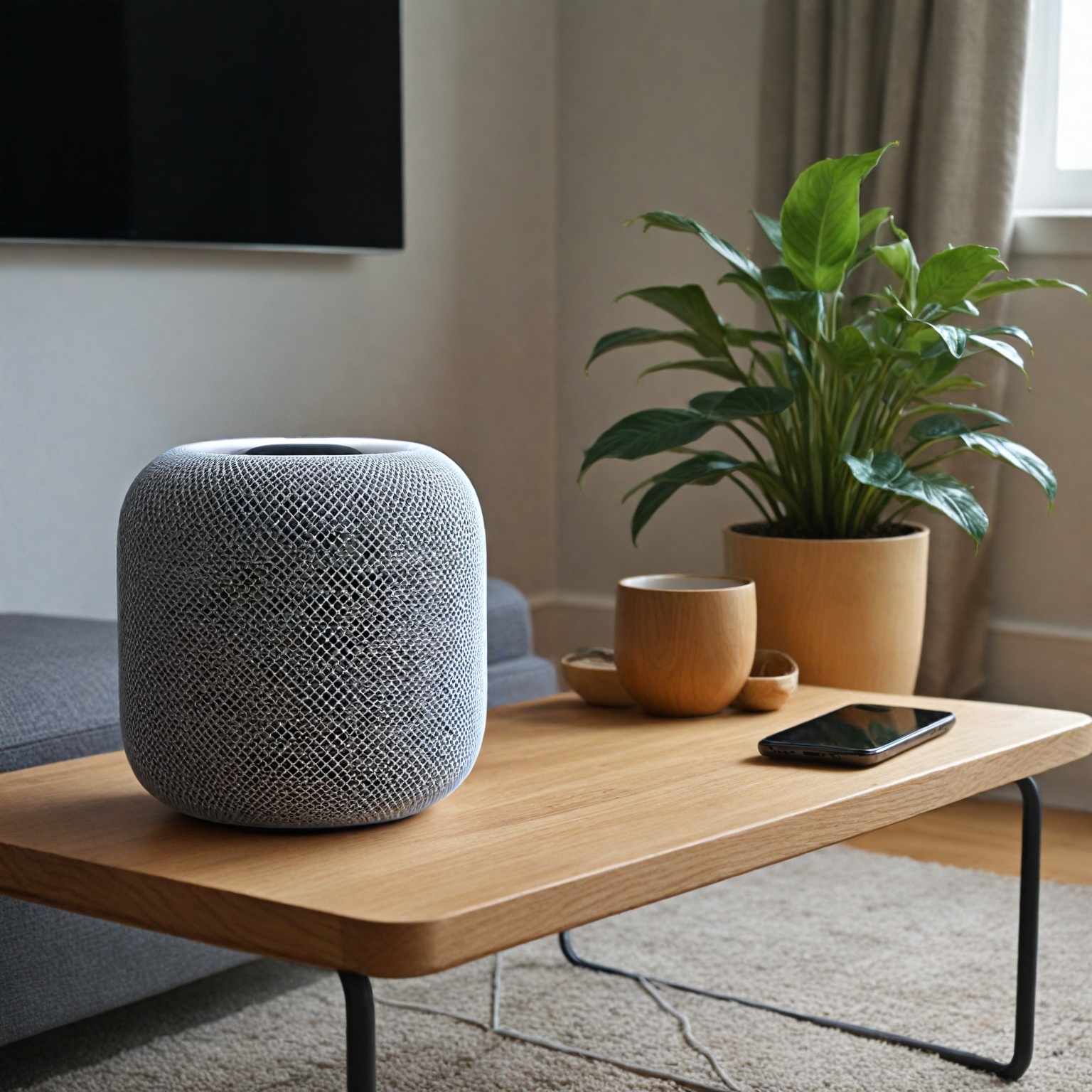
In terms of physical design, the HomePod Mini 2 is anticipated to retain the general form factor of its predecessor, with no major shifts such as the addition of a touchscreen—features that have been rumored only for the larger HomePod model. However, Apple may refresh the device’s aesthetic appeal by expanding the color palette beyond the existing white, midnight, yellow, orange, and blue options, following its tradition of subtle design updates. Leaked information also suggests improvements in microphone arrays and sensor configurations to support advanced AI functionalities, although these changes are expected to be incremental rather than revolutionary.
Rumored Launch Details
The Apple HomePod mini (2nd generation) is widely anticipated to launch in 2025, with most rumors converging on a release during the third quarter (Q3) of the year, potentially before or alongside the iPhone 17 launch in September 2025. This timeline aligns with Apple’s historical product announcement patterns, as the company typically announces home speakers roughly three weeks prior to their official release. Some analysts, like Ming-Chi Kuo, initially speculated a possible Fall 2024 launch, but more recent reports suggest a delay to late 2025 to allow for product refinement and integration into a broader smart home strategy.
The projected Q3 2025 release window is supported by several industry insiders, despite earlier rumors of Siri-related delays potentially affecting the schedule. Mark Gurman, a reputable Apple insider, has further pinpointed a likely debut in October or November 2025, possibly coinciding with an updated Apple TV, which would complement Apple’s push towards expanding its smart home ecosystem. This strategy could involve simultaneous launches of new HomePod models, Apple TV, and a rumored smart display, enhancing the overall home automation experience.
In terms of hardware, the HomePod mini 2 is expected to feature Apple’s new in-house “Proxima” chip, combining Wi-Fi and Bluetooth capabilities, with support for Wi-Fi 6E, replacing the previous Broadcom chip used in earlier models. Additionally, there is speculation about a screen-equipped HomePod variant, representing a significant evolution in design that would blend smart speaker functionality with visual interaction. However, details about this potential feature remain limited and somewhat speculative.
Despite anticipation, some skepticism remains regarding Siri’s performance improvements, as current user experiences often highlight limitations in voice command accuracy and responsiveness. Overall, while the exact release date and full feature set of the HomePod mini 2 remain unconfirmed, the collected information suggests a major upgrade and launch planned for late 2025 as part of Apple’s expanding smart home lineup.
Expected Features and Specifications
The HomePod mini 2 is anticipated to introduce several significant hardware and software enhancements aimed at improving performance, connectivity, and user experience. Central to these upgrades is the integration of Apple’s newer S-series chip, potentially the S9, S10, or even S11, which would provide faster processing speeds and enable more responsive interactions with Siri and smart home controls. This improved processing power is expected to facilitate smoother handling of complex commands, personalized assistance through AI learning, and more efficient smart device management within the Apple ecosystem.
Connectivity upgrades are also a key focus, with rumors pointing to the inclusion of a new Apple-designed Wi-Fi and Bluetooth chipset supporting Wi-Fi 6E or Wi-Fi 7 standards. This advancement promises faster and more reliable wireless connections, lower latency, and possibly the capability to function as a Wi-Fi range extender, enhancing whole-home coverage. The inclusion of Apple’s N1 wireless chip could further bolster these networking capabilities, complementing the device’s overall performance.
Audio quality remains a cornerstone of the HomePod mini’s appeal, and the second generation is expected to deliver richer bass, clearer mid-tones, and a more immersive soundstage. These refinements aim to enhance music streaming, podcasts, and hands-free calling experiences. While major design overhauls seem unlikely, Apple may introduce new color options to refresh the device’s aesthetic appeal, following its pattern of subtle visual updates.
Despite ongoing speculation about advanced features such as Apple Intelligence or on-device AI comparable to larger HomePod models, insiders suggest that the HomePod mini 2 will likely not include high-end AI chips or a touchscreen, maintaining its role as a compact smart speaker rather than a hybrid device. However, improved Siri integration with more contextual awareness of connected devices is expected, potentially enhancing smart home control and interoperability within Apple’s ecosystem.
Additional rumored improvements include the possibility of lower-latency Handoff features, faster Siri responses, and the continuation of the HomePod mini’s role as a central control point for smart home setups. These updates align with Apple’s broader strategy to unify smart home device management across platforms and improve the overall intelligence and responsiveness of its ecosystem.
User Interface
The HomePod Mini 2 is expected to continue the design philosophy of its predecessor, focusing on a compact form factor without incorporating a touchscreen. Unlike the rumored larger HomePod models that might feature full-color touchscreens for enhanced interactivity—such as playback controls, album artwork, or call thumbnails—the mini version is unlikely to adopt such a display due to size and design constraints.
Instead, the HomePod Mini 2 will maintain a voice-centric interface powered by Siri, which is becoming more intelligent and personalized through advancements in artificial intelligence. The device is anticipated to learn user habits and preferences over time, offering a more intuitive and responsive experience when managing smart home commands and interactions.
Meanwhile, Apple is reportedly developing a new smart home hub device featuring a larger screen and running a specialized “Home OS” with widget-based interfaces for more direct control over smart home devices. This hybrid device would blend HomePod audio capabilities with iPad-like display functionality, marking a significant departure from the HomePod Mini’s interface design.
There is some speculation about intermediate screen sizes—such as a display comparable to an iPhone or iPad Mini—that could be integrated into HomePod speakers to display recipes or facilitate video calls, but these remain unconfirmed and have not been linked directly to the HomePod Mini 2. Overall, the user interface of the HomePod Mini 2 is expected to emphasize voice control and seamless smart home integration rather than introducing new touch-based elements.
Pricing and Market Position
The Apple HomePod mini has established itself as a competitively priced smart speaker, retailing at $99 in the US, £99 in the UK, and AU$149 in Australia. This price point positions it significantly lower than Apple’s premium HomePod 2, which currently sells for $299, £299, and AU$479 respectively, reflecting a clear segmentation in Apple’s smart speaker lineup. Historically, Apple has maintained a two-tier pricing strategy with its HomePod products; the original HomePod launched at $349 before dropping to $299, a price maintained by the second-generation HomePod introduced in 2023.
Industry expectations suggest that the HomePod mini (2nd generation) will likely follow this pricing trend and launch around the $99 mark. However, some rumors hint at the possibility of the upcoming HomePod mini 3 being priced even lower, possibly near $79, to enhance competitiveness in an increasingly crowded voice assistant market and to complement a potential “good, better, best” product lineup if Apple introduces a smart display variant with a full speaker system.
Despite Apple’s loyal customer base, it continues to trail behind Amazon and Google in the smart speaker segment. Therefore, maintaining an affordable price while incorporating advanced features remains a critical challenge for Apple to entice users to upgrade or switch. Moreover, Apple’s ongoing commitment to integrating recycled materials into its products is expected to continue, aligning with broader environmental initiatives. The combination of strategic pricing and feature enhancements is essential for the HomePod mini’s sustained market relevance and appeal.
Market Impact and Reception
The anticipated launch of the Apple HomePod mini (2nd generation) in Q3 of 2025 is expected to generate significant attention in the smart speaker market, given the device’s established popularity and Apple’s strong brand presence. Industry analysts predict that the feature-rich upgrade will reinforce Apple’s position in the competitive smart home segment by appealing to both existing users and new customers seeking advanced audio capabilities and seamless integration with the Apple ecosystem.
Speculation regarding the device’s enhancements, such as the inclusion of a newer S-series chip, suggests improvements in computational audio that could elevate sound quality and spatial awareness, potentially setting a new benchmark for compact smart speakers. The introduction of new color options may also attract consumers interested in more personalized and aesthetically diverse choices, contributing positively to market reception. However, the absence of major design overhauls or added features like a touchscreen may temper expectations for radical innovation but aligns with the HomePod mini’s identity as a minimalist, user-friendly device.
Comparisons with Competitors
The HomePod Mini 2 enters a highly competitive smart speaker market dominated by Amazon and Google, both of which have established strong footholds with their respective Echo and Nest product lines. Apple’s challenge lies in delivering a device that not only matches but surpasses these competitors in terms of features, performance, and integration, all while maintaining a competitive price point.
While the original HomePod Mini was praised for its sophisticated and nuanced sound quality relative to its compact size, it still lagged behind the larger HomePod 2 in audio power and internal specifications. This positioned the Mini as a compelling option for users valuing design and ecosystem integration over sheer audio force. Apple aims to leverage its strengths in privacy, premium design, and seamless integration within its ecosystem to differentiate the Mini 2 from similar offerings by Amazon and Google.
Pricing remains a critical factor. The HomePod Mini’s affordability has been one of its major selling points, especially compared to the more expensive HomePod 2, making it a direct competitor to lower-cost smart speakers from Google and Amazon. However, Apple needs to introduce compelling upgrades to convince users to switch or upgrade, as it currently trails behind these companies in overall smart speaker market share.
Moreover, Apple’s anticipated broader smart home strategy in 2025—including a rumored HomePod with a display featuring AI-powered controls—could create a tiered ecosystem that competes more directly with Google Nest Hub Max and Amazon Echo Show, potentially drawing users deeper into Apple’s ecosystem and offering more comprehensive smart home experiences.
Alignment with Apple’s Product Strategy
The HomePod Mini 2’s anticipated launch aligns closely with Apple’s broader product strategy of maintaining a fresh, competitive lineup while expanding its presence in the smart home market. Apple typically unveils new products during its spring events, usually held in March or April, and the HomePod Mini 2 is expected to follow this pattern, allowing for a timely global rollout that caters to its diverse customer base. This approach supports Apple’s goal of delivering innovative technology at an affordable price point, which is a crucial factor in competing with established players like Amazon and Google in the smart speaker segment.
Moreover, the HomePod Mini 2 represents a strategic push toward reimagining the smart home ecosystem in 2025. Industry analysts highlight that Apple is not merely refreshing its HomePod lineup but is investing in creating versatile, feature-rich devices that integrate advanced AI
The content is provided by Jordan Fields, Home Upgrade News