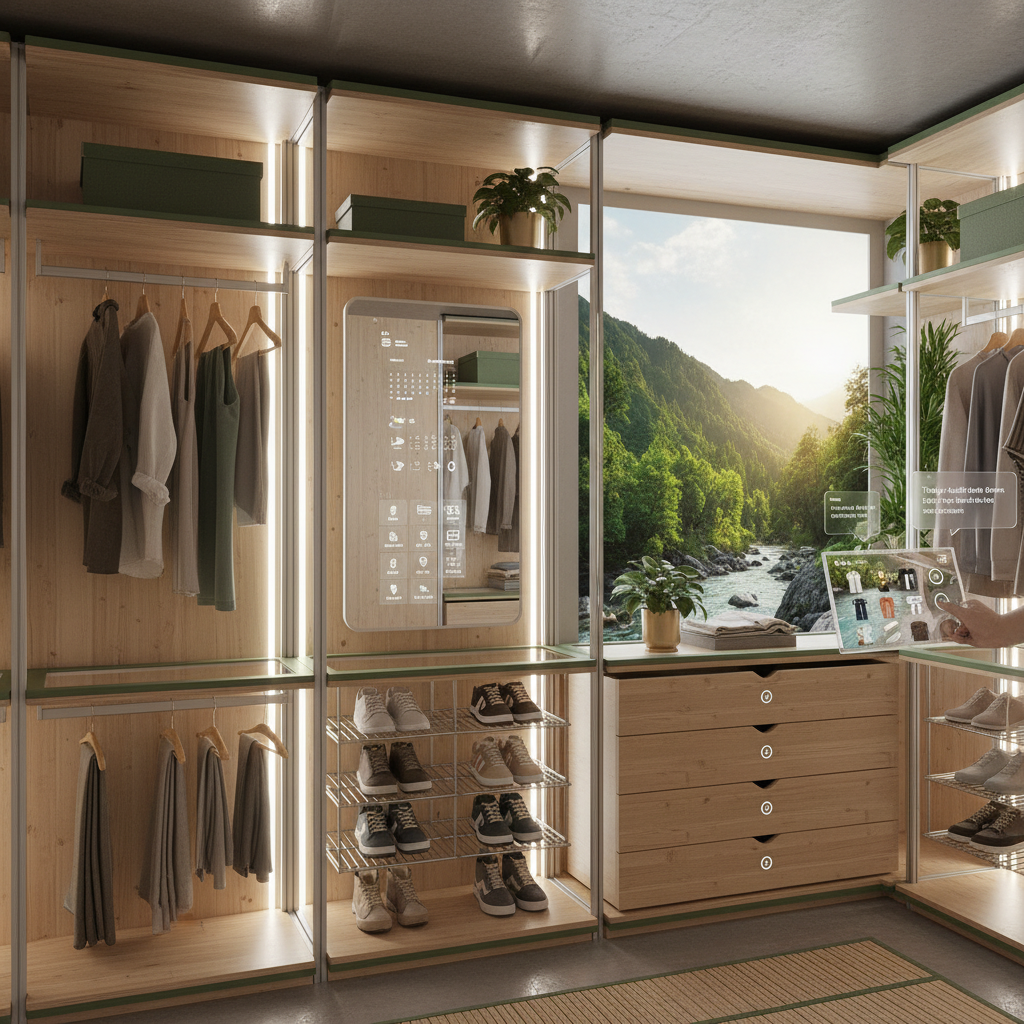
Summary of Smart Closet Remodeling in 2026
Smart closet remodeling in 2026 combines technology, personalized design, and sustainability for functional and aesthetic storage spaces. Homeowners can customize their closets using tools like 3D design software and augmented reality (AR), ensuring layouts fit their lifestyles while reflecting a trend towards integrating smart technology into everyday living environments.
Key features include AI-powered inventory management, RFID and NFC tagging for garment tracking, and IoT-enabled lighting that enhances convenience and energy efficiency. The focus on sustainable materials also responds to growing consumer demand for eco-friendly solutions. The shift from minimalist to boutique-inspired designs, emphasizing warm aesthetics and multifunctional spaces, aims to create organized environments that promote well-being. However, challenges such as technology usability, budgeting, and privacy concerns remain critical considerations for homeowners and designers.
Overview of Smart Closet Features
In 2026, smart closet remodeling emphasizes personalization to align with homeowners’ lifestyles. Advanced tools allow users to visualize their spaces with 3D design and AR, ensuring functionality and tailored aesthetics. Hidden storage solutions improve organization, while tech-enhanced accessories streamline routines, highlighting a growing technological influence in home organization.
Sustainability is increasingly vital, with a shift towards eco-conscious materials and modular designs that extend the life of closet systems and minimize waste. This trend promotes a responsible approach to home remodeling, catering to evolving household needs with adaptable designs.
Innovative Technologies in Smart Closets
Smart closets incorporate advanced technologies to improve wardrobe management and integrate seamlessly with smart home systems. AI-driven inventory tracking systems anticipate outfit needs, while RFID and NFC enable automated garment tracking through tagging. These technologies facilitate user interaction with features like smart mirrors and touchscreens for inventory management.
Lighting also plays a significant role, with IoT-enabled systems automating brightness and color for energy efficiency and enhanced ambiance. Such integrations support a holistic smart home ecosystem that prioritizes user needs and convenience.
Trends Shaping 2026 Remodeling Practices
Remodeling trends in 2026 emphasize sustainability, comfort, and multifunctionality. Homeowners prioritize eco-friendly materials, incorporating organic textures like bamboo and reclaimed wood, which contribute to both visual appeal and environmental responsibility. Modular systems support longevity and adaptability, decreasing the frequency of necessary remodels.
Lighting is now essential in closet design, with features like motion sensors and energy-efficient LEDs becoming standard. The aesthetic shift favors natural hues and layered materials over minimalist styles to create warm, inviting spaces tailored to individual tastes.
Benefits of Smart Closet Remodeling
Smart closet remodeling provides tailored, organized spaces that enhance daily routines. Advanced tools allow homeowners to visualize designs, optimizing functionality according to their needs. Efficient storage solutions promote simplicity and ease of maintenance, making spaces less overwhelming.
Sustainability is central, with a focus on durable materials that minimize waste and support long-term use. Automation features, such as RFID tagging and voice controls, increase accessibility while contributing to an improved quality of life through seamless organization and management.
Challenges to Address
Despite the advantages, smart closet remodeling faces challenges like integrating advanced technology without overwhelming users. Balancing innovation with user-friendliness is crucial for ensuring accessibility for all homeowners. Cost concerns also arise, particularly with high-end features that may limit wider adoption.
Sustainability remains pressing, necessitating eco-friendly materials and responsible design practices. Privacy and data security are essential considerations as connected devices become commonplace, prompting homeowners to seek reassurances regarding the handling of personal information.
Prominent Brands and Technologies
Innovative brands are at the forefront of smart closet remodeling, emphasizing customizability and environmentally responsible design. Companies like Organized Living offer modular systems that surpass traditional options in durability and sustainability. Materials used in these systems reflect a shift towards natural textures and deeper hues, enhancing aesthetic appeal.
Advancements in technology, including IoT features and LED lighting, are reshaping closet systems, promoting energy efficiency and mood customization. The market is set for significant growth, integrating smart capabilities into closet designs and enhancing user experience.
Case Studies in Smart Closet Evolution
New smart closet designs focus on customization and sustainability. Brands emphasize high-quality, flexible materials that adjust to user needs while minimizing waste. Incorporating technologies like intelligent mirrors adds luxury and practicality, transforming spaces into interactive containers for personal style.
Embracing sustainable practices through circular economy principles influences both closet design and the broader fashion industry, promoting recyclability and waste reduction. These trends highlight a commitment to creating stylish, functional spaces that cater to modern homeowner preferences.
Future Trends and Innovations
The future of smart closet remodeling will hinge on technology, sustainability, and personalized design, crafting closets that adapt dynamically to users. Innovations like AI-powered wardrobe management will enhance this evolution, helping to maintain digital inventories and optimize user experiences.
With tools that support virtual design, closets will increasingly serve as responsive environments that not only organize but also enhance daily living through smart integration and thoughtful personalization.
The content is provided by Jordan Fields, Home Upgrade News