
Summary
The Residential Environmental Services Department (RESD) is an organization dedicated to managing environmental risks in residential settings, and promoting sustainability and environmental health. Its primary responsibilities include waste management, air quality monitoring, environmental health services, and ensuring compliance with environmental laws and regulations. The RESD strives to encourage individual and organizational commitment to the preservation of natural resources, and promotes the ‘Grow For Life’ philosophy, fostering personal and professional growth in alignment with the larger mission of the department. Through outreach programs, the department seeks to inspire a global community of leaders dedicated to solving environmental challenges and advancing global environmental health and justice.
The RESD plays a pivotal role in waste management and mitigation, seeking to reduce the harmful impact of waste on both the environment and human health. It oversees the collection, recycling, and disposal of waste, with an added focus on mosquito control services. Recognizing the contribution of waste to global greenhouse gas emissions, the department champions composting methods as a way to reduce waste and transform it into a beneficial soil amendment. Moreover, the department is heavily involved in the monitoring and management of air quality, utilizing a network of monitoring sites to provide data on air quality conditions.
In addition to these primary roles, the RESD also emphasizes collaboration with other organizations and departments, recognizing the importance of a holistic, community-based approach to environmental stewardship. The department has a diverse organizational structure, with key roles including the Director of Environmental Services and Environmental Services Worker, and fosters employee participation in sustainability initiatives.
Despite its various roles and initiatives, the RESD has faced criticism and controversy, particularly in relation to improper waste disposal and a perceived lack of collaboration with key sustainability and environmental organizations. Nonetheless, the RESD continues to play a significant role in residential environmental services, driving change and promoting sustainability within communities.
History and Mission
The mission of the Residential Environmental Services Department has evolved over the years to focus on advancing sustainability and environmental consideration in mission execution. This has been influenced by the global commitment to environmental conservation and the emergence of key environmental policies since the 1960s. It has also been shaped by the legislative obligations and responsibilities stipulated in health and environmental acts.
The Department aims to facilitate individual accountability and organizational commitment to preserving national resources while ensuring the security of the homeland. The department works through leading the Department of Homeland Security (DHS) in the development of policy, integrating sustainability, and fostering a transformative culture within DHS.
In its outreach to communities, the department aims to build a global community of leaders through local environmental service. It also encourages companies and employees to connect with and volunteer for environmental and conservation organizations. The department believes that in ensuring future world leaders are motivated and equipped to solve sustainability challenges, the mission to champion global environmental health and justice will be advanced.
At the core of the Department’s philosophy is the ‘Grow For Life’ principle that emphasizes the significance of personal goals while actively supporting employees in shaping their desired careers. This encourages employees to connect their personal and professional growth to the larger mission of the department, emphasizing their integral role in advancing environmental conservation.
Function and Responsibilities
The main function of a Residential Environmental Services Department is to manage and mitigate environmental risks in residential settings, while promoting health, safety, and cleanliness. An Environmental Services Worker, often an integral part of this department, is responsible for cleaning and maintaining the facility to ensure cleanliness and sanitation.
Air Quality Monitoring
The department utilizes a network of air monitoring sites to provide air quality data in populated areas at risk for unhealthy air quality due to pollutants. The goals of this program are to evaluate compliance with national and state ambient air quality standards, provide real-time monitoring of air pollution episodes, develop data for trend analysis, and provide public information on daily air quality conditions.
Successful air quality management also requires collaboration between communities, regulators, emissions reduction partners, innovative technology, data analysts, and industry stakeholders.
Waste Management
The aim of waste management is to reduce harmful effects of waste on the environment and human health, primarily dealing with municipal solid waste generated by industrial, commercial, and household activities. According to the Solid Waste Management Act, waste management should aim to reduce waste generation and manage generated waste in the most environmentally-responsible manner. Providing exceptional waste collection, recycling, disposal, and even mosquito control services is part of their responsibility to protect and improve the quality of life in the community.
In the context of climate change, waste management is extremely important as organic and inorganic waste is a significant contributor to global greenhouse gas emissions. Composting is one method of reducing waste and transforming it into a beneficial soil amendment, thus, addressing climate change and building resilient communities. Moreover, the department also oversees initiatives and corrective measures to improve solid waste management such as equipment for segregation and recycling facilities, proper maintenance of waste collection vehicles, and a system for leachate collection and removal.
Environmental Health Services
The department’s responsibilities include the provision of Environmental Health Services, which entails the provision and facilitation of comprehensive, proactive and need-related services. The role of an Environmental Services Worker includes maintaining a customer service friendly appearance and attitude towards other co-workers and residents, demonstrating compassion for residents and staff, and prioritizing and managing projects and workload. They play a crucial role in promoting health and safety, while also providing support services to maintain a safe and clean environment in a variety of settings, such as hospitals, schools, and office buildings.
Compliance and Sustainability
The department is also responsible for ensuring compliance with key environmental laws and regulations to prevent harm to the environment. They provide policy, training, technical support, and oversight to ensure that residential properties operate in an environmentally-friendly manner. Furthermore, they aim to enhance sustainability and optimize energy use within the residential community.
Interdepartmental Collaboration
Interdepartmental collaboration is integral to successful community engagement and environmental stewardship, particularly in relation to air quality management and waste reduction efforts.
Collaborative efforts between communities, researchers, and organizations, facilitated through multi-stakeholder forums, enable the incorporation of local knowledge and lived experiences, thus fostering more culturally appropriate resources and solutions. The department’s work with Breathe London, a project utilizing hybrid networks of regulatory-grade monitors and low-cost sensors to facilitate stakeholder collaboration, serves as an international blueprint for cities looking to improve their air quality.
The Residential Environmental Services Department supports a circular economy model, which recycles materials to create new products, typically uses less energy, results in reduced greenhouse gas emissions, and can be more localized, therefore burning fewer fossil fuels. The department supports this model through the implementation of the Waste Reduction Model (WARM), developed by the U.S. Environmental Protection Agency, to calculate potential greenhouse gas savings from reduction, recycling, and composting activities.
Organizational Structure
The Residential Environmental Services Department encompasses a diverse range of roles and responsibilities. The overall hierarchy of the department places considerable emphasis on sustainable materials management strategies, with the most preferred being reducing, reusing, and recycling. The department is also proactive in promoting waste diversion through employee outreach and engagement initiatives.
The environmental services provided by the department include assessment of waste generated within the facilities, designing a customized waste segregation infrastructure, installing a composting system, and managing the collection of recyclable materials. Employee participation in sustainability initiatives is encouraged through workshops and campaigns.
The Director of Environmental Services is an important role within the department. This role involves ensuring the cleanliness and safety of the facility and managing the maintenance and cleaning staff. The director’s responsibilities also encompass staff hiring, training, scheduling, and evaluation, as well as the development and implementation of strategies to improve efficiency and outcomes.
The role of Environmental Services Worker is another key part of the organizational structure. These workers have a range of responsibilities including food services, housekeeping, building maintenance, and groundskeeping. Other duties include meal preparation and serving, and ensuring the upkeep of sanitation standards within the facility.
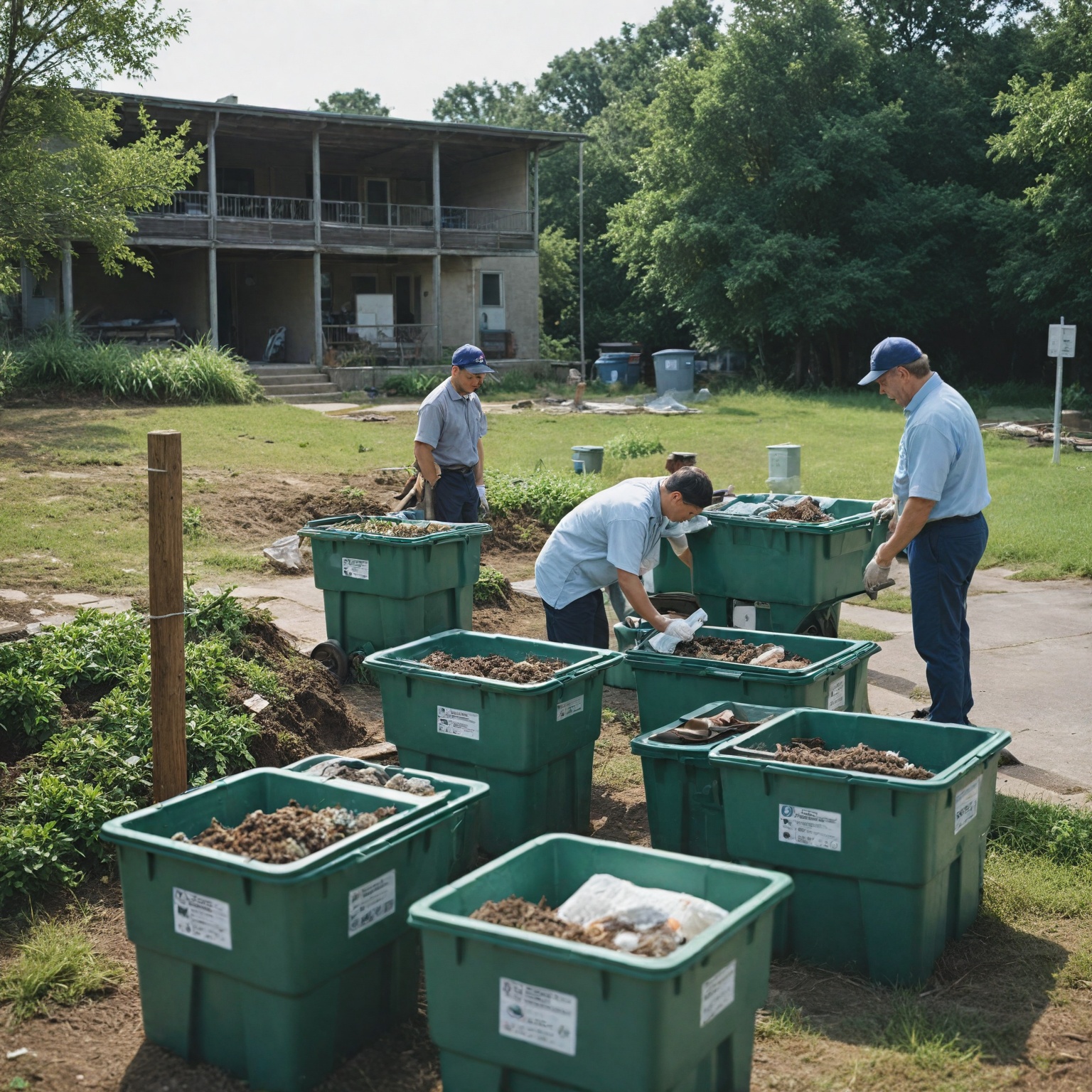
In terms of physical infrastructure, the department utilizes specialty containers of varying sizes for waste and recycling purposes and services such as septic tanks and interceptor pits. To facilitate training and research development, a series of relevant documents are prepared and distributed regularly, and workshops are held in collaboration with national and international agencies.
Projects and Initiatives
The Residential Environmental Services Department carries out a number of projects and initiatives designed to assess, reduce, and manage waste in various facilities. In collaboration with partners across the city, the department runs a program under the Peggy Notebaert Nature Museum. This initiative aims to recruit, train, and support a volunteer network working collectively on environmental service projects to improve the quality of life in local neighborhoods .
Another initiative launched by the department, known as the Waste Reduction Pilot, involved commercial partners participating in an outreach and engagement working group to identify challenges and devise solutions . The department has also launched an Extended Producer Responsibility (EPR) initiative in 2022. This project seeks to reduce the environmental impact of products by shifting the financial and physical burden of waste management from governments and taxpayers to producers .
In addition to these projects, the department is also involved in environmental planning and historic preservation, thereby honoring the past while planning for the future . Owing to the expansion of healthcare facilities, the availability of environmental service hospital jobs is projected to increase by 10 percent between now and 2026 .
Criticism and Controversies
Criticism towards the Residential Environmental Services Department often pertains to improper waste disposal in various communities. A significant aspect of this issue stems from the poor attitude and negligence of residents. Moreover, this problem is exacerbated by the lack of sufficient funds allocated by most governments for waste management, such as waste collection services, ageing or not maintained infrastructure, and inefficient sanitation facilities.
Furthermore, despite the role of organizations like the Association for the Advancement of Sustainability in Higher Education (AASHE) and the Basal Action Network (BAN) in advocating for sustainability and environmental health, the Residential Environmental Services Department has been criticized for its lack of collaboration with such organizations.
The content is provided by Harper Eastwood, Home Upgrade News